


For Sale by Owner
Selling Smart: Why a Real Estate Agent Makes All the Difference

Want to know the #1 thing homeowners regret when they sell without an agent? It’s that they didn’t price their house correctly for their current market.
According to the latest data from the National Association of Realtors (NAR), those sellers agree pricing their home effectively was the hardest part of the process.
Top 5 Most Difficult Task for Sellers Who Didn’t Use an Agent:
- Getting the price right
- Preparing or fixing up the house
- Selling within the desired time frame
- Handling all the legal documents
- Finding the time to manage all aspects of the sale
And that makes sense. Pricing isn’t as simple as picking a number from an online estimate or copying what your neighbor got last year. It takes real insight into:
- What buyers are actually willing to pay today
- How much competition you have in your area
- What similar homes nearby are really selling for
- How desirable your area or neighborhood is
- The condition of your house
Without that context, it’s easy to overshoot the mark, especially now that buyers can be more selective. And in today’s market, that’ll backfire.
Overpricing Isn’t a Small Mistake, It Snowballs
Your price is part of what shapes a buyer’s first impression. And when it’s too high, a chain reaction begins.
If buyers think you’re asking too much, they’re going to turn the other way. And when buyers bypass your house, you’ll get fewer showings. Fewer showings lead to fewer offers. And fewer offers usually mean making a price cut to try to draw buyers back in.
And that’s happening a lot lately, especially on homes sold without a pro.
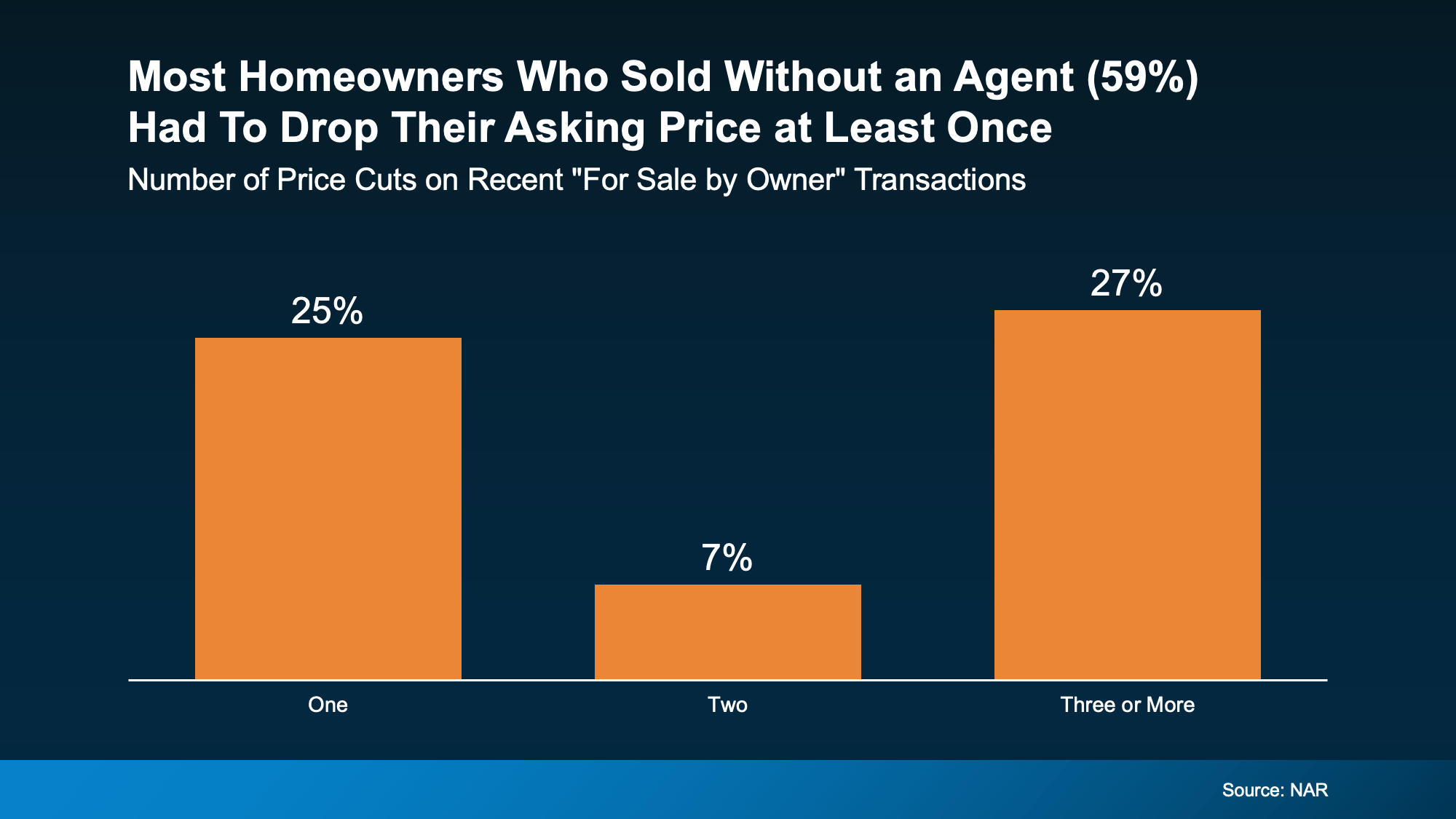
The same NAR report shows most homes sold without an agent (59%) had to reduce their asking price at least once (see the orange in the graph below).
 The Part Sellers Don’t See Coming
The trouble is, price cuts don’t always fix the problem. They can attract bargain hunters rather than strong, confident buyers. That’s because many buyers see a price drop as a sign there’s something wrong with the house. And that assumption can turn buyers away too.
By the time your house finally sells, you may net less than if you’d priced it correctly from the start. Again, the data backs this up.
NAR shows that homes sold with an agent sell for nearly 8% more than homes sold without one.
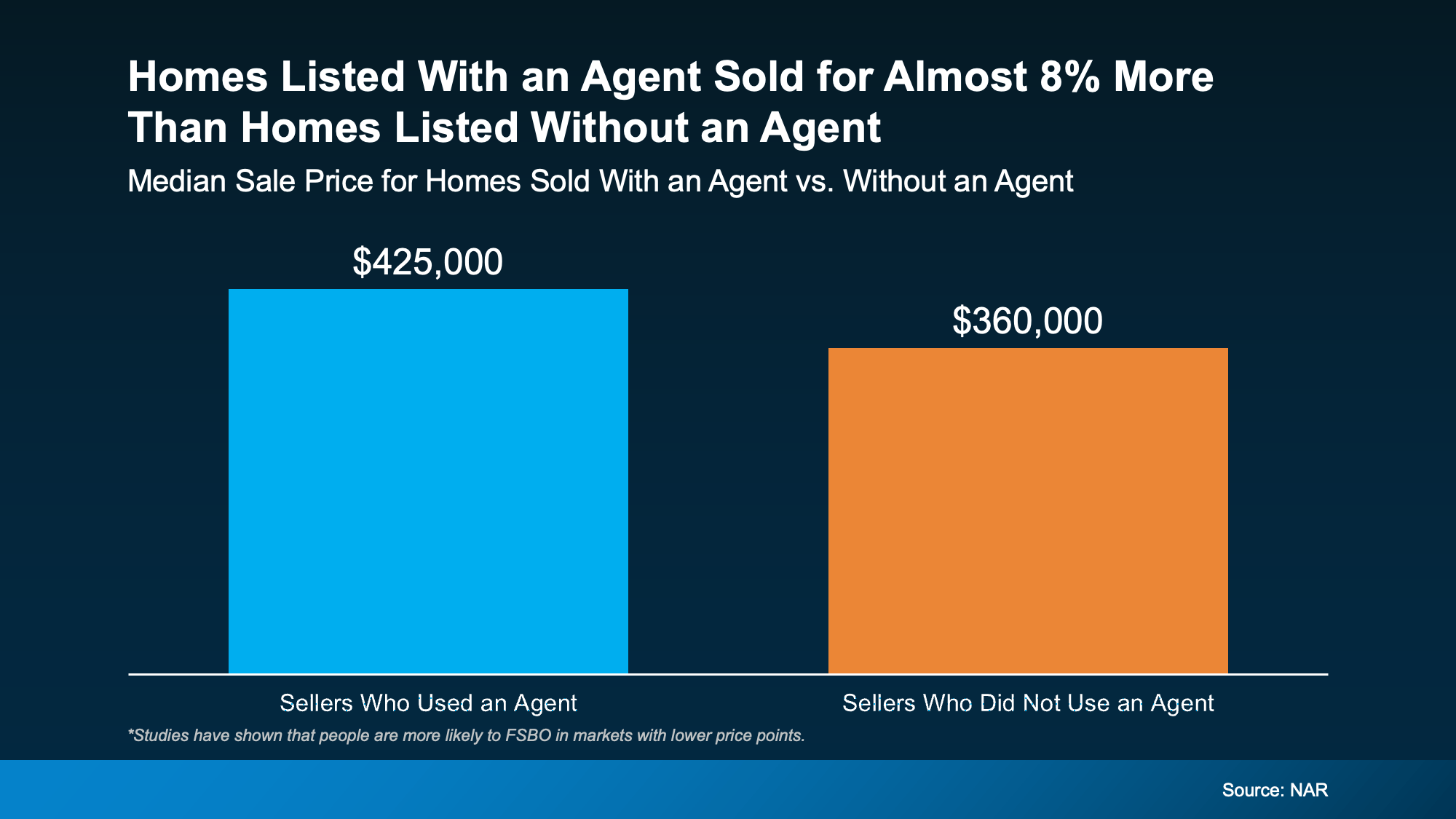 That’s not because agents magically add value. It’s because they have the expertise needed to get it right. The price. The prep. The presentation. And the paperwork.
Nail all of that from day one, and you’ll be set up to get as much money as you can out of your sale.
So, even though you thought selling without an agent meant saving money, that’s not necessarily true. The facts show selling on your own can mean selling for less in the long run. And that may be enough to totally change your perspective.
Bottom Line
Today, the biggest risk of selling without an agent isn’t the paperwork or the hassle. It’s the price. And once pricing goes wrong, it’s hard to course correct.
So, if you’re thinking about selling and want to understand what your home would realistically go for in today’s market, connect with a local agent. A quick pricing conversation now can save you from much bigger regrets later.
Cutting out the agent might seem like a smart way to save when you sell your house. But here’s the hard truth.
Last year, homes that sold with an agent went for almost 15% more than those that sold without one.
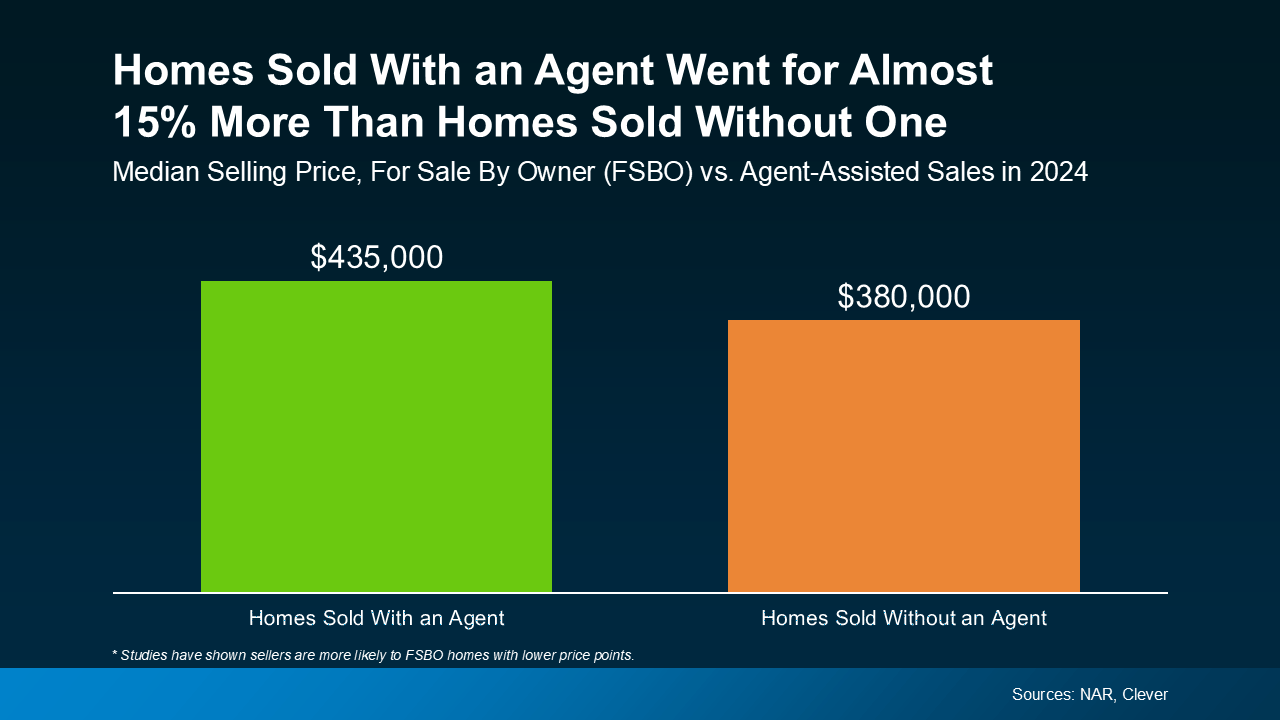 That gap is pretty hard to ignore. And with more homes on the market to compete with right now, selling on your own is a mistake that’s going to cost you.
This Isn’t the Market for DIY Selling
A few years ago, you might’ve gotten away with a “For Sale By Owner” (FSBO) sign in your yard, navigating the process on your own. That’s because homes were flying off the market and buyers were pulling out all the stops. But that’s just not the case anymore. With more inventory than we’ve seen in years, we’re not in a “list it and they will come” market anymore. You need professional expertise.
A yard sign and some photos you take on your own won’t cut it.
Right now, the housing market is getting back to what most would consider a more normal balance of buyers and sellers, and that really changes the game. According to Realtor.com, the latest number of listings for sale was the highest it’s been in any month of July since 2019 (see graph below):
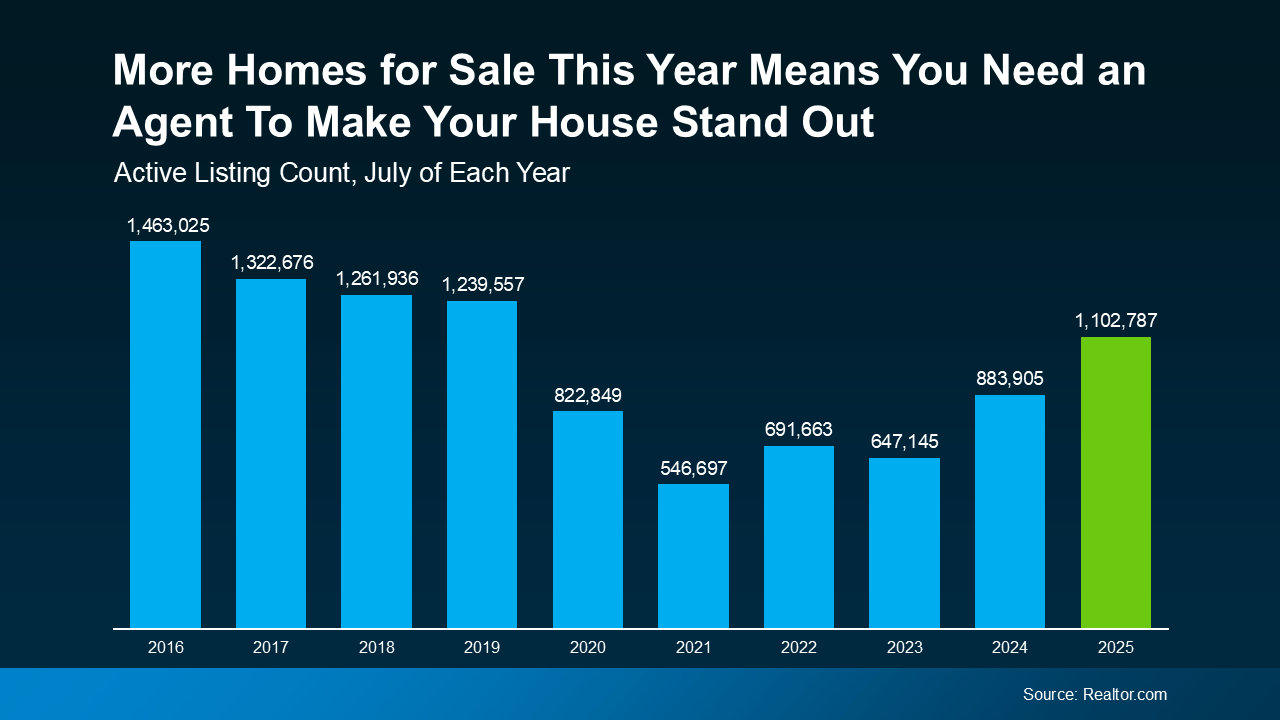 And while inventory growth is going to vary by local market, nationally, this graph shows the number of homes for sale is inching back toward normal.
With more listings available, that means buyers can be more selective. They’ll compare your home to others on price, condition, photos, location, and more. If yours doesn’t stand out, it will get skipped over.
More Inventory = More Competition for You
Selling today requires the latest pricing strategy, expert prep work, professional marketing, and strong negotiation skills. And if you’re not bringing all of that to the table, chances are, you’re going to feel it in your bottom line.
More Homeowners Are Turning To the Pros
That’s why even more home sellers are working with agents today. Data from the National Association of Realtors (NAR) shows a record-low percentage of homeowners sold without an agent last year. And the few sellers who tried to sell on their own realized their mistake pretty quickly.
According to Zillow, 21% of homeowners ended up hiring an agent anyway after struggling to sell on their own.
So, why take the risk? With a local pro, you’ll have:
- Pricing precision to attract buyers and maximize your return
- Expert staging and presentation advice to highlight your home’s best features
- Pro-level marketing, including the best exposure and access to buyer networks you can’t reach on your own
- Skilled negotiation to evaluate offers and navigate inspections, protecting your bottom line
- Local market expertise that helps your listing stand out based on what inventory looks like in your area
An agent’s expertise isn’t optional anymore. It’s essential.
Bottom Line
In a market with more listings and pickier buyers, many sellers who try to sell on their own end up working with an agent anyway. So why not start there?
Connect with an agent so you have a pro who knows exactly what it takes to sell your house in today’s market, for the best possible price, without leaving money on the table.
Reach out to an agent if you want a professional assessment on what your house could sell for today.

A few years ago, homes were flying off the shelves and getting multiple offers well over their asking price. It felt like you could name your price and still have buyers lined up at the door.
But today’s housing market is different. Buyers are getting more selective now that inventory has grown. Homes are sitting a little longer. And more sellers are having to cut their prices.
So, how do you still come out on top? It all starts with one thing, pricing your house right from the start. Today, that matters more than ever – and it can make or break your sale.
There’s a Real Price Disconnect Between Buyers and Sellers
A recent survey from Realtor.com shows 81% of home sellers believe they’ll get their asking price or more. But the actual sales data shows there’s a growing gap between what sellers expect and what buyers are actually willing to pay.
In fact, an annual report from the National Association of Realtors (NAR) shows 44% of recently sold homes went for less than the asking price. And 1 in 3 sellers had to cut their price at least once before the home sold. It’s a sign that expectations may be a little out of step with today’s reality.
Check out the graph below. It uses data from Redfin to show that asking prices (blue line) are higher than actual sales prices (green line) by a wider and wider margin:
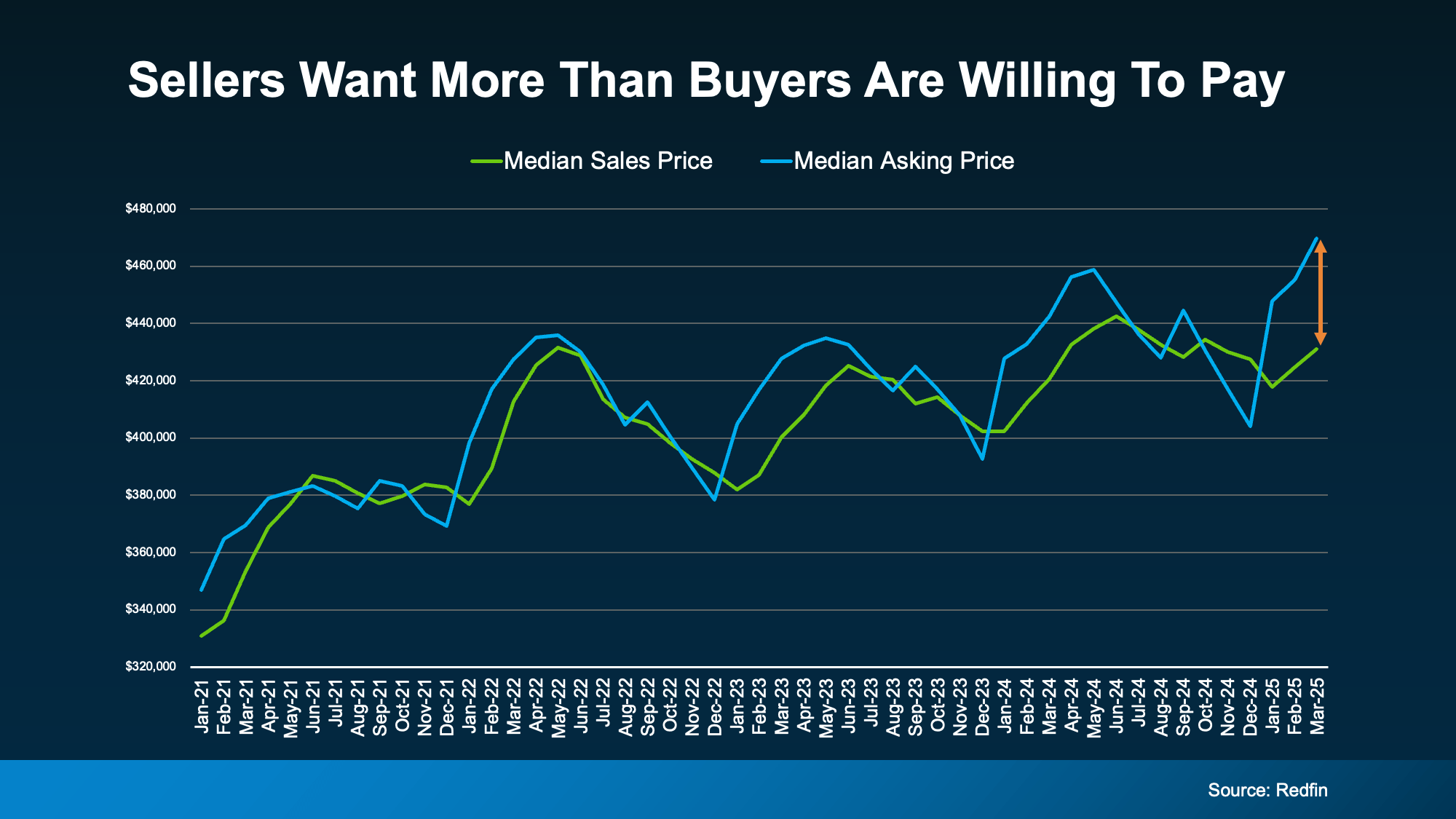 This tells you something important: not all buyers are willing to pay what many sellers are asking. That doesn’t mean you can’t sell for a great price – but it does mean you need to start with a price that reflects what people are willing to pay in today’s market.
What Happens When You Overprice Your House?
Pricing your house high initially may seem like a smart move, so you have more room to negotiate. But the reality is, an overpriced home can sit on the market and turn buyers away.
Buyers are smart. And when they see a house that’s been sitting for a while, they start to wonder what’s wrong with it. That can lead to fewer showings, less interest, and eventually, a price cut to re-ignite attention. As Realtor.com explains:
“By getting the right price early on, you can increase the odds buyers will be interested in the home. In turn, this decreases the chances the home will sit on the market for a lengthier timeline, also reducing the odds you’ll need to lower the listing price.”
The longer a house sits, the harder it can be to sell.
You Still Have a Great Opportunity – If You Price Your House Right
To avoid making this mistake, it’s important to lean on an agent who knows what’s happening locally when you set your asking price.
Your agent will look at recent local sales, buyer trends, and inventory levels to find that pricing sweet spot for your neighborhood – because it’s going to be different based on where you live.
And here’s something else to keep in mind, home prices have climbed more than 57% over the past five years. So, even if you price a bit below the number you had your sights set on, you’ll likely still be in a great position profit-wise.
With a local real estate agent’s help, you’ll attract more attention, avoid seeing your house sit on the market too long, and maximize your chances of getting a strong offer.
In today’s market, the right price works. As Mike Simonsen, Founder of Altos Research, explains:
“. . . the best properties, well priced are selling quickly in most of the country.”
Bottom Line
The market has changed, but your opportunity to sell hasn’t. You just need the right pricing plan. Talk to a local real estate agent to go over what’s happening with prices in your area and determine what price would help your house sell quickly and for top dollar.

The House That Started It All Could Kickstart What’s Next

Priced Out? A Condo or Townhome Could Be Your Way In.

More Homes, Better Prices: A Buyer’s Summer



-
 Equity4 weeks ago
The Housing Market Is Stronger Than You Think
-
 Economy3 weeks ago
What Buying or Selling a Home Gives Back to Your Community
-
 Buying Tips4 weeks ago
The 1 Factor That Explains Everything Happening with Home Prices Right Now
-

 Affordability3 weeks ago
Down Payments Are Smaller Than They’ve Been Since 2021
-

 Buying Tips3 weeks ago
Student Loans Are Back in the News. Don’t Let It Put Your Homeownership Plans on Hold.
-

 Affordability2 weeks ago
What To Expect from the Housing Market in the Second Half of 2026
-

 Buying Tips2 weeks ago
The “Take It or Leave It” Attitude Is Fading from the Market – What That Means for You
-
 For Sellers2 weeks ago
Think Nobody’s Buying Homes Right Now? Think Again.
You must be logged in to post a comment Login