
Real Estate Tips & News
What Happens to the Housing Market When the Economy Slows Down?

There’s a lot of noise out there about what an economic slowdown could mean for the housing market. And if it leaves you feeling a little uneasy, you’re not alone. But here’s the thing.
If you’re worried about what a potential recession could mean for the value of your home, or your homebuying power, your trusted REMAX® agent is here to help set the record straight. You don’t have to fear the market when you understand what the data actually shows.
A Recession Doesn’t Automatically Mean Home Prices Will Fall
It’s easy to assume that if the economy slows down, home prices will fall. You might remember what happened in 2008. But the truth is: the housing crash of 2008 was an exception — not the rule.
It hadn’t happened before. And it hasn’t happened since. But what made 2008 so different? It was a flood of oversupply and very different lending standards. And everyone remembers how painful that time was.
Today, lending is much tighter, and even with inventory rising, the overall number of homes for sale remains well below normal levels. That keeps upward pressure on prices — and it keeps prices from falling significantly on a national level. And while prices are moderating in some markets today, a significant crash is unlikely.
In fact, according to data from Cotality, in four of the last six recessions, home prices actually went up (see graph below):
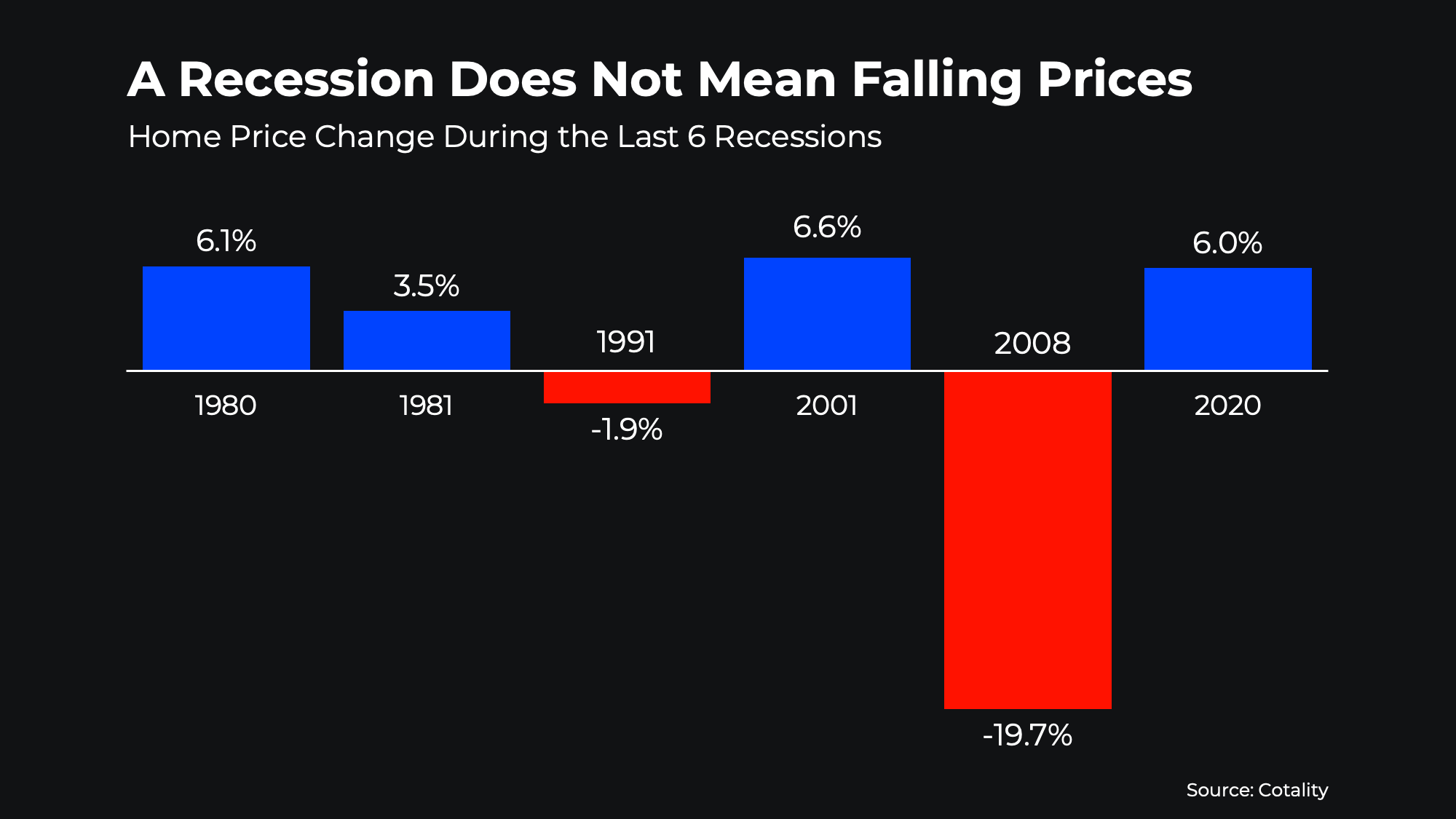 Don’t let fear of a recession make you assume prices are about to fall dramatically.
And since prices usually follow the path they’re already on, in most markets they should rise, not fall, in the days ahead. The rise just may slower, or even flat, but certainly not a crash.
Mortgage Rates Typically Decline During Recessions
Another important pattern you should know? Mortgage rates usually fall when the economy slows down.
Looking at the data for the last six recessions, mortgage rates came down each time — helping boost buyer purchasing power, even during tougher economic periods (see graph below):
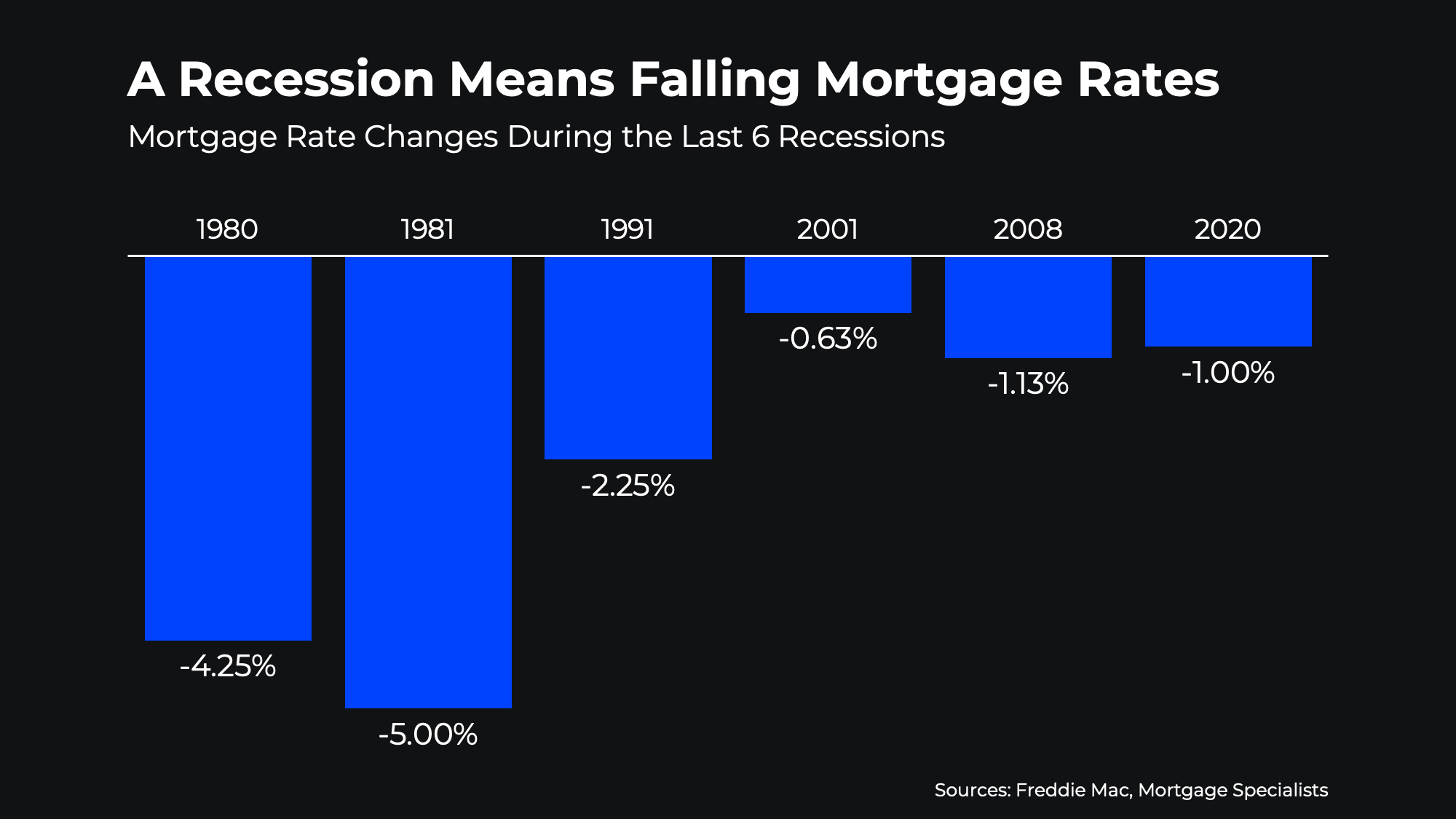 If a recession does happen, history suggests you could see some relief in mortgage rates. However, it’s important to stay realistic. While a dip is possible, we’re unlikely to return to the ultra-low 3% rates seen in 2020 and 2021.
Bottom Line
Economic shifts are part of the cycle, but they don’t have to derail your plans to buy or sell a home. Don’t let fear be the thing that keeps you from your next move.
Instead, lean on facts to guide your decisions. And your trusted REMAX agent is the perfect person to make sure you have the information you need to feel confident moving forward.

If you’re a homeowner getting ready to move, one question usually comes first: should you buy your next home before you sell, or sell your current house before you start looking?
There’s no single right answer. The best call depends on your finances, your local market, and your timeline. And a trusted agent can help you weigh all of it.
But in a lot of cases these days, selling first puts you in the stronger spot.
The Advantages of Selling First
Selling is usually the trickier half of a move today, so getting it done first clears your biggest hurdle. And that’s especially true right now, because there are more homes for sale than there are buyers, which means houses are taking longer to sell than they did a year or two ago.
So how does leading with your sale pay off? Let’s start with the money.
1. You Won’t Get Stuck Paying Two Mortgages
Buy before you sell, and you could end up carrying two mortgages at once. And especially since houses are staying on the market longer these days, that overlap may drag on for more time than you’d planned. And if unexpected repairs come up, it could get even more expensive.
Selling first takes that risk off the table, so you’re not multitasking homeownership. As Ramsey Solutions puts it:
“It’s best to sell your old home before buying a new one to avoid unnecessary risks and possible headaches.“
2. You Can Use Your Equity To Fuel Your Move
This is always true, but one of the biggest perks of selling first is that you’ll know exactly how much money you’re walking away with. And one of the big figures that matters in that conversation is how much equity you have in your current place.
Equity is basically your house’s value minus what you still owe on your mortgage. And it adds up fast. According to Realtor.com, homeowners who’ve been in their home for 5 years have about $180,000 in equity on average. And those who’ve had their home for 6-10 years? They have over $340,000.
After you sell, you can use that money to cover your down payment or even buy your next home in cash. And knowing that profit up front helps you plan your next move.
3. Your Offer Will Be Hard To Pass Up
When your house is already sold, you don’t have to make your offer contingent on that sale. In a market where buyers are taking their time, that’s exactly what a seller wants to see.
Picture it from the seller’s side. If their house has been sitting for a while, they’ll gravitate toward the offer most likely to close without a snag.
That can also give you room to ask for a little more, like repairs, since a motivated seller would rather keep things moving than lose you and wait for another offer to come in. Your agent can help you make the most of your upper hand in that scenario.
Is There a Catch?
Selling first has its tradeoffs too, and it helps to see the pros and cons side by side before you decide. Here’s a quick breakdown based on information from Zillow (see visual below):

The cons are manageable with the right plan, so talk about them with your agent. They can help you negotiate things like a rent-back, where you stay in your house for a set time after closing, or line up flexible closing dates to keep the transition smooth.
Bottom Line
There’s no one-size-fits-all answer to buying and selling at once. But for a lot of homeowners, leading with the sale makes moving easier on their mind and their wallet.
Connect with a local agent, and they’ll help you navigate selling and buying with more confidence, more financial power, and less stress.


Renovate or Relocate? What To Know Before You Decide To Age in Place

Myth vs. Reality: Does the Fed Control Mortgage Rates?

Two Moves That Can Get You Into Your First Home Sooner



-
 For Buyers4 weeks ago
Data Centers Are Moving Closer to Homes. What Does That Mean for You?
-

 For Sellers3 weeks ago
Selling This Fall? You Want To Get These 4 Things Right.
-

 Agent Value4 weeks ago
Selling This Fall? You Haven’t Missed Your Window
-

 Affordability3 weeks ago
3 Things You Can Actually Control About Your Mortgage Rate Right Now
-

 Affordability3 weeks ago
The Best Time To Buy a Home in 2026 Is Almost Here
-

 Buying Tips1 week ago
Hoping for (or Dreading) a Housing Crash? The Experts Just Weighed In.
-

 Agent Value2 weeks ago
There Are 4 Types of Housing Markets Right Now. Which 1 Are You In?
-

 Affordability2 weeks ago
Why So Many Sellers Are Cutting Their Price Right Now
You must be logged in to post a comment Login