


Affordability
Multi-Generational Homebuying Hit a Record High – Here’s Why

Multi-generational living is on the rise. According to the National Association of Realtors (NAR), 17% of homebuyers purchase a home to share with parents, adult children, or extended family. That’s the highest share ever recorded by NAR (see graph below):
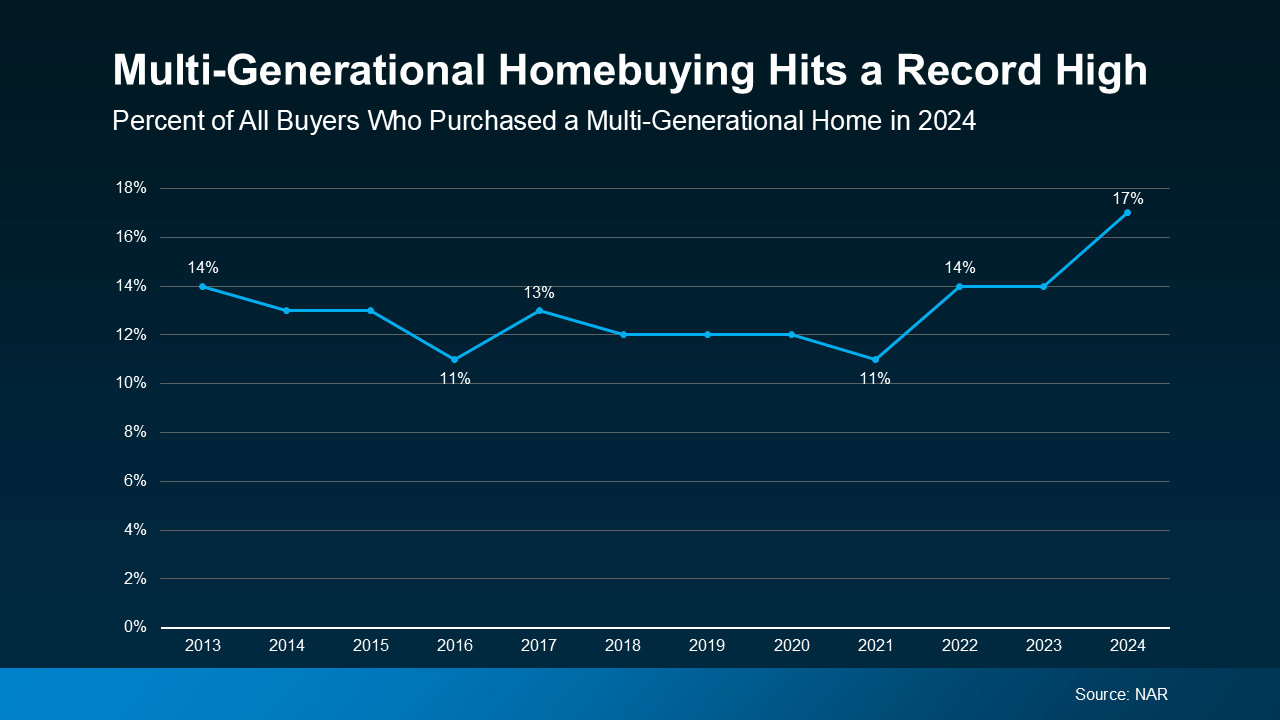 And what’s behind the increase? Affordability. NAR explains:
“In 2024, a notable 36% of homebuyers cited “cost savings” as the primary reason for purchasing a multigenerational home—a significant increase from just 15% in 2015.”
In the past, caregiving was the leading motivator – especially for those looking to support aging parents. And while that’s still important, affordability is now the #1 motivator. And with current market conditions, that’s not really a surprise.
Pooling Resources Can Help Make Homeownership Possible
With today’s home prices and mortgage rates, it can be hard for people to afford a home on their own. That’s why more families are teaming up and pooling their resources.
By combining incomes and sharing expenses like the mortgage, utility bills, and more, multi-generational living offers a way to overcome financial challenges that might otherwise put homeownership out of reach. As Rick Sharga, Founder and CEO at CJ Patrick Company, explains:
“There are a few ways to improve affordability, at least marginally. . . purchase a property with a family member — there are a growing number of multi-generational households across the country today, and affordability is one of the reasons for this.”
But this strategy doesn’t just help with affordability. It may even allow you to get a larger home than you’d qualify for on your own and that gives everyone a bit more breathing room. As Chris Berk, VP of Mortgage Insights at Veterans United, explains:
“Multigenerational homes are more than a trend: They are a meaningful solution for families looking to care for one another while making the most of their homebuying power.”
And momentum may be growing. Nearly 3 in 10 (28%) of homebuyers say they’re planning to purchase a multi-generational home.
Maybe it’s a solution that would make sense for you too. The best way to find out? Talk to a local real estate agent who can help you decide if this option would work for you.
Bottom Line
If your budget feels tight, buying a multi-generational home could be a smart solution.
Would you ever consider buying a home with a family member? Why or why not?
Connect with an agent to talk through your options.

Mortgage rates have already dropped into the upper 5s twice this year. But after just a few days, they ticked back up into the low 6% range. If you saw that and thought, “Great. I missed it,” you’re not the only one.
A lot of buyers are treating the 5s like some kind of magic number. As if moving from 6.1% to 5.99% suddenly changes everything. And from a mindset perspective, it does feel different.
But here’s the part most people don’t actually run the math on.
The Payment Difference Isn’t What You Think
Let’s say you’re looking at a $500,000 home loan. At 6.1%, generally speaking, your principal and interest payment is roughly $3,030 per month. At 5.9%, it’s about $2,966 per month.
That’s a difference of only $64 a month.
Not $300.
Not $500.
Sixty dollars.
Let that sink in for just a moment.
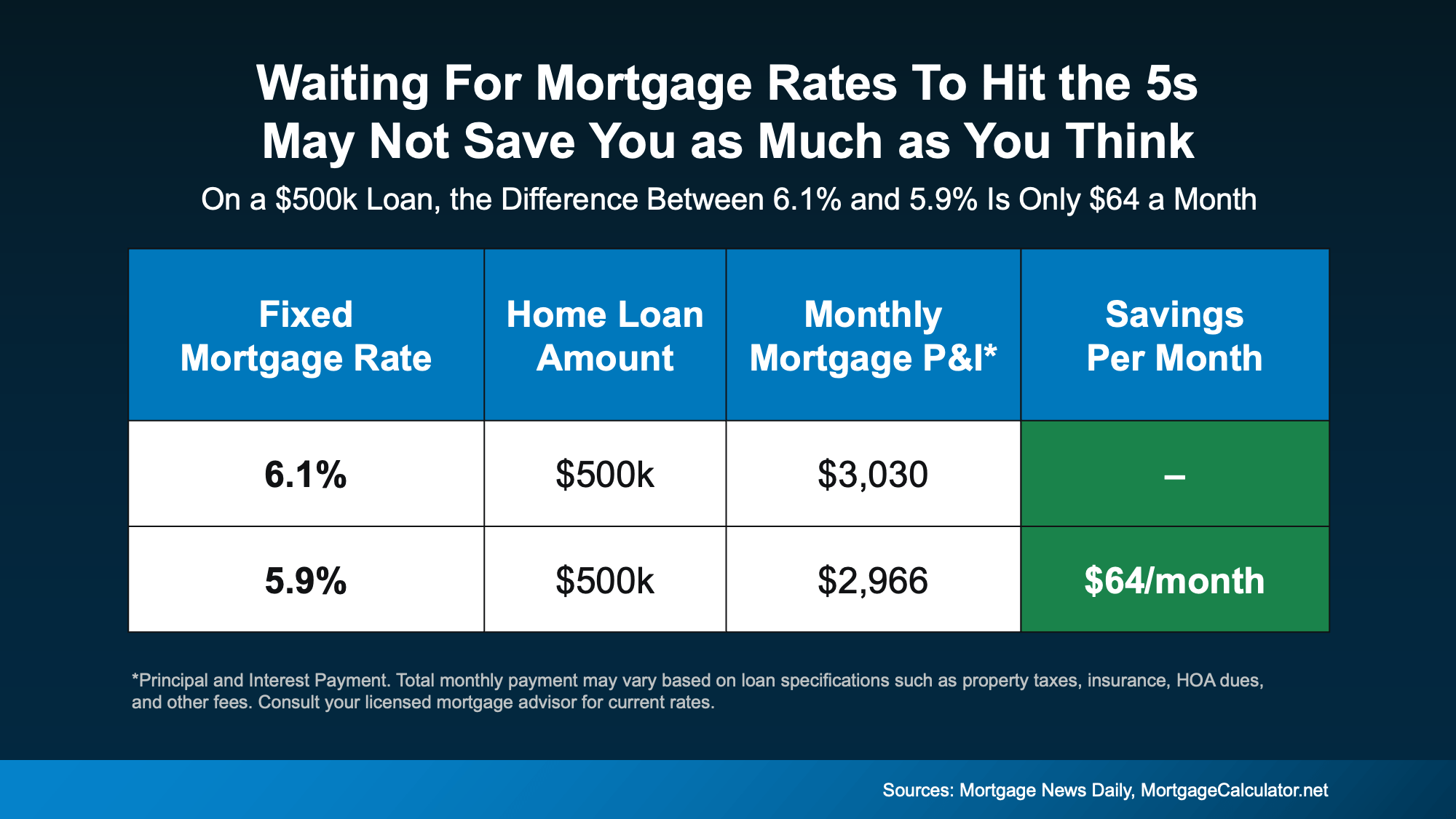 Yes, over time that $64 a month can add up. But it’s far from the dramatic swing many buyers imagine when they say they’re “waiting for the 5s.”
The psychological impact of seeing a 5 in front of your rate can feel big. The financial impact? It might be something you don’t even notice when it’s all said and done.
Experts Aren’t Predicting a Big Drop
Another important piece to think about: most housing economists aren’t forecasting a long-term return to 5% territory anytime soon.
While rates will move up and down, likely hitting the high 5s here and there, the broader expectation is for mortgage rates to hover in the low 6% range this year, not stay in the 5’s or decline much more.
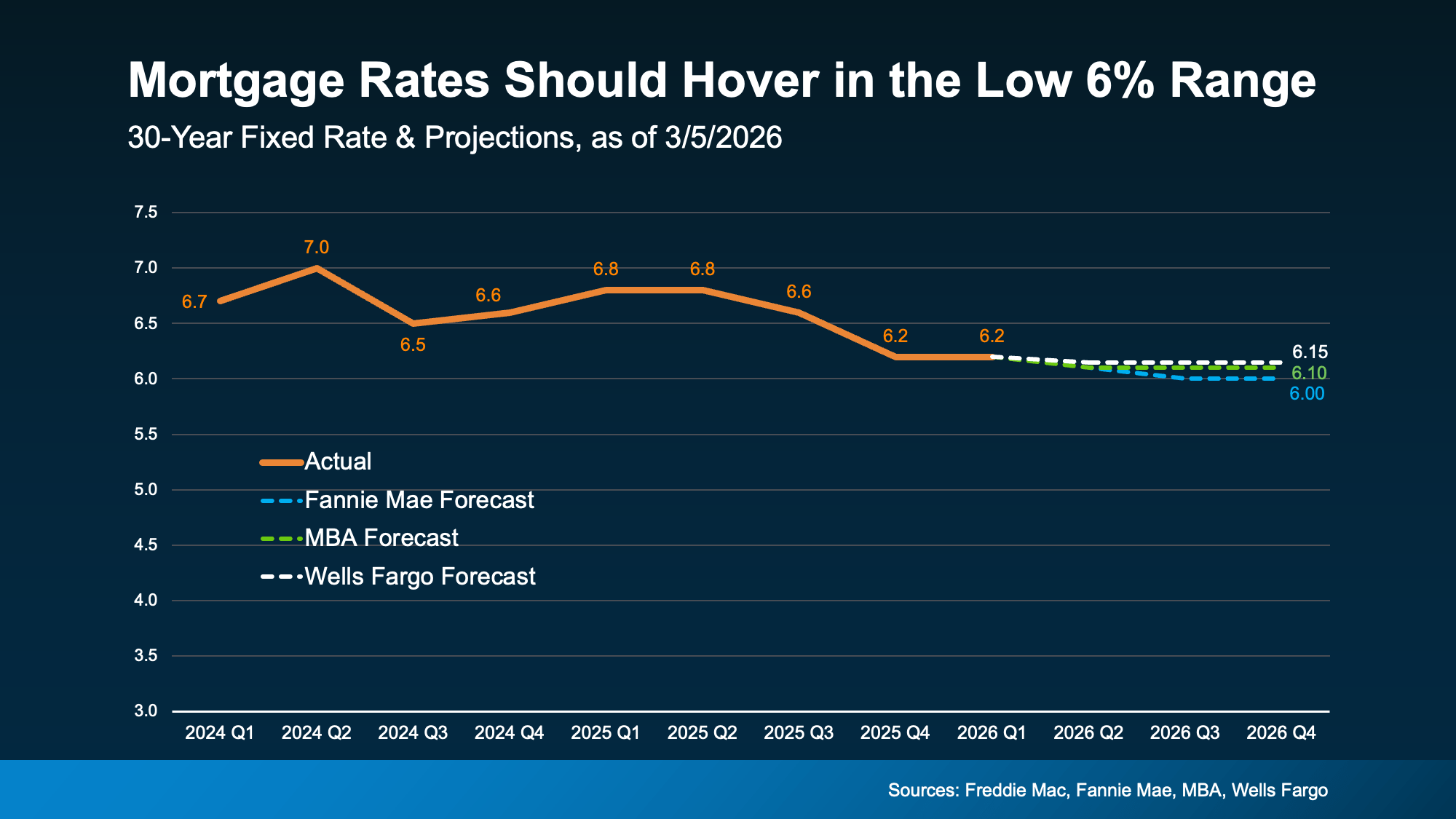 While it certainly could happen, the reality is, waiting for a deep drop may not deliver the payoff you’re hoping for, if you’re holding out
The Bigger Question to Ask
Instead of asking, “Did I miss the 5s?” A better question is: “Does today’s payment work for me?”
If the monthly payment fits comfortably in your budget, and you’ve found a home that meets your needs, the difference between 6.1% and 5.9% likely isn’t the deciding factor. It might be one of them, but it shouldn’t be everything.
And remember, mortgage rates aren’t permanent. If they drop meaningfully later, refinancing is always an option. But you can’t refinance a home you didn’t buy.
Waiting Might Feel Safe, But It Isn’t Always Strategic
It’s natural to want the best possible rate. Everyone does. But sometimes buyers overestimate how much a rate in the high 5s will change things in today’s market.
Don’t miss the fact that rates have already come down. A year ago, they were in the 7s. Now? They’re hovering in the low 6s. And for a lot of people, that percentage point difference that’s already here is the real game changer.
If you paused your plans when rates were higher, now may be the right time to re-run your numbers. Not because rates are “perfect.” But because the monthly payment math might work better than you think, even with rates in the low 6s.
Before assuming you’ve missed your moment, take another look at the numbers.
You may find it never disappeared.
Bottom Line
If you’ve been sitting on the sidelines waiting for that magic five number for rates, that strategy may not pay off as much as you’d expect.
Connect with an agent or lender so you can double check the math at your price point. You may realize payments are already within your range.

Renting can feel like the easier choice right now. There’s no big down payment. No dealing with surprise repairs. And no long-term commitment.
But then your rent goes up again. And again. And suddenly the thing that seemed flexible starts looking… expensive, especially considering you’re not building any equity. And once that happens, it’s easy to feel a little trapped in the cycle.
That’s because there’s so much chatter today about how buying a home isn’t affordable. But the truth is, the math may work out better than you’d expect based on what’s changed recently.
Buying Is More Affordable Than Renting in Many Areas
In a lot of places today, owning a home actually costs less each month than renting a 3-bedroom home. And recent data from ATTOM shows that’s true in nearly 58% of counties across the U.S. (see chart below).
And that’s after you factor in things like insurance and typical maintenance costs.
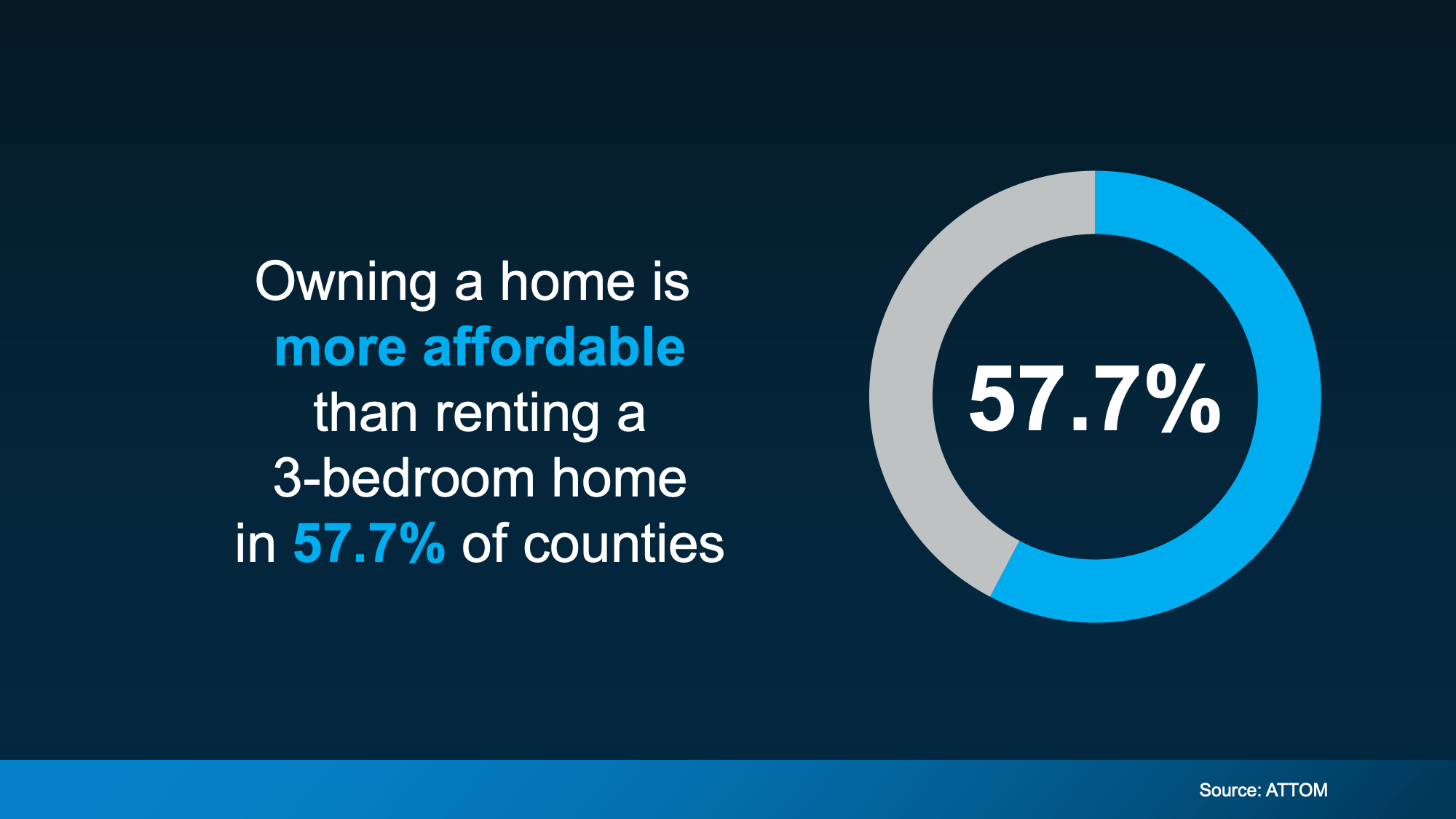 In other words, even though it may feel like a bit of a shock, the numbers show rent often stretches monthly budgets more than owning does. That’s thanks to slower home price growth, more homes for sale, and monthly mortgage payments starting to ease as rates come down.
Affordability Still Varies by Region
Now, even though nationally the balance has shifted, that doesn’t mean buying is more affordable in every market or for every renter.
While buying is more affordable than renting in nearly 58% of counties nationwide, that share looks different depending on your region (see graph below):
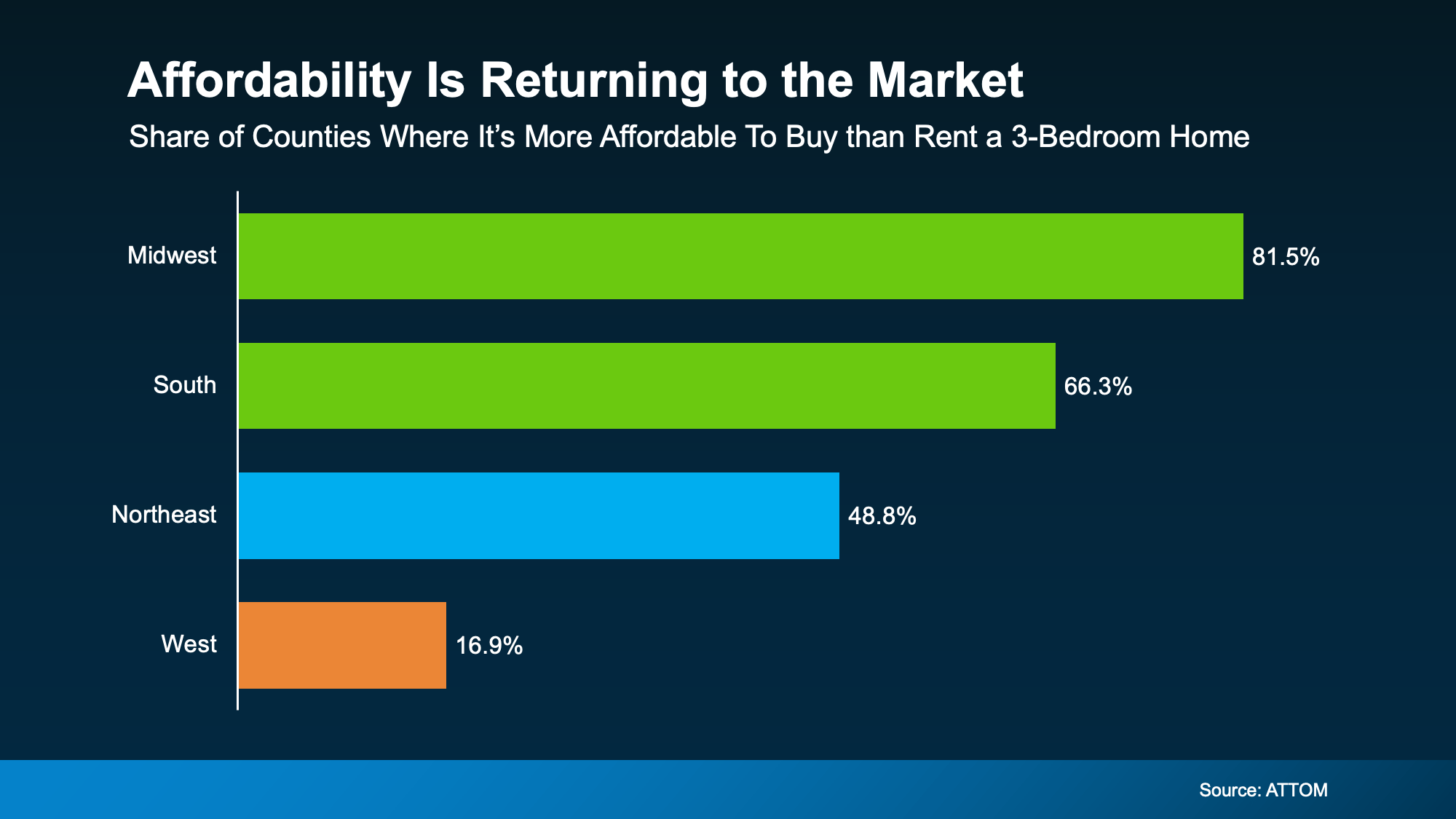
The biggest improvement is happening in the Midwest and South. But if you’re living in the West, things could still feel tight.
The takeaway? How affordable buying is really depends on where you live. And the only way to know how this plays out where you live is to look at the numbers locally.
So, What’s Still Holding Buyers Back?
Maybe you’re nodding along so far but thinking, “Okay, but I still can’t afford the upfront costs.” If that’s your reaction, you’re not the only one.
For many renters, the biggest hurdle isn’t the monthly payment alone. It’s the down payment, too.
But you’re not out of options. Here’s the part most people don’t hear enough about: there are thousands of down payment assistance programs available across the country, and many buyers qualify without realizing it.
And the average benefit? Roughly $18,000.
That kind of support can help cover part of your down payment or closing costs, which means you may not need to save nearly as much as you think to get started.
When you combine that with monthly payments that may work better than expected, especially as rates continue to ease and prices cool, buying may feel far more realistic than it looks at first glance.
Bottom Line
The point isn’t that everyone should rush out and buy a home tomorrow.
It’s that renting isn’t always the more affordable option people assume it is – and buying may be more realistic than it feels once you look at the full picture.
If you’re renting and feeling stuck in the “someday” loop, it might be worth a simple conversation with a local real estate agent or lender. Just a chance to see what’s possible and whether it makes sense for you.
Buying your first home can feel frustrating when the numbers don’t line up the way you expected. You may know you’re ready but finding something that fits your life and your budget is the hard part.
That’s where townhomes come in.
Townhomes are becoming a bigger part of today’s housing supply, and that shift is opening doors for first-time buyers in a way we haven’t seen in years. That’s because they offer a more realistic path to step into homeownership without stretching yourself too thin, especially in a market where affordability can still feel tight.
There Are More Townhomes To Choose From
Builders are building more townhomes than they have in decades. In fact, when you look at data from the National Association of Home Builders (NAHB), nearly 1 in 5 new single-family homes being built today is a townhome. That’s the highest share on record (see graph below):
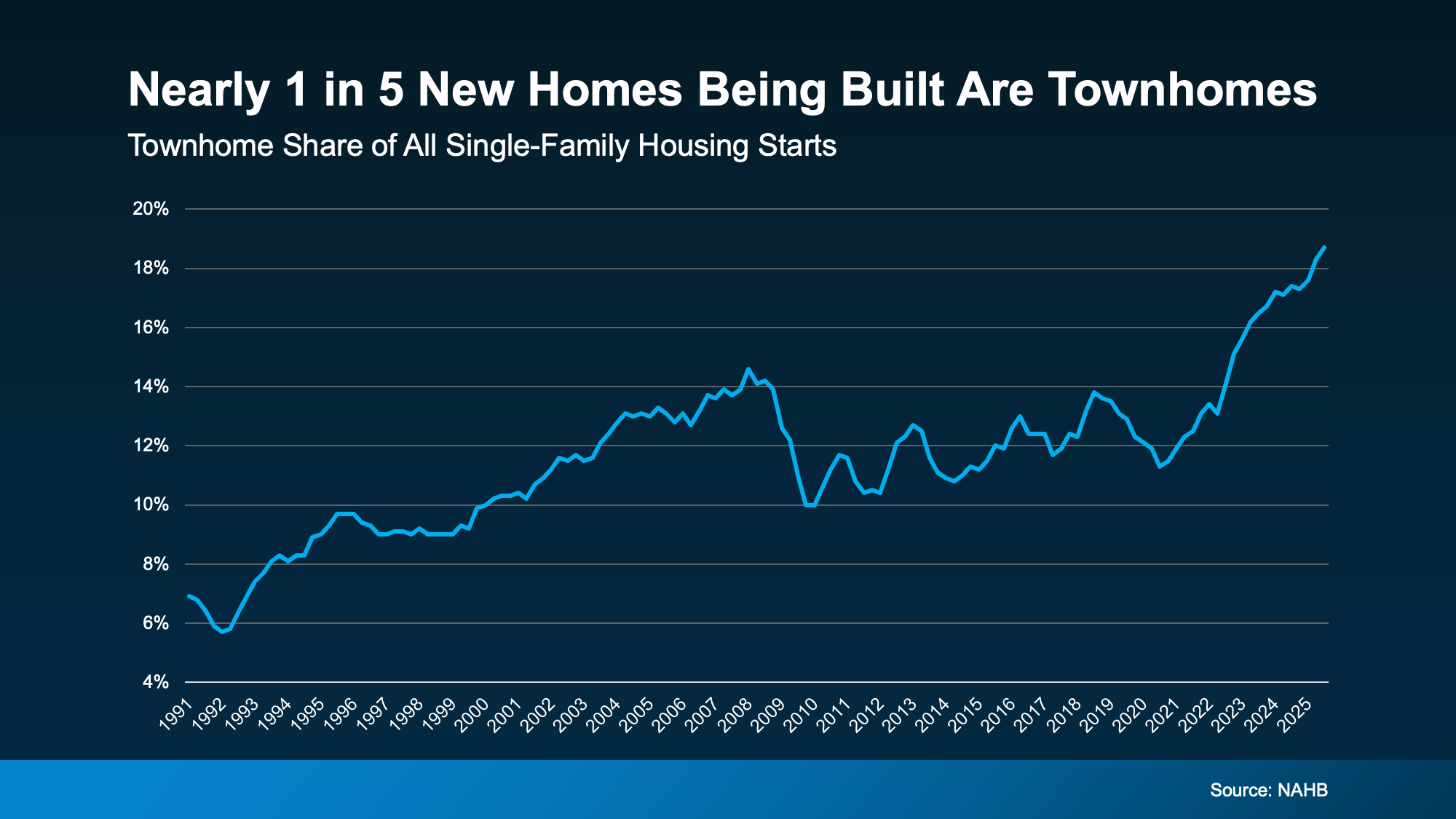
To put that in perspective, just a decade ago, townhomes made up closer to 1 in 10 new construction homes.
That gives today’s buyers far more townhome options than they had in the past. And that’s a really good thing.
Townhomes are one of the best ways for first-time buyers to finally get their foot in the door. And seeing that there’s more available for sale means one thing: you may have more opportunity to break into the market than you think.
Here’s why they’re such a popular choice for buyers like you.
Townhomes Tend To Be More Affordable
While prices vary by market, Redfin data shows townhomes are typically priced lower than detached single-family homes nationally. And that gap has grown in recent years as the supply of this type of home has grown too (see graph below):
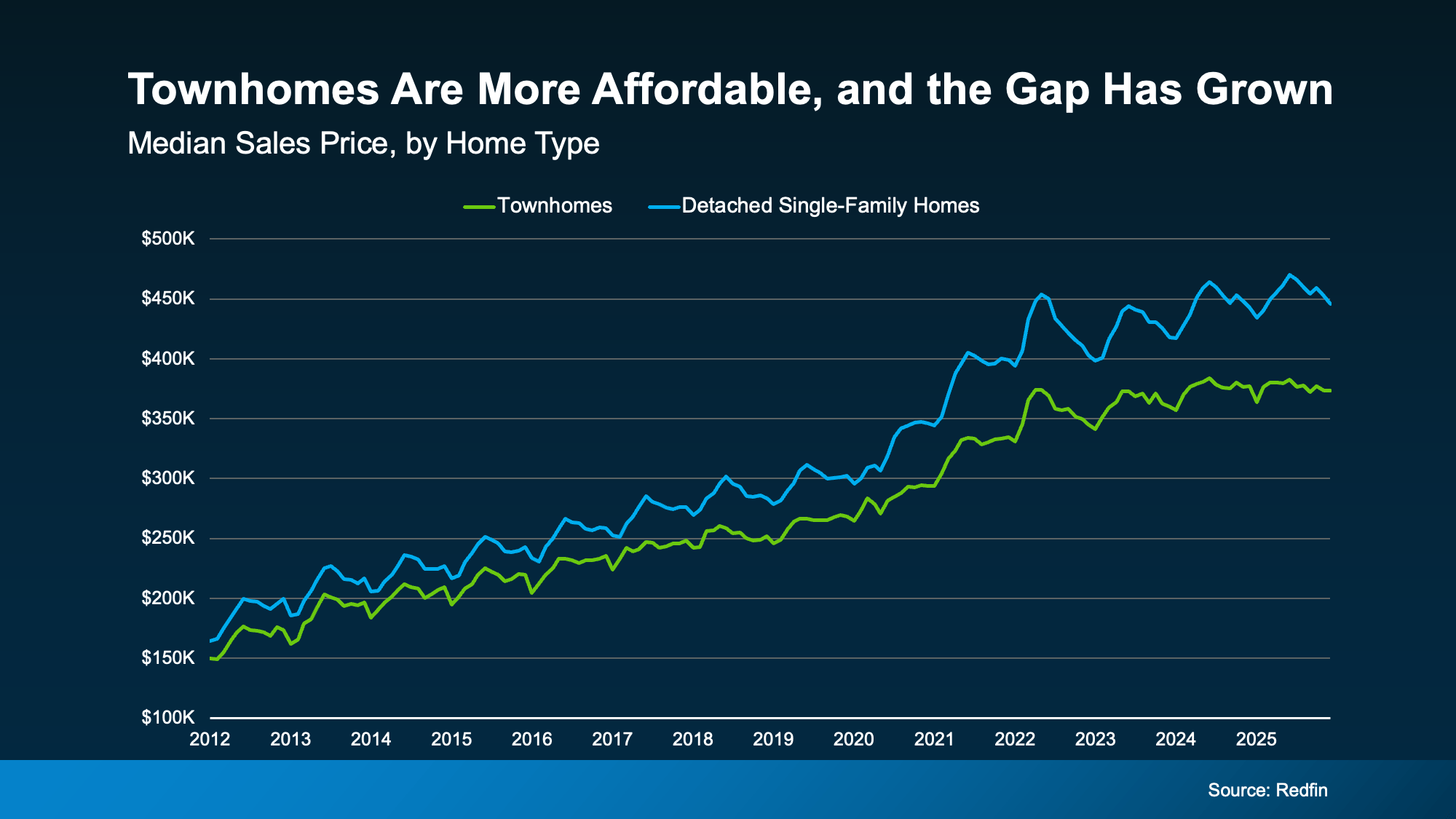 There are two main reasons you may find a better deal on a townhome today.
Reason #1: Size
Townhomes are usually smaller by design. Most modern townhomes fall in the 1,300–1,500 square foot range, which helps keep prices, and monthly payments, lower. Basically, it works like this. Since they usually have a smaller footprint, they’re cheaper to build, and that makes them less expensive to buy, too. Ali Wolf, Chief Economist at NewHomeSource, explains how this helps buyers:
“With the high cost of housing across the country, townhomes have emerged as a vital, more accessible entry point into homeownership. They are often priced lower than detached houses, offering buyers – especially first-timers, young professionals, and those downsizing – the chance to build equity without breaking the bank.”
Reason #2: Builder Motivation
And here’s another thing working in your favor. With more inventory than in recent years, homebuilders are motivated to sell what they’ve already built.
So, many may be more willing to negotiate, whether that means price flexibility, closing cost help, or potentially throwing in upgrades. According to the National Association of Realtors (NAR):
“. . . home builders say they’re ready to attract more first-time home buyers. They’re responding to affordability pressures through lower cost homes and builder incentives. About 40% of builders cut prices on newly built homes at the end of last year . . . Roughly two-thirds of builders also offered additional incentives, like mortgage rate buydowns.”
Bottom Line
If buying your first home feels just out of reach, the right option might not be a different timeline. It might be a different type of home.
If you want to talk through whether a townhome makes sense for you or see what’s available in your area, connect with a local real estate agent.

The #1 Reason Buyers Walk Away (And How To Get Ahead of It)

One Key Sign We’re Not Headed for a Wave of Foreclosures

If Your House Isn’t Getting Offers, Read This.



-

 Affordability3 weeks ago
Renting vs. Buying: The Numbers Might Surprise You
-
 For Sellers4 weeks ago
The Real Reason Home Sales Slowed in January. And It’s Not What You Think.
-

 For Sellers3 weeks ago
Top Mistakes Homeowners Are Making in 2026 (And How To Avoid Them)
-

 Equity3 weeks ago
How Your Equity Could Help Younger Generations Buy a Home
-
 For Buyers4 weeks ago
Move-Up Buyers Are Choosing New Construction
-

 Agent Value4 weeks ago
The Price You Set Can Make (or Break) Your Sale
-

 Downsize2 weeks ago
The Hidden Advantage Repeat Buyers Have Right Now
-

 For Sellers2 weeks ago
Spring Sellers Have an Edge. Here’s Why.
You must be logged in to post a comment Login