


Buying Tips
Builder Incentives Reach 5-Year High

Even with more homes on the market right now, some buyers are still having a tough time finding the right one at the right price. Maybe the layout feels off. Maybe it still needs some updating. Or maybe it’s just more of the same.
That’s why more buyers are turning to new construction – and finding some of the best deals available today.
Why? Today, many builders have more homes that are finished and sitting on the market than normal. And that means they’re motivated to sell. They’re running a business, and they don’t want to sit on their inventory. They want to sell it before they build more homes. And that can definitely work in your favor.
As Lance Lambert, Co-Founder of ResiClub, puts it:
“In housing markets where unsold completed inventory has built up, many homebuilders have pulled back on their spec builds—and many are doing bigger incentives or outright price cuts to move unsold inventory.”
Incentives Are the Highest They’ve Been in 5 Years
Data from the National Association of Home Builders (NAHB) shows 66% of builders offered sales incentives in August. That’s the peak so far this year, and the highest percentage we’ve seen in 5 years.
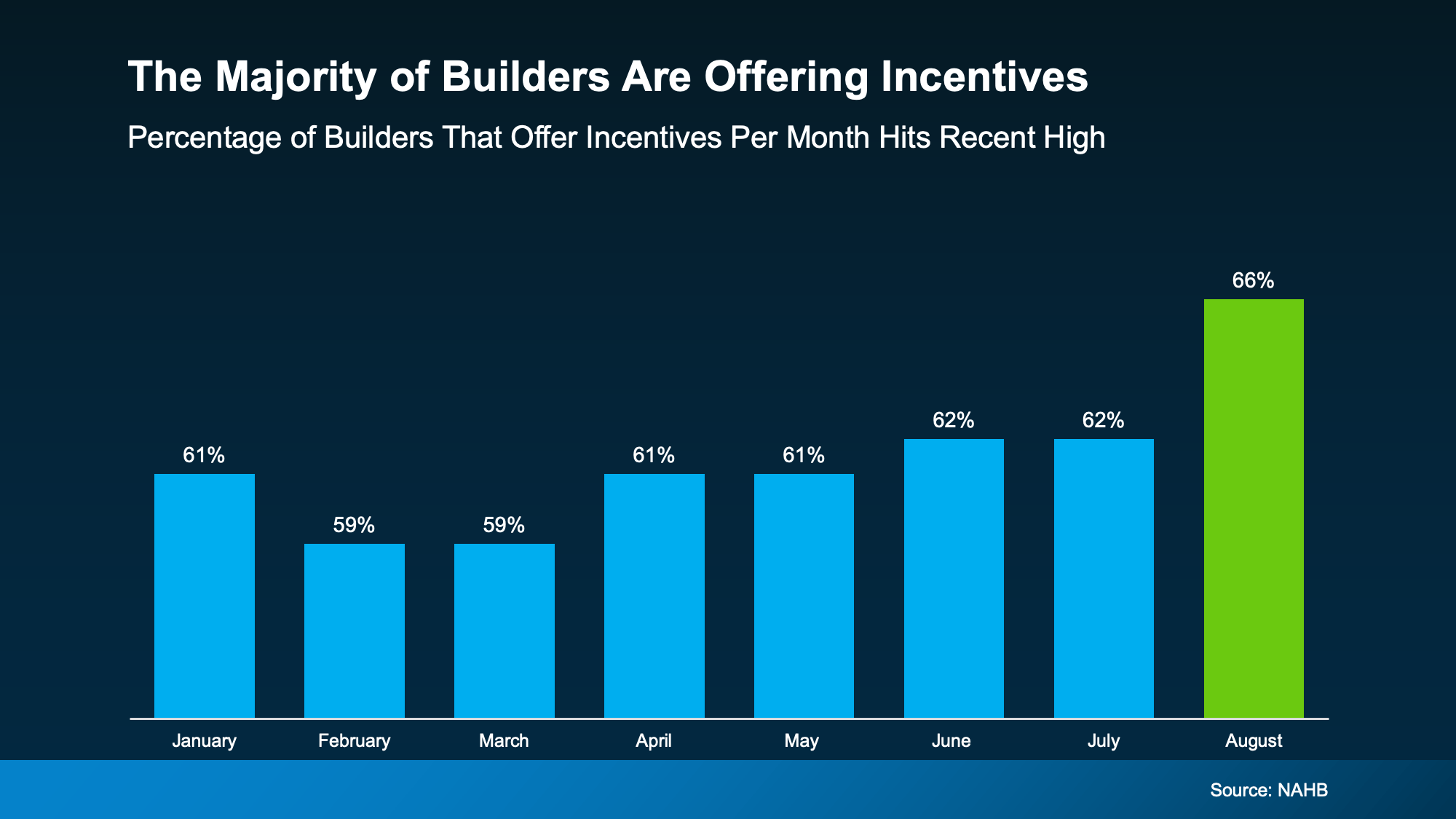 That means 2 out of every 3 builders are offering something extra to get deals done. And when builders throw in incentives, it’s the buyers like you who win.
Price Cuts Are Back on the Table
One of the most common incentives they’re offering right now is adjusting the price. According to NAHB, almost 40% of builders are doing price cuts (see graph below):
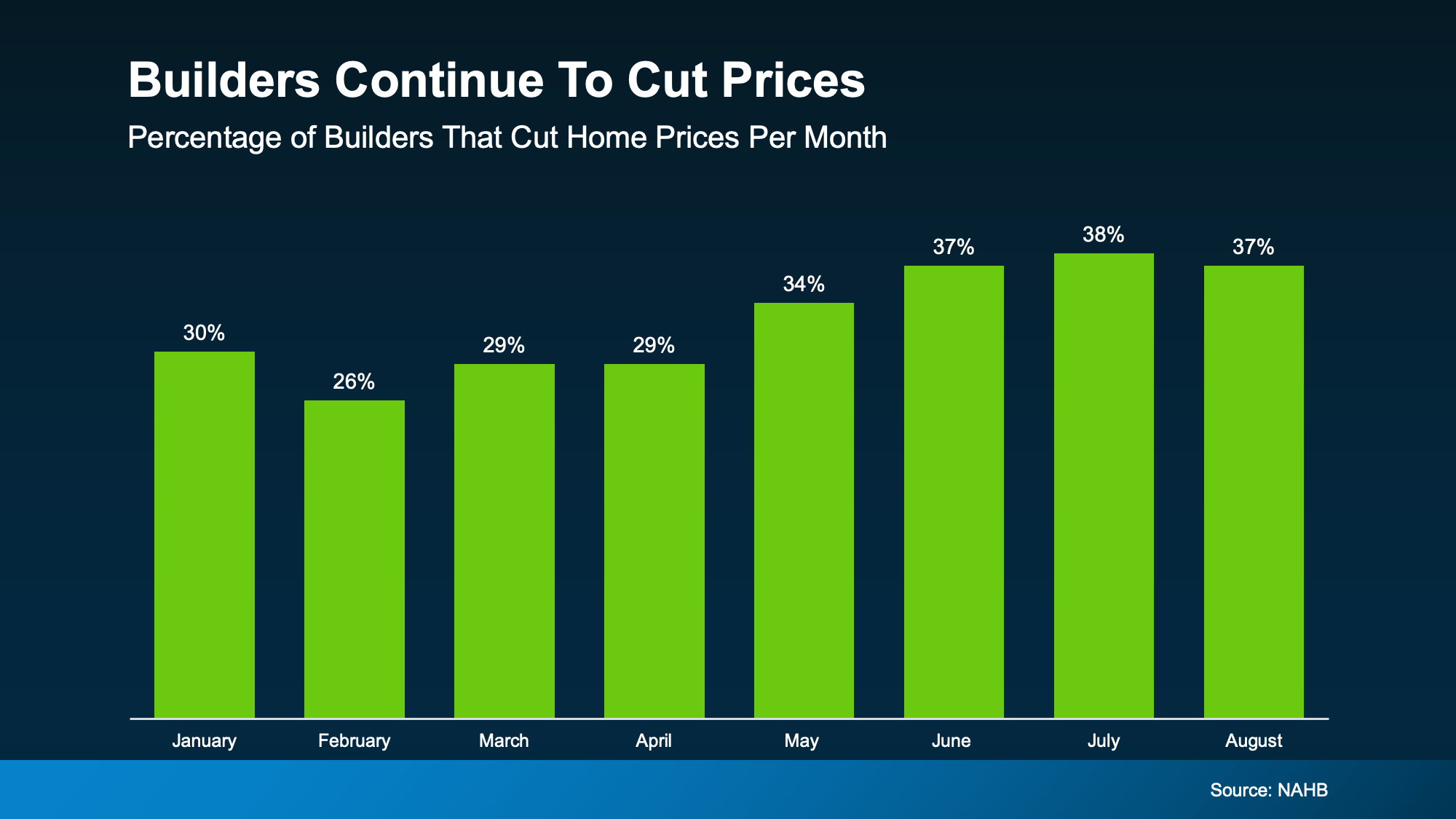 On average they’re taking off about 5% off the purchase price of the house. For a buyer, 5% could be the difference between reluctantly settling and finally getting a home that works for you.
Take a $500,000 house as an example. If builders reduce the price by 5%, you’re saving $25,000.
And even if the builder you’re interested in won’t budge on price, they’ve got plenty of other levers to pull. As Realtor.com explains:
“. . . there are deals to be found in the market for new homes, with builders increasingly willing to negotiate on price or offer incentives such as rate buydowns and closing cost assistance.”
Why This Matters for You
As a buyer, you probably have a clear vision for your ideal home. Because you’re not just buying any house. You’re buying your house. The one with the space, features, and lifestyle you’ve been hoping for. New builds can check those boxes since they usually have:
- Bigger kitchens and open layouts
- Energy efficiency (hello lower utility bills)
- Smart-home upgrades
- Fewer repair headaches on day one
And today’s incentives make buying a new home more attainable than it’s been in years.
One Word of Advice: Don’t Go At It Alone
If you want to take advantage of this opportunity, just be sure to use your own agent. Builder reps aren’t there to save you money. They protect the builder’s bottom line. That’s why you need to bring your agent with you. Your agent will:
- Cut through the sales pitch and run the cold hard numbers
- Spot which incentives are actually worth it (and which ones are fluff)
- Handle negotiations so you walk away with the best deal possible
- Keep your best interest as their top priority
Bottom Line
If you’re not finding a home you love, the new home market is buzzing with opportunity. With record-high incentives, price cuts in play, and builders itching to move inventory, this is the best time in years to buy new construction.
Curious how far today’s incentives could stretch your budget? Connect with an agent to see what builders are offering in your area.


Mortgage rates have been volatile lately. And if you’re thinking about buying a home, that can make it harder to plan. But there are still things you can do to get the best rate possible in today’s market. It starts with having the right information.
So, what’s causing the bumps in rates? And what can you do about it? Let’s break it down.
Mortgage Rate Volatility Is Normal
Data from Freddie Mac shows the recent volatility. After trending down for well over a year, there was a rise this month (see graph below):
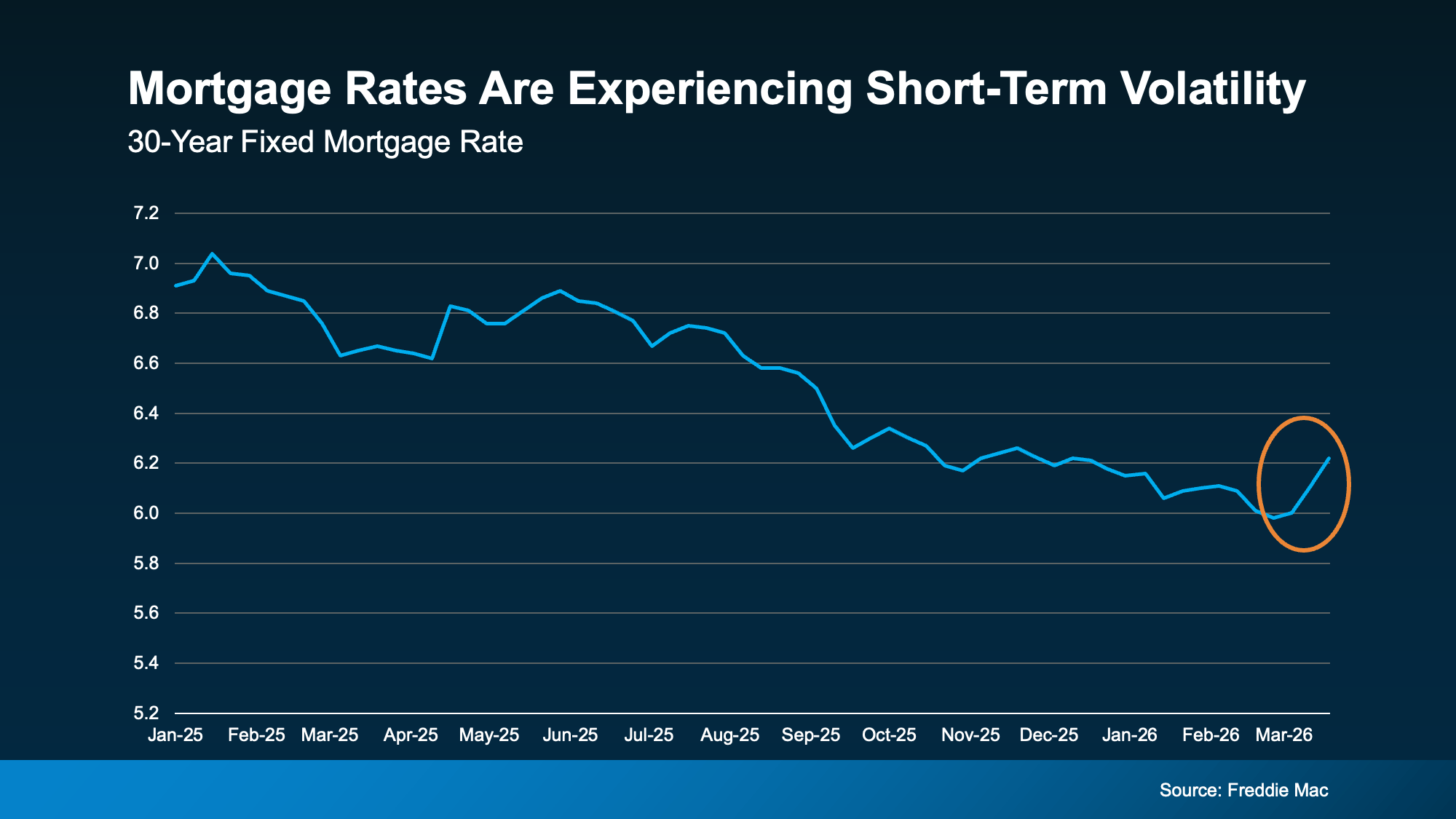
While it’s easy to be distracted by the changes, here’s what you need to remember.
It’s normal for rates to bounce around a bit here and there. For example, if you look back at the graph, you’ll see that even within the past year there have been times like this when rates inched up. We’re in one of those moments right now and you need to be aware of that.
Especially when there’s economic uncertainty or big global events happening, volatility like this is expected. As Investopedia explains:
“Mortgage rates don’t move in isolation. When global events inject uncertainty into financial markets . . . that can ripple through to borrowing . . . mortgage costs can respond quickly to geopolitical developments. As long as uncertainty remains elevated, rate swings may continue.”
And that’s one of the reasons why trying to time the market isn’t a wise move.
You can’t control what happens with mortgage rates. But there are still things you can do to help you get the best rate possible in today’s market. And here’s where to focus your effort.
Your Credit Score
Your credit score plays a big role in the rate you qualify for. Even a small improvement can make a noticeable difference in your monthly payment. As Bankrate puts it:
“Your credit score is one of the most important factors lenders consider when you apply for a mortgage. Not just to qualify for the loan itself, but for the conditions: Typically, the higher your score, the lower the interest rates and better terms you’ll qualify for.”
So, make sure you do what you can to keep your credit score up. If you’re not sure what your score is or how you can improve it, talk to a trusted loan officer.
Your Loan Type
There are also different types of home loans – and each one can have unique requirements, benefits, and rates for qualified buyers. The Consumer Financial Protection Bureau (CFPB) explains:
“There are several broad categories of mortgage loans, such as conventional, FHA, USDA, and VA loans. Lenders decide which products to offer, and loan types have different eligibility requirements. Rates can be significantly different depending on what loan type you choose.”
That’s why it’s so important to explore your options with a lender. You may even want to talk to multiple lenders to see how the options vary.
Your Loan Term
The length of your loan matters too. Most lenders typically offer 15, 20, or 30-year loans. Freddie Mac offers this advice:
“When choosing the right home loan for you, it’s important to consider the loan term, which is the length of time it will take you to repay your loan before you fully own your home. Your loan term will affect your interest rate, monthly payment, and the total amount of interest you will pay over the life of the loan.”
Again, to figure out what makes the most sense for your budget and long-term goals, have a lender walk you through all your options.
Bottom Line
Thinking about buying right now? The best advice is to accept that you can’t control where rates are going to go from here.
What you can do is work with a trusted lender and take steps that’ll help you get the best rate possible.
So, if you want to move today, talk to an agent and a lender to make it happen. You just need to control the controllables and focus where it counts.


Your House Hasn’t Sold Yet. Should You Rent It Out Instead?

Before You Fall in Love with a House, Do This First.

Don’t Let Home Prices Headlines Fool You



-

 Agent Value4 weeks ago
If Your House Isn’t Getting Offers, Read This.
-

 Affordability4 weeks ago
Should You Wait for Lower Rates?
-

 For Buyers4 weeks ago
One Key Sign We’re Not Headed for a Wave of Foreclosures
-

 Agent Value3 weeks ago
The #1 Reason Buyers Walk Away (And How To Get Ahead of It)
-
 For Buyers7 days ago
Don’t Let Home Prices Headlines Fool You
-

 Affordability3 weeks ago
Affordability Has Improved in All 50 States
-

 Agent Value3 weeks ago
3 Must-Do’s for First-Time Home Buyers
-

 Equity2 weeks ago
The Remodel You’ve Been Dreaming About May Be Closer Than You Think
You must be logged in to post a comment Login