

Equity
Do You Know How Much Your House Is Really Worth?

Want to know something important you probably don’t have a professional check for you nearly as often as you should? Spoiler alert: it’s the value of your home.
Because here’s the reality. Your house is likely the biggest financial asset you have. And if you’ve lived in it for a few years or more, chances are it’s been quietly building wealth for you in the background – even if you haven’t been keeping tabs on it.
You might be surprised by just how much it’s grown, even as the market has shifted over the past few months.
What Is Home Equity?
That hidden wealth in your home is called equity. It’s the difference between what your house is worth today and what you still owe on your mortgage. Your equity grows over time as home values rise and as you make your monthly payments. Here’s an example to help you really understand how the math works.
Let’s say your house is now worth $500,000, and you have $200,000 left to pay off on your loan. That means you have $300,000 in equity. And that’s right in line with what the typical homeowner has right now.
According to Cotality, the average homeowner with a mortgage has about $302,000 in equity.
Why You Probably Have More Than You Think
Here are the two main reasons homeowners like you have near record amounts of equity right now:
1. Significant Home Price Growth. According to the Federal Housing Finance Agency (FHFA), home prices have jumped by nearly 54% nationwide over the last five years (see map below):
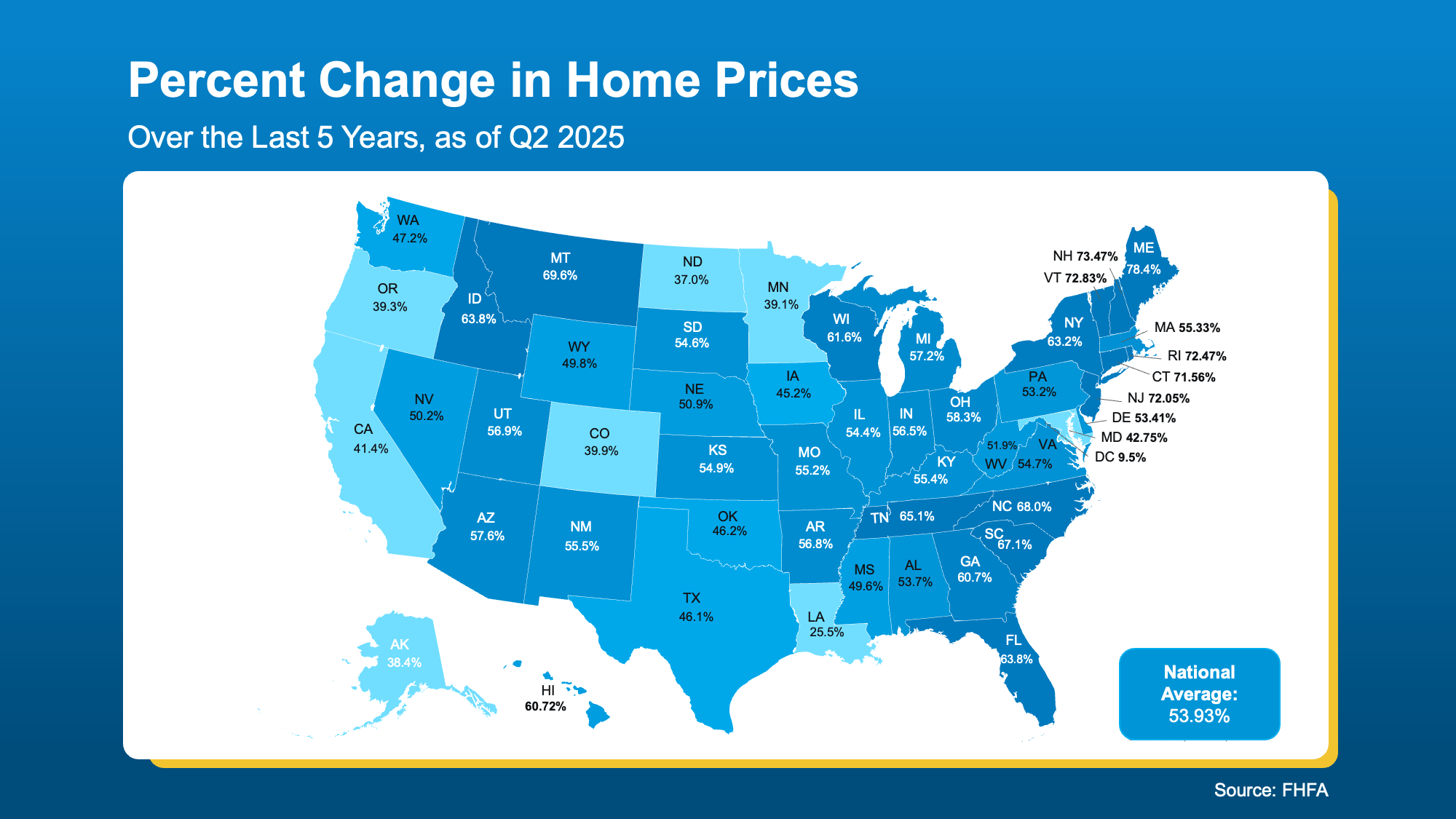 This means your house is likely worth much more now than when you first bought it, thanks to how much prices have climbed over time. And if you’re worried because you’ve heard prices are flattening or even coming down in some markets, just know if you’ve been in your house for a few years (or more) you very likely have enough equity to sell and still come out ahead.
2. People Are Living in Their Homes Longer. Data from the National Association of Realtors (NAR), shows the average homeowner stays in their home for about 10 years now (see graph below):
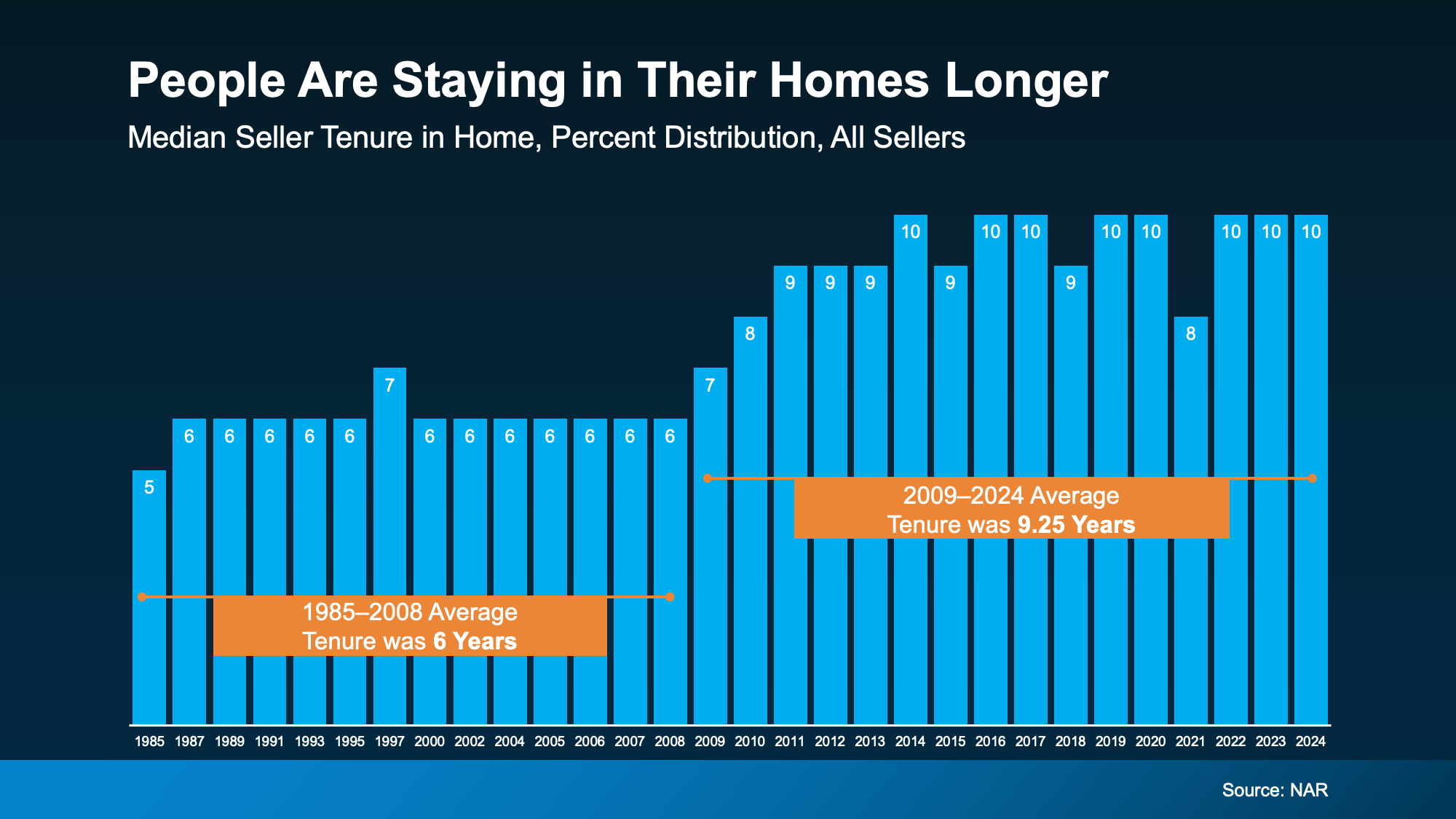 That’s longer than it used to be. And over that decade? You’ve built equity just by making your mortgage payments and riding the wave of rising home values. Because the financial side of homeownership is about playing the long game, not worrying about little ups and downs in the market here and there. And over time, that means you’re winning.
So, if you’re one of those people who’s been in their home for a bit, here’s how much the behind-the-scenes price growth has helped you out. According to NAR:
“Over the past decade, the typical homeowner has accumulated $201,600 in wealth solely from price appreciation.”
What Could You Actually Do with That Equity?
Your equity isn’t just a number. It’s a tool you can use to unlock your next big move. Depending on your goals, you could:
- Use it to help buy your next home. Your equity could help you cover the down payment on your next home. In some cases, it might even mean you can buy your next house in all cash.
- Renovate your current house to better suit your life now. And, if you’re strategic about your projects, they could add even more value to your home if you do sell later on.
- Start the business you’ve always dreamed of. Your equity could be exactly what you need for startup costs, equipment, software, or marketing. And that could help increase your earning potential, so you’re getting yet another financial boost.
Bottom Line
Chances are, your house is worth quite a bit right now. If you’re curious about the value of your home, connect with a local agent to run the numbers. That way, you’ll know what you’re working with and where you can go from here.

That kitchen you’ve been mentally redesigning…
The bathroom that really needs a refresh…
Or the outdoor space you keep saying you’ll get to someday…
What if you already have what you need to finally make it happen? Because a growing number of homeowners are realizing just that.
Homeowners are expected to spend over $522 billion on home improvements by the end of 2026 – and they’re not draining their savings accounts to get it done. Many are using their home equity.
And if you’ve owned your home for 10+ years, there’s a chance you could use your equity to fund some home upgrades too. Let’s break down what you need to know first.
What Is Equity? And How Does It Help?
Equity is the difference between what your house is worth and what you owe on your mortgage.
And according to Cotality, the average homeowner has about $313,000 worth of equity today. That’s more than enough to finally knock some projects off your list. And more people are realizing they can use that to give their home a little TLC.
Research coming out of Meridian Link says home improvements are the top thing people are using their equity for today.
Top Motivations for Equity-Based Borrowing:
- Funding home improvements (45%)
- Using it to pay down other debts / debt consolidation (16%)
- Investing in other properties (16%)
Maybe it makes sense for you to do the same. But here’s what’s important. Just because you can use your equity doesn’t mean you have to. It also doesn’t mean every project makes sense.
What Projects Are Actually Worth It?
If you’re going to go this route, you’ll want to focus on upgrades that actually pay off. A good renovation should be something that improves the value of your home. Because, even if you’re not planning to sell soon, you want to make sure you’re setting yourself up for success when you do.
And an agent is the best resource as you weigh your options. They know what other homeowners are doing and what buyers in your area like. And that can be really helpful as you narrow down your project list. As the National Association of Realtors (NAR) puts it:
“Being able to help sellers prioritize home improvements and maximize their net on the sale is a key value real estate agents offer.”
Here’s a quick rundown of the projects with the best potential to recoup your costs according to NAR (see graph below). While it’s a good starting point, just remember it can’t match the expertise an agent can provide.
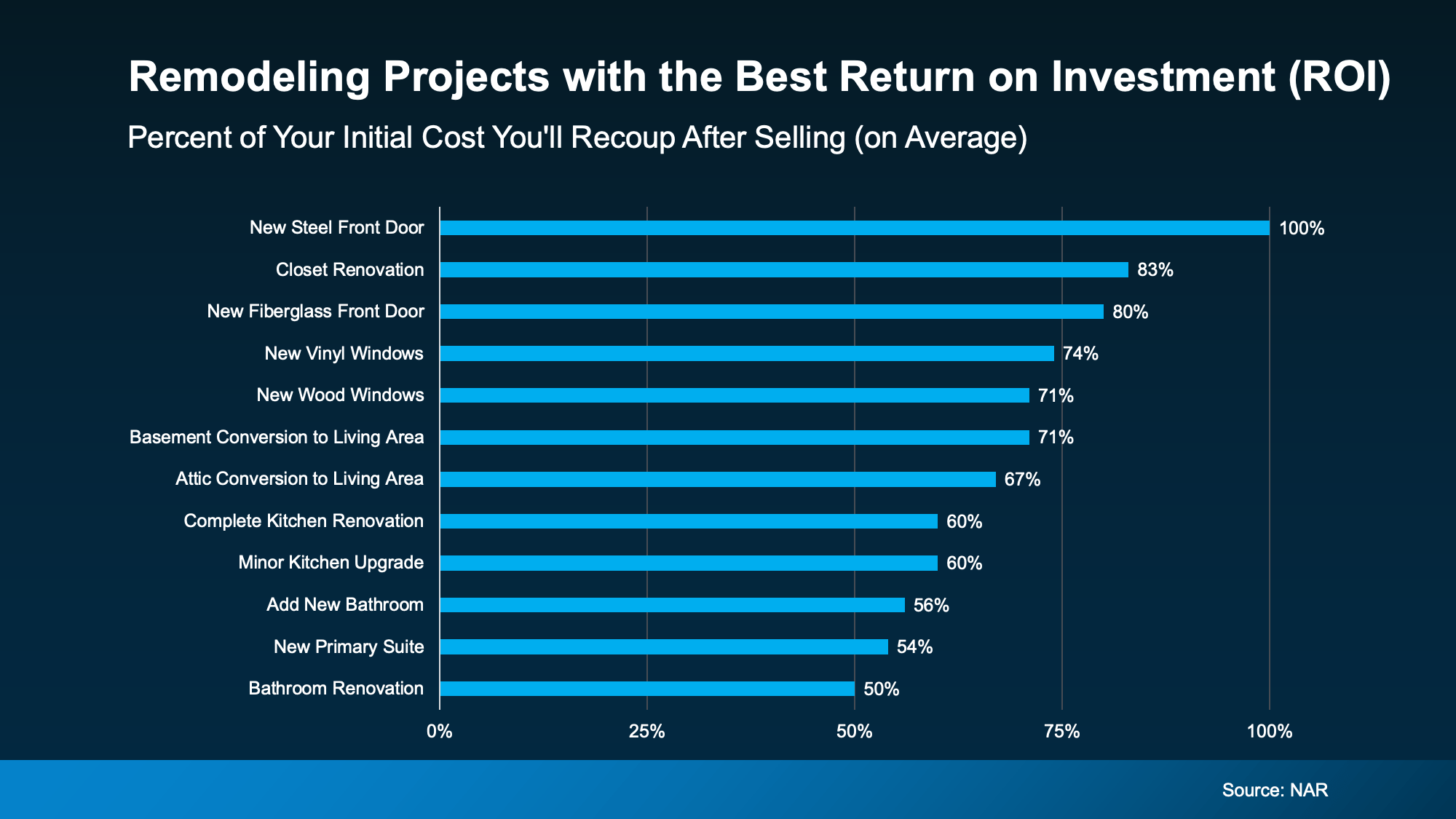 As you can see, there’s a wide range of projects on that list. Yes, some are bigger-ticket items, like kitchens or baths. But others are smaller updates with surprisingly strong ROI.
A new front door is a great project. But it’s not something to use your equity for. But revamping your kitchen? That’s where your equity can come in and lighten the load.
Where To Go from Here
Whether the project you’ve been thinking about is on this list or not, chat with an agent to make sure it’s worth the time, money, and effort before calling in any contractors.
Because the goal isn’t to do everything, it’s to invest where it counts.
And if you want to use your equity to get one of the bigger projects done, meet with a financial advisor too. Because you’ll want to make sure you’ll maintain a good loan-to-value (LTV) threshold even after using your equity. That way you have all the information you need to make your decision.
Bottom Line
Whether you’re selling next year or just giving your house some TLC, the right home improvements today can set you up for success tomorrow. And the best part? Your equity may be the key to making it happen.
What’s one upgrade you’ve been thinking about – and wondering if it’s worth it?
Have a quick conversation with an agent to find out if it’s the right decision for your home.
You’ve probably seen posts on social media talking about how “home prices are falling.” And when you see something like that, it’s normal to wonder:
Is this the start of a crash?
What does this mean for my house?
Let’s clear this up right away. This is not a crash. And your home is not suddenly losing a lot of value.
The National Story – Prices Are Still Going Up
Here’s what often gets left out of what you’re seeing online. While some markets are experiencing slight declines, they’re the minority. Most places are still seeing prices rise or at the very least, hold steady.
That’s why, at the national level, home prices are still rising, just at a slower pace. According to the National Association of Realtors (NAR):
“Home prices continued to rise in the fourth quarter of 2025. National median prices rose 1.2% year over year to $414,900.”
That’s not the rapid growth of a few years ago, but it’s not a downturn either. And just to really drive this home, here’s a look at the data from NAR at a regional level, so you can see that the negative narrative spun up online isn’t the whole truth (see graph below):
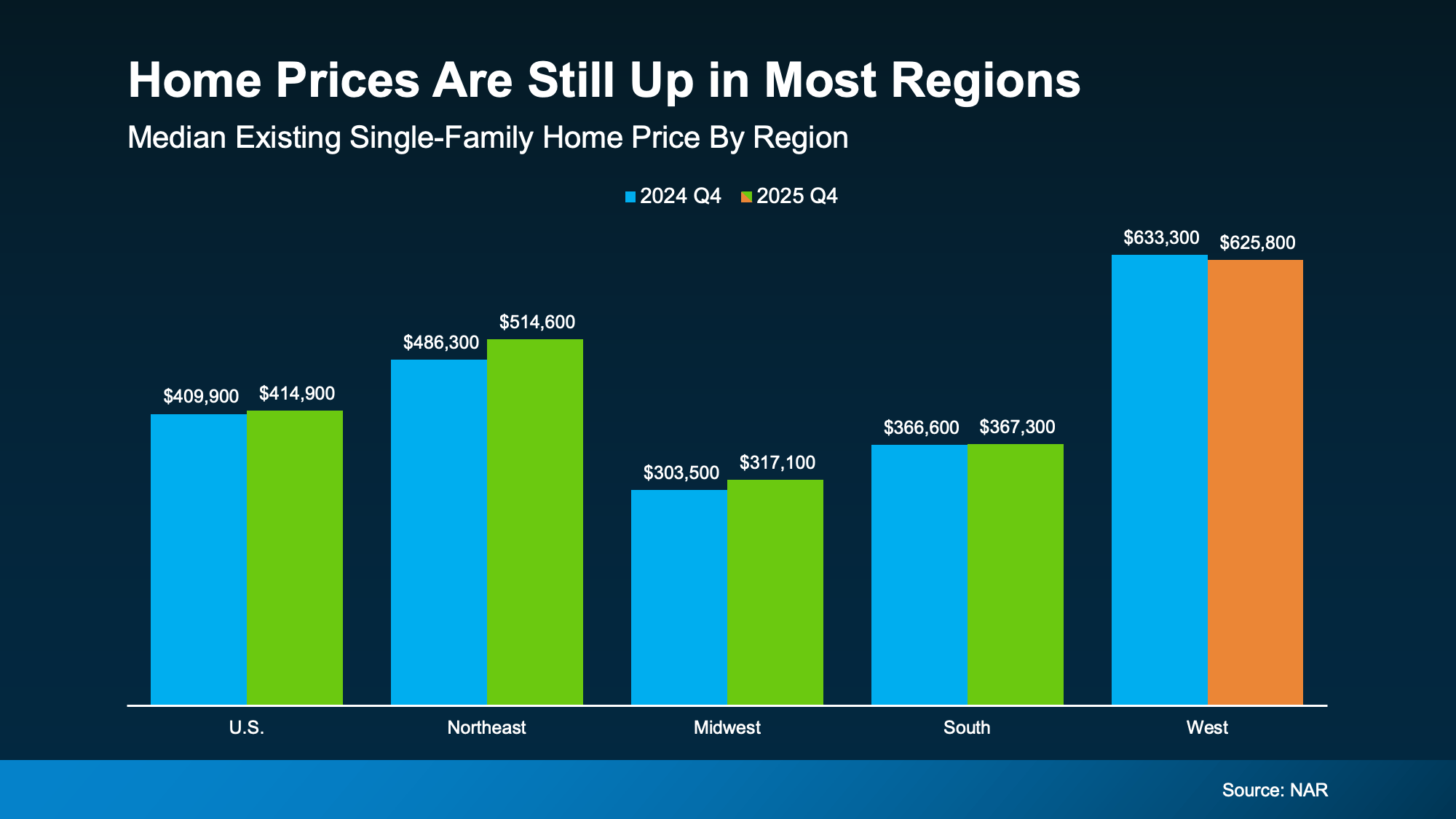 Home prices are up (or at least holding steady) in the Northeast, Midwest, and South. The West has seen some small declines in certain markets, but “small” is the key word.
There is no wave of falling prices across the country. Instead, there are just a few pockets adjusting after several years of what’s typically considered unsustainable or exponential growth.
Yes, Some Markets Have Come Down, But Look at the Bigger Picture.
Okay, but what about the places where prices have declined? According to ResiClub and Zillow, that’s not a cause for major concern. When you zoom out and look at those same markets over the past five years, the story changes (see graph below):
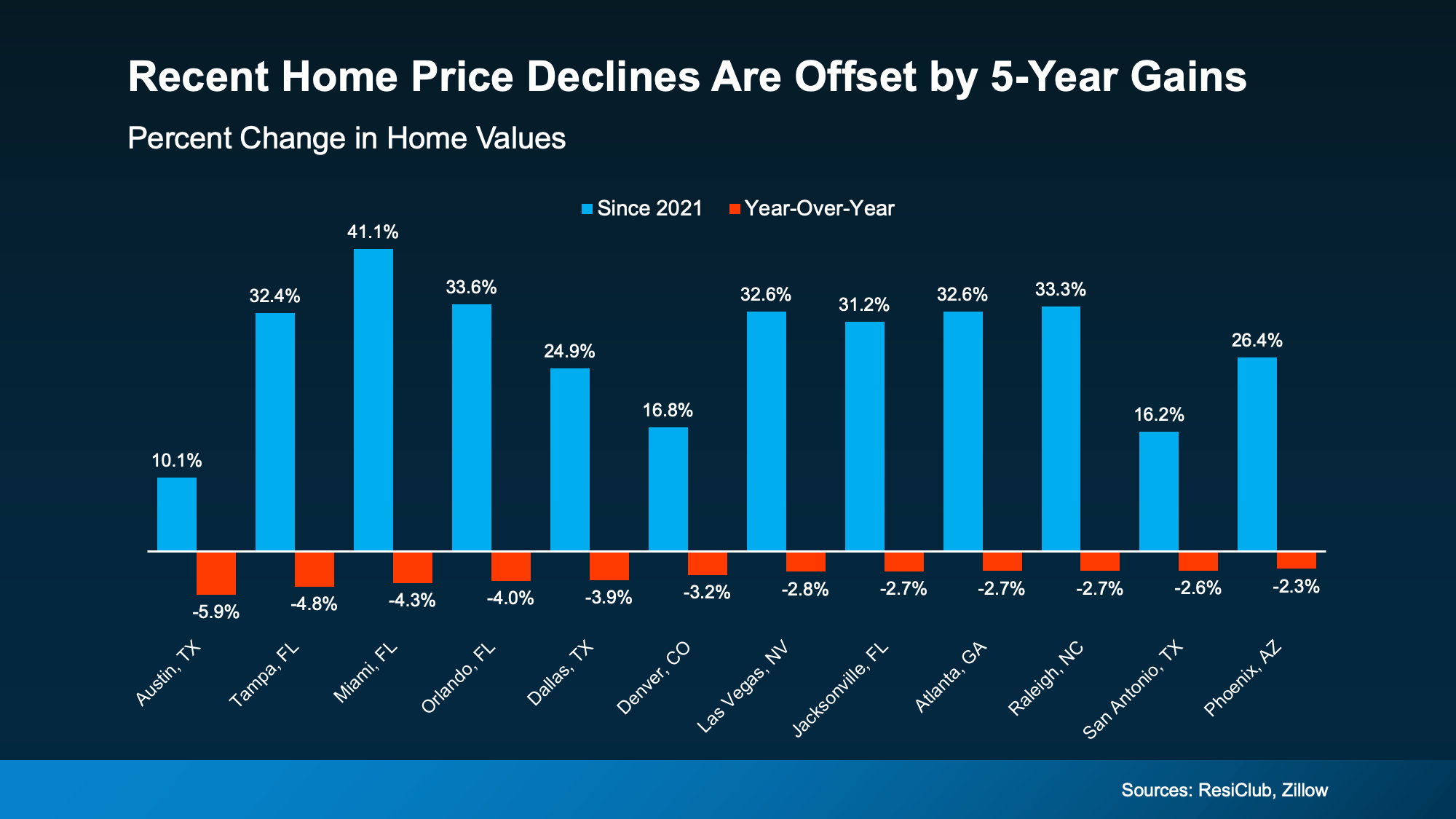 In the areas with recent declines, home values are still significantly higher than they were just five years ago. That’s a direct reflection of how much home values have gone up.
Online chatter tends to shine a spotlight on the few areas that are down. But the bigger picture shows most homeowners are still in a very strong position.
Of course, every market, and every home, is different. But broadly speaking, home values are holding steady. And this isn’t a sign of widespread trouble in the market.
Bottom Line
Despite what you may be seeing online, home prices are rising or holding steady in most parts of the country.
If you’re curious what your home is worth today, take a look at the numbers with a local real estate agent. Because context, and local expertise, matter more than what you’re seeing online.
What if you didn’t have a mortgage payment on your next house? It may sound a little unrealistic. But for a number of homeowners, it’s actually doable.
Nearly 3 in 10 homes purchased today are bought in cash, according to the National Association of Realtors (NAR). That’s far more than the pre-pandemic norm (see graph below):
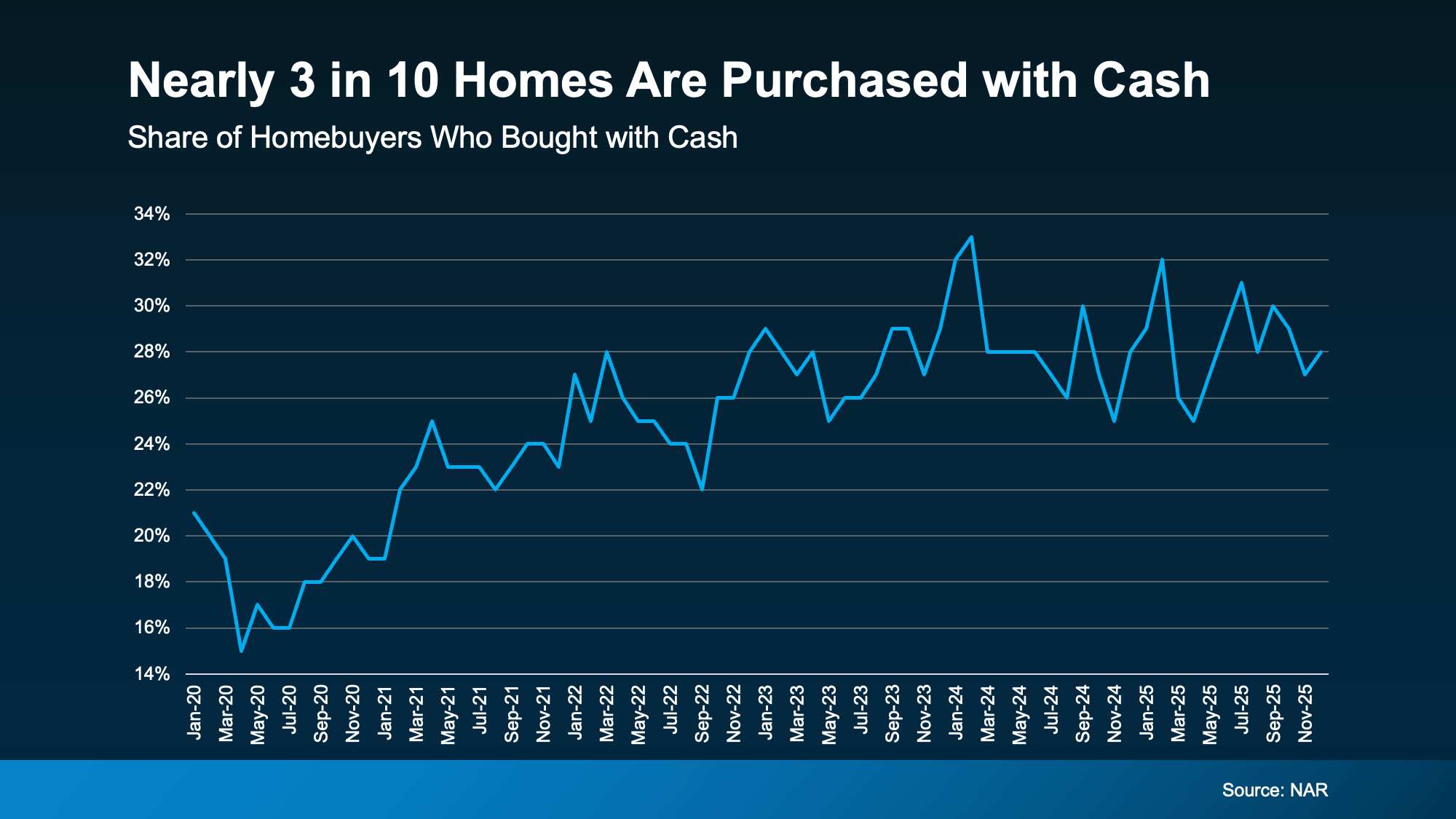 So, how are so many buyers pulling that off? The answer is simple: home equity.
Back in 2020-2021, mortgage rates and the number of homes for sale were both at all-time lows. And that combination pushed home prices up, fast.
If you owned a home during that time, it likely gained significant value – maybe even enough to buy your next house in cash. NAR explains:
“. . . rising home equity has armed many existing homeowners with the financial leverage to make cash offers, allowing them to convert years of price appreciation into immediate purchasing power.”
Here’s why you may want to go that route yourself, if you have enough equity to do it.
1. Your Offer Becomes More Attractive
Sellers value certainty. And an all-cash offer removes one of the biggest unknowns in a transaction: financing. As Rocket Mortgage explains:
“Cash offers are attractive to sellers. Sellers often prefer to work with cash buyers if they can because they don’t have to worry about a buyer’s financing falling through at the last minute.”
In many markets, an all-cash offer can give you a serious edge.
2. You Can Close Faster
And since you don’t have to worry about underwriting, lender approvals, and loan processing, the time it takes to close shrinks. Cotality puts it this way:
“Cash buyers have always enjoyed an edge over borrowers. They remove financing risk, reduce delays, and often close in days rather than weeks.”
If the owner of the house you’re buying is already under contract on their next home or they just need to move fast (like for a new job), that speed is a real draw.
3. You Won’t Have Monthly Mortgage Payments
When you buy in cash, you don’t have to finance your purchase. That means you don’t have to worry about what today’s mortgage rates are and you own the house outright from the day you close. And that’s a big deal.
No mortgage.
No monthly payment.
Full ownership.
That financial freedom opens the door for other big lifestyle benefits. Zillow explains:
“Paying in cash means you own your home outright. This eliminates the need for monthly mortgage payments, freeing up your finances for other priorities like savings, travel, or home improvements.”
4. You May Get a Better Deal
And here’s one more thing that surprises a lot of homeowners: cash buyers often pay less for the house.
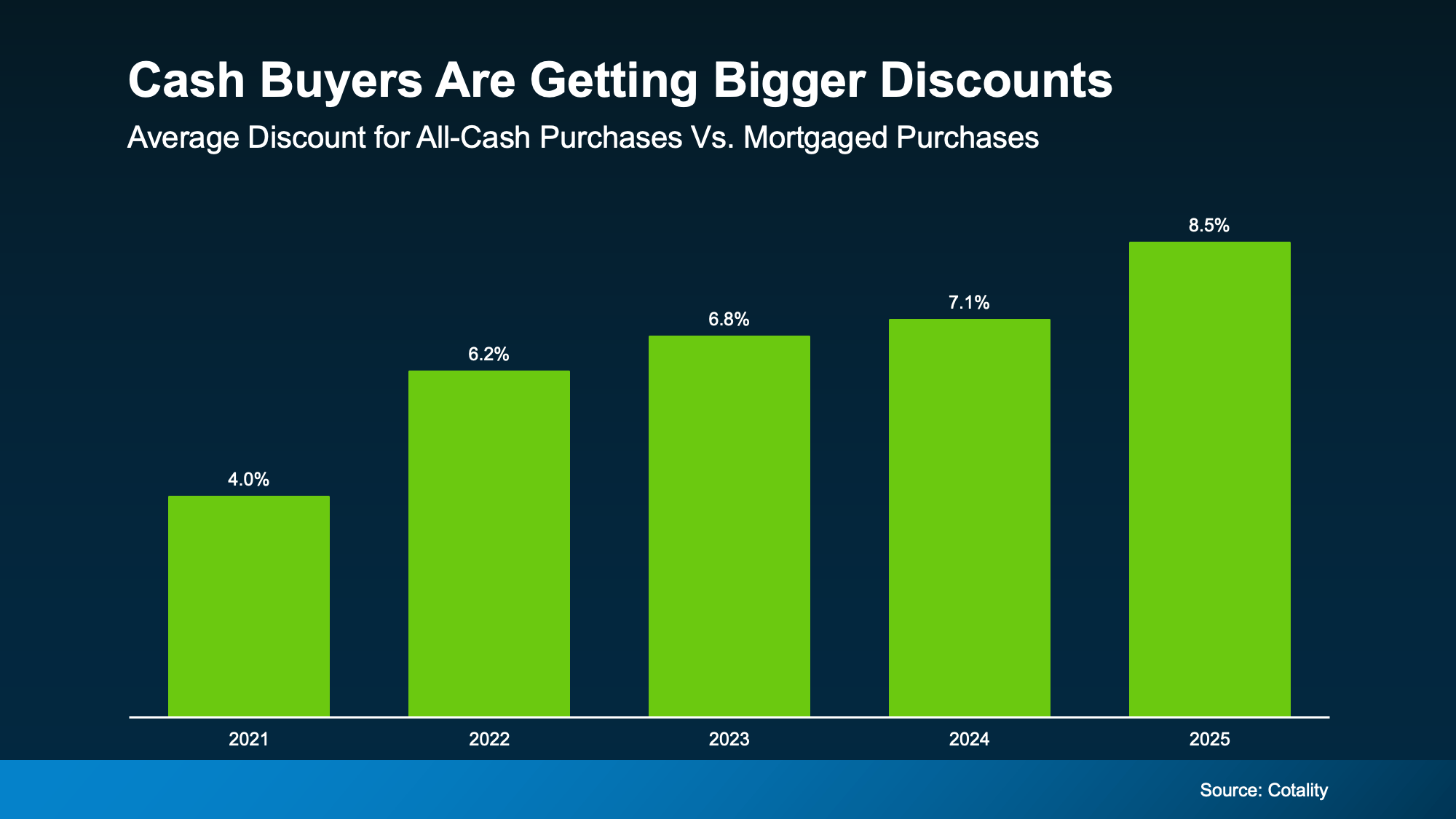
According to Cotality, all-cash buyers tend to spend roughly 9% less on the house than buyers who use a mortgage. That’s because some sellers are willing to accept lower offers to get a deal done quickly, with more certainty of closing, and fewer financing hoops to jump through. As Cotality explains:
“From a seller’s point of view, a lower but reliable offer can feel preferable to a higher one that may collapse weeks later.”
And that advantage grows with each passing year (see graph below):
 Is an All-Cash Move Realistic for You?
Not every homeowner will buy their next house outright in cash. And that’s okay.
But the bigger takeaway is this: the equity you’ve built may give you more options than you think.
Whether that means downsizing and eliminating a mortgage entirely, or just relocating with stronger negotiating power, your current house may be what makes it possible.
Bottom Line
Before assuming you’ll need another traditional mortgage, it’s worth asking one simple question: How much equity do you really have? Because the answer might change what you thought your next move could look like.
Curious what your home equity could do for you? Ask a local real estate agent to run the numbers and see what kind of buying power you’re really sitting on.

You Can’t Control What’s Happening with Mortgage Rates. But You Can Control This.

The Remodel You’ve Been Dreaming About May Be Closer Than You Think

Affordability Has Improved in All 50 States



-

 Affordability4 weeks ago
Renting vs. Buying: The Numbers Might Surprise You
-

 For Sellers4 weeks ago
Top Mistakes Homeowners Are Making in 2026 (And How To Avoid Them)
-

 For Sellers3 weeks ago
Spring Sellers Have an Edge. Here’s Why.
-
 Downsize3 weeks ago
The Hidden Advantage Repeat Buyers Have Right Now
-

 Equity3 weeks ago
Are Home Prices Dropping? Here’s the Real Story.
-

 Agent Value2 weeks ago
If Your House Isn’t Getting Offers, Read This.
-

 Affordability2 weeks ago
Should You Wait for Lower Rates?
-
 For Buyers2 weeks ago
One Key Sign We’re Not Headed for a Wave of Foreclosures
You must be logged in to post a comment Login