


Inventory
Are Investors Actually Buying Up All the Homes?

Are you trying to buy a home but you feel like you’re up against deep-pocketed Wall Street investors snatching up everything in sight? Many people believe mega investors are driving up prices and buying up all the homes for sale, and that’s making it hard for regular buyers like you to compete.
But here’s the truth. Investor purchases are actually on the decline, and the big players aren’t nearly as active as you might think. Let’s dive into the facts and put this myth to rest.
Most Investors Are Small, Not Mega Investors
A common misconception is that massive institutional investors are dominating the market. In reality, that’s not the case. The Mortgage Reports explains:
“On average, small investors account for around 18% of the market, while mega investors represent only about 1%.”
Most real estate investors are mom-and-pop investors who own just a few properties — not large corporations buying up entire neighborhoods. They’re people like your neighbors who have another home they’re renting out or a vacation getaway.
Investor Home Purchases Are Dropping
But what about the big investors you hear about in the news? Lately, those institutional investors – the ones that make headlines – have pulled back and aren’t buying as many homes.
According to John Burns Research and Consulting (JBREC), at their all-time peak in Q2 2022, institutional investors (those owning 1,000+ single-family homes) only made up 2.4% of home sales. And that number has only come down since then. By Q3 2024, that number had fallen to just 0.3% (see graph below):
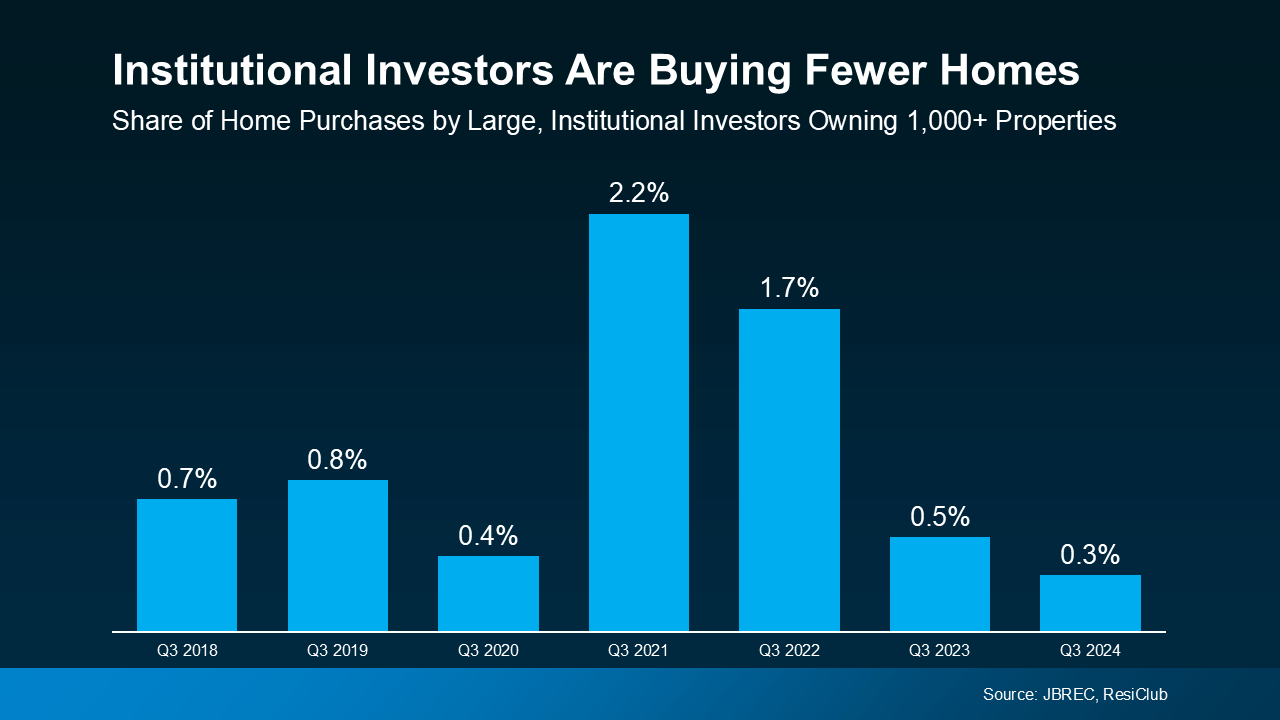 That’s a major shift, and it means far fewer investors are competing in the market now than just a few years ago.
Investors are clearly more reluctant to buy in today’s market, but why? The answer is largely because higher mortgage rates and home prices have made it less attractive for them.
The idea that Wall Street investors are buying up all the homes and making it impossible for you to compete is a myth. While some investors are still in the market, they’re not nearly as active as they were in past years.
Bottom Line
Big institutional investors aren’t buying up all the homes – if anything they’re buying less than they have been. Connect with a local real estate agent to talk about what’s happening in your local market. There could be more opportunities than you think.
How does knowing investors are buying fewer homes change the way you see your chances in today’s market?

Mortgage rates being back above 7% isn’t exactly the news most people wanted. But it’s changing the market in ways that matter whether you’re buying or selling.
The number of homes for sale is growing faster than it was this time last year. And interestingly, the main reason isn’t a flood of new listings. It’s because homes aren’t selling as quickly.
Here’s why – and what that means if you’re thinking about buying or selling.
Inventory Growth Is Picking Up Steam
According to HousingWire Data, after inventory growth slowed down for most of the past year, it’s accelerated again in recent weeks. You can see that in the graph below. Just look at the blue line:
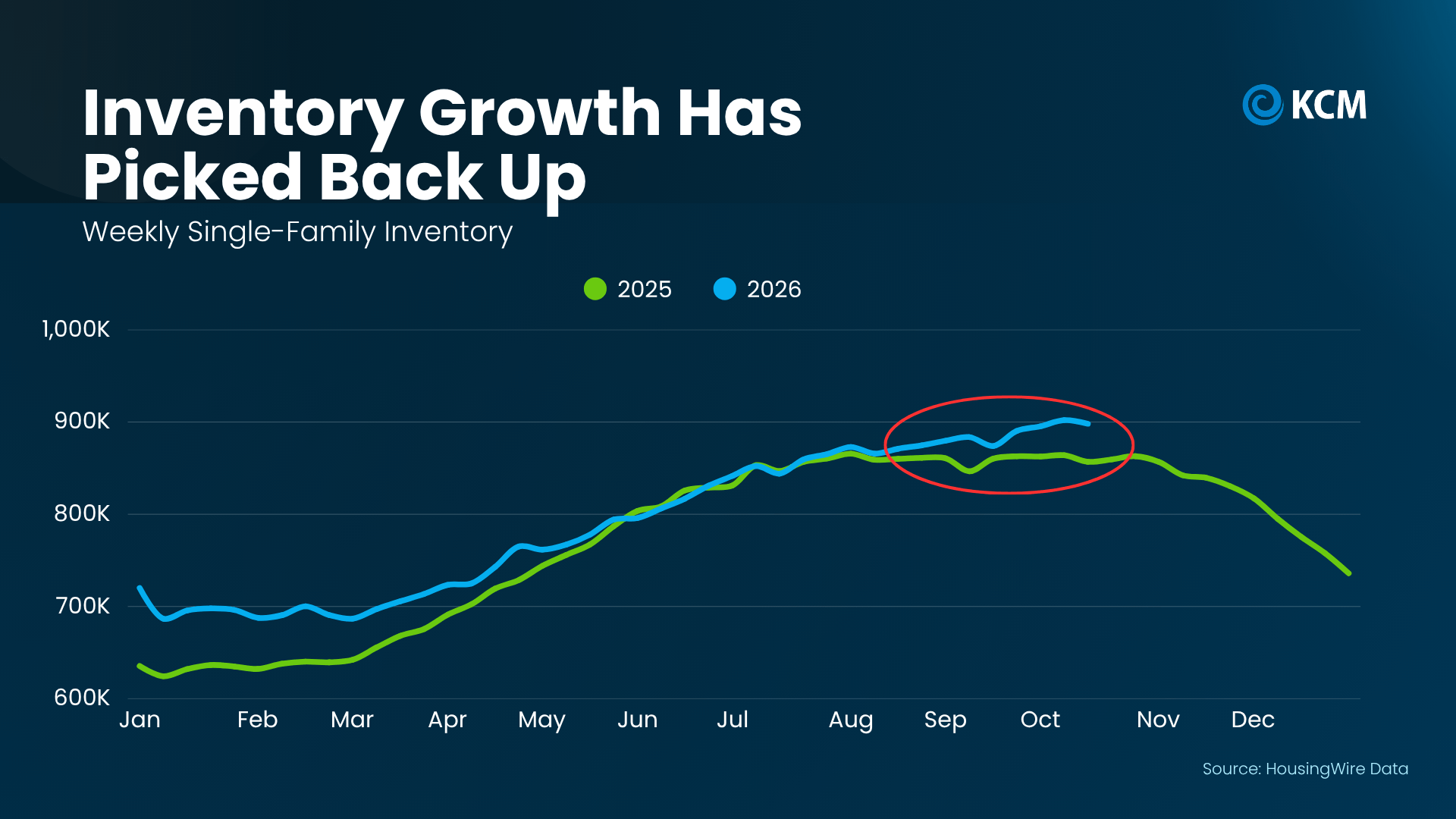
And what’s behind this shift might surprise you.
When rates rise, some buyers hit pause. That means fewer homes sell each week. And as those unsold homes stay on the market alongside new listings, the number available starts to grow (see the blue line in the graph below).
Here’s another way to look at it to make it even more obvious. The graph below shows the relationship between rates and inventory. Again, this year is the blue line. Last year? That’s the green.
With rates inching up this year, you can see inventory has grown by about 25k. But when rates went down this time last year, buyers jumped back in, and inventory actually dropped by about 9k.
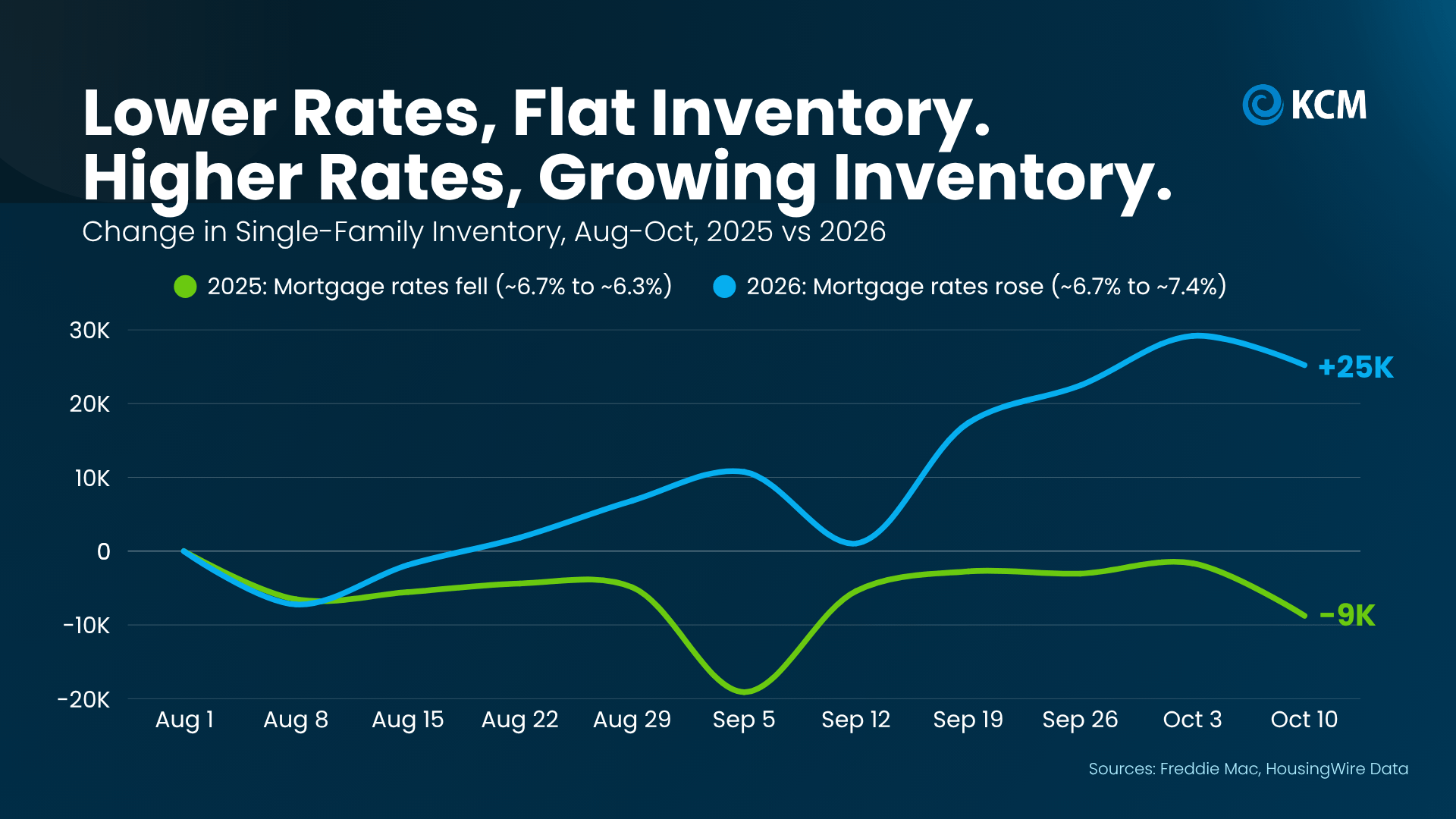
Logan Mohtashami, Lead Analyst at HousingWire, explains how that’s flipped from 2025 to 2026:
“With mortgage rates over 7%, demand tends to soften and inventory rises . . .”
Homes Are Spending More Time on the Market
Here’s another metric that shows the impact rates are having: time on market. Data from Realtor.com shows the typical home spent 61 days on the market this September. Back in September 2021, it was just 41 days (see graph below):
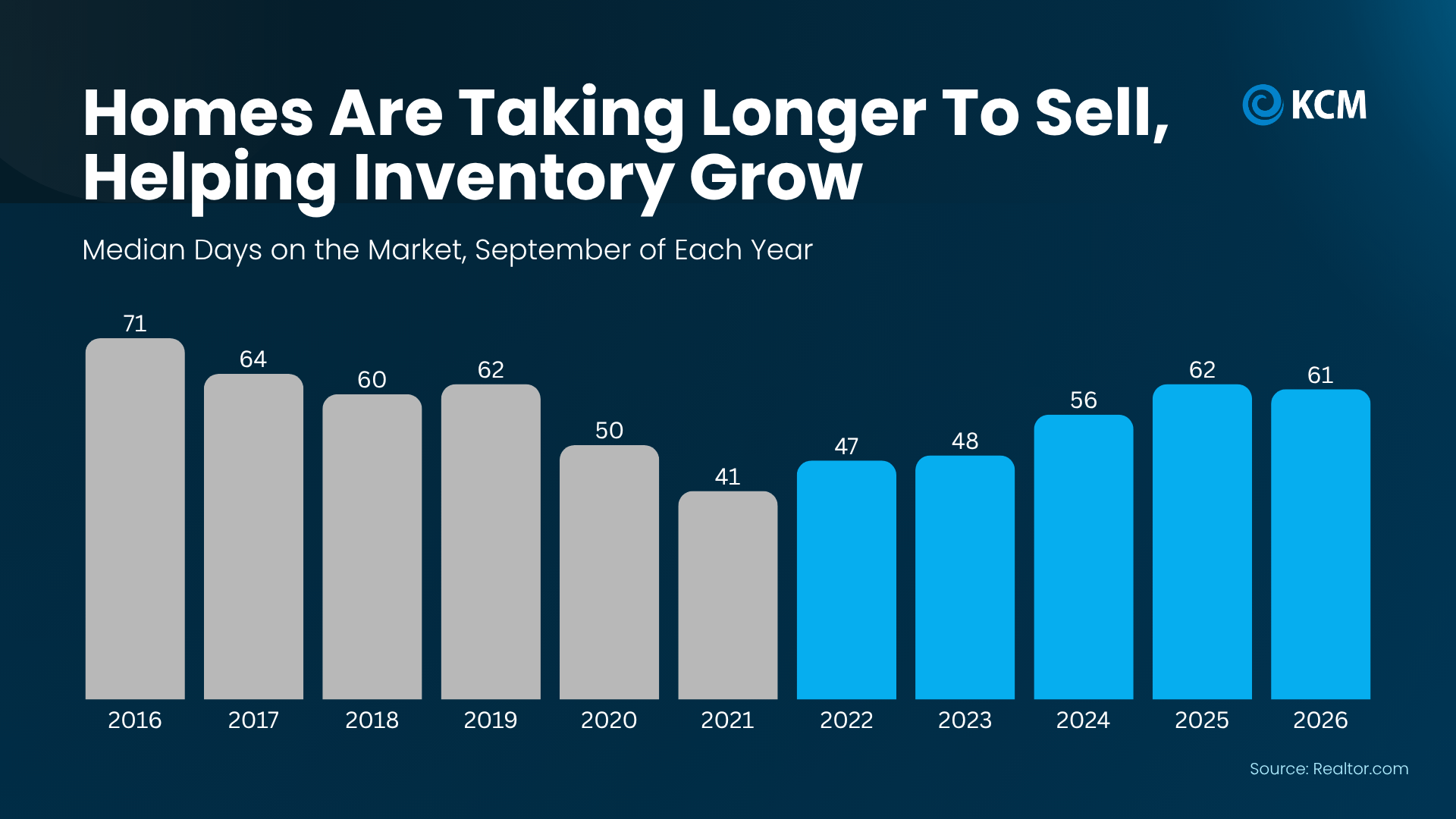
Here’s what that tells us. In 2021, when rates were low, more buyers were active, and homes sold fast. But now that rates are a bit higher, not as many buyers are interested, so it takes a bit longer to close a deal.
How To Make This Market Work for You
So, what does all of this mean for your plans? That depends on which side of the move you’re on:
If you’re buying, more homes for sale means more choices and less pressure to rush. And more room to negotiate too. A house that’s been sitting for a while could have a seller who’s more willing to talk – not just about price, but repairs, closing costs, or even helping buy down your mortgage rate.
That doesn’t mean every seller will play ball. But compared to the frenzy of a few years ago, buyers have more leverage now.
If you’re selling, the right strategy can make all the difference. Buyers have more homes to choose from, so making yours stand out is especially important. That starts with pricing it right from day one, making a great first impression, and working with your agent to highlight what makes your house worth choosing. Buyers are still buying and homes are still selling. The key is making sure yours is positioned to attract the right buyer.
The market hasn’t stopped. It’s just moving at a different pace. And whether you’re buying or selling, your strategy needs to move with it.
Bottom Line
In many places right now, inventory is growing and homes are taking a bit longer to sell. And that’s information that should shape the strategy you use going in.
Whether you’re buying or selling, connect with a local real estate agent to look at how long homes are taking to sell in your neighborhood, so your offer, or your price, fits today’s market.
You’ve been waiting for something to change before you buy. It just might not be the thing you expected…
While everyone’s paying attention to mortgage rates, only the savviest buyers know that the changing season can start tipping things in their favor.
Because every fall, buyers tend to get more to choose from, better prices, and more room to negotiate. And that’s why Hannah Jones, Senior Economist at Realtor.com, says:
“We always see that the best time to buy window usually falls in the early fall around October.”
And that’s exactly why, if you’ve been waiting for a better moment to buy, this season may be worth a closer look – even with rates where they are.
1. There Are More Homes To Choose From
One of the biggest frustrations buyers have had over the past few years has been a lack of choices. Fall tends to help with that.
Based on seasonal trends, Realtor.com data shows there are typically more homes available for sale in September through November than during any other season of the year (see graph below):
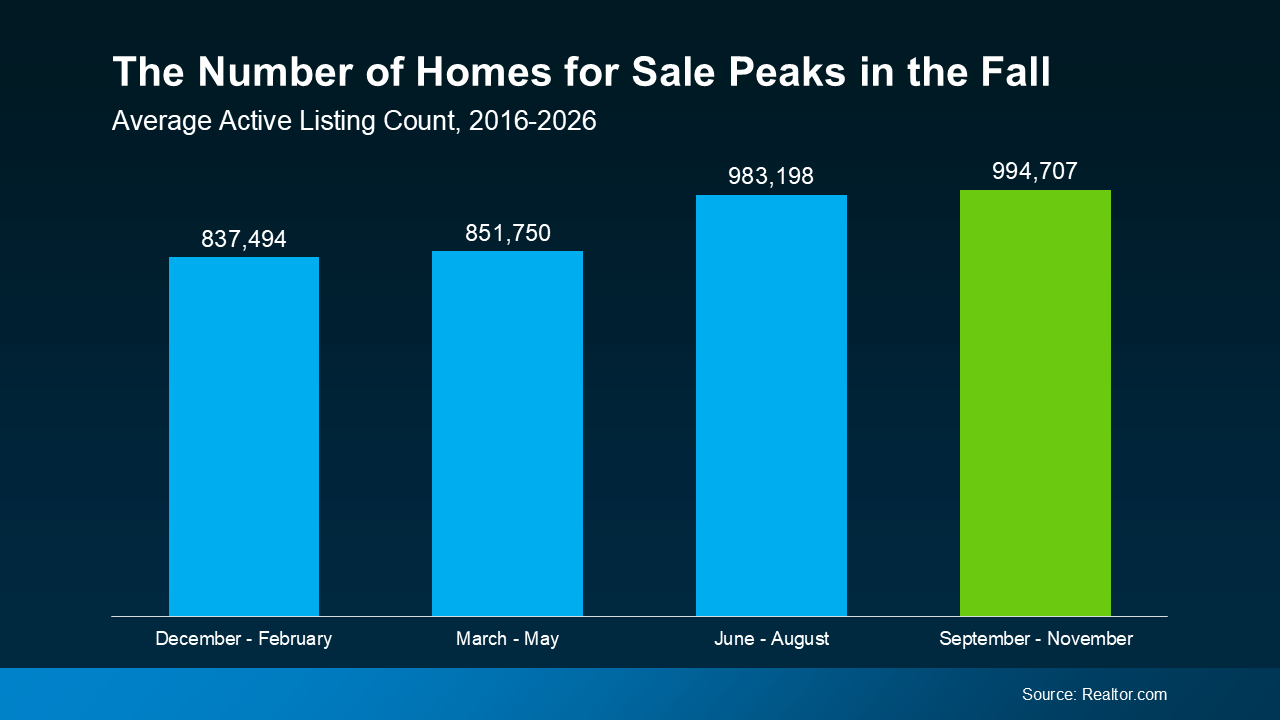 Why does this happen? Homes that hit the market in spring and summer don’t all close right away. Some sit. New listings keep coming. And inventory builds as the year goes on.
By fall, you’re looking at the largest pool of available homes all year. That makes it easier to find one that works for your needs and your budget. And if anything, this should be more true this year. Rates that are higher for longer tend to help inventory grow even more.
More choices can mean fewer compromises. You’re more likely to find the right home, not just the one that happens to be available.
2. Asking Prices Start To Drop
Having more choices is great. But if every home is still priced too high, that only gets you so far. That’s where fall’s second advantage kicks in: asking prices start their seasonal decline.
HousingWire data shows this trend over time (see graph below):
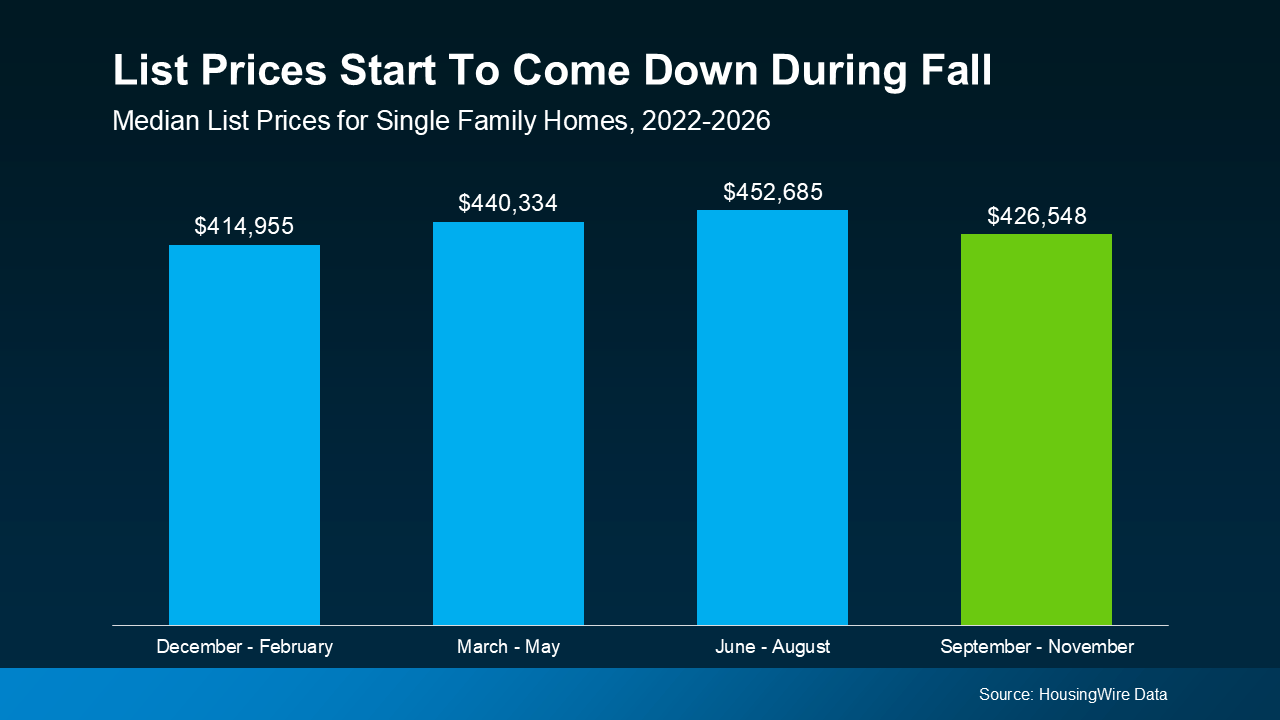 It works like this. Spring and early summer are when sellers feel the most confident because that’s when demand is typically strongest. So, many homeowners price their homes higher during those periods because of the uptick in demand.
But every year, like clockwork, that dynamic starts to change by fall. Buyer activity slows down as the weather cools off. So, sellers have to price a bit lower to try to draw buyers in. And that’s good for your bottom line.
3. More Sellers Are Willing To Negotiate
But fall doesn’t just bring more choices and lower asking prices. It also brings more sellers who are increasingly motivated to get a deal done.
You can see it in the data. Most years, fall is when price cuts peak according to Realtor.com data (see graph below):
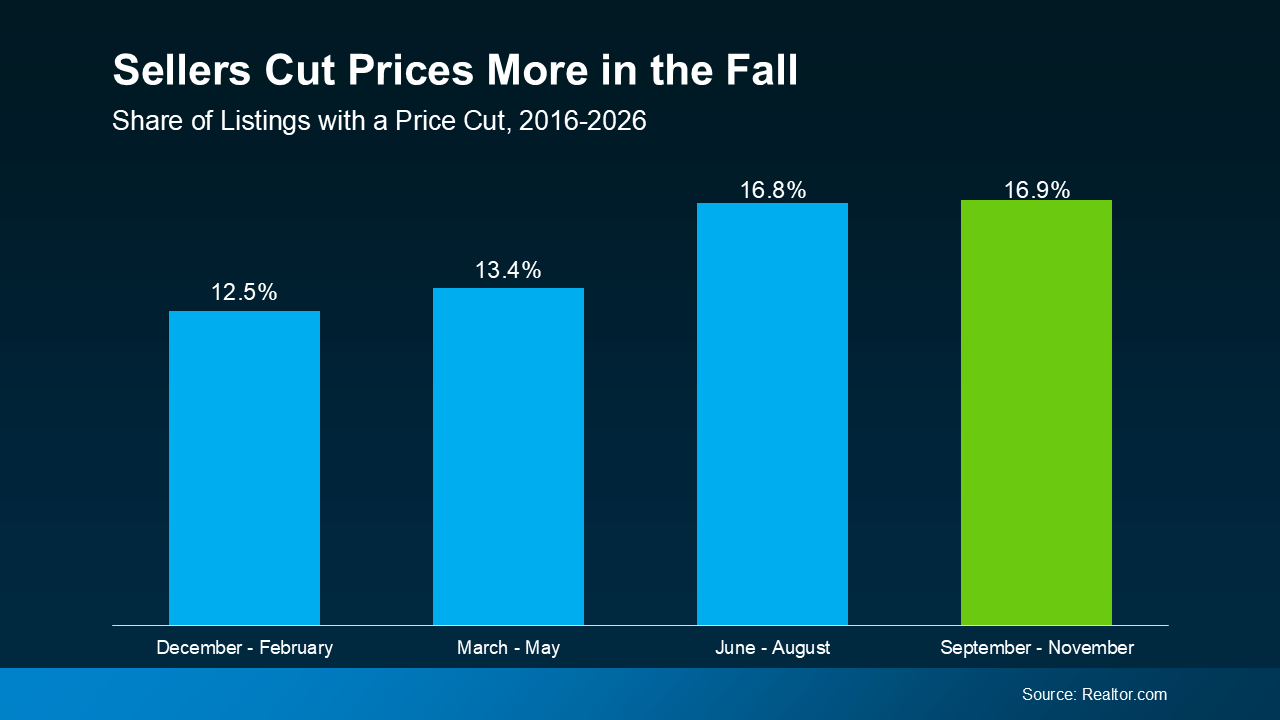
While it’s not a big difference from summer, this fall you’ll have more negotiation power than you’d have if you wait until the first half of 2027. Here’s why.
If a home is on the market in the fall, many sellers are eager to get it sold before the holidays. And since there are usually fewer buyers active in the fall, that often leads to another opportunity to snag a better deal. As the National Association of Realtors (NAR) explains:
“Less competition can lead to better deals. While homes are not selling as fast as during the summer, sellers may be more willing to negotiate.”
Even a small seller compromise here can make a meaningful difference for you.
As an example, a 5% price drop on a $500,000 home is $25,000. That could mean you end up borrowing less, keeping more money in savings, having room in the budget for updates after you move in, or simply making the monthly payment feel more manageable.
Bottom Line
Of course, every market moves a little differently. But here’s what doesn’t change: Fall consistently buyers. More homes. Lower asking prices. Motivated sellers.
If you’ve been waiting for your search to feel a little more doable, this season may be worth another look.
Have a quick conversation with a local agent about what’s happening in your market. That way you can find out whether this fall gives you opportunities you may not have had a few months ago.

A recent survey from Talker Research asked Americans to pick one word to describe how 2026 has felt so far. The winner? Stressful. And honestly, there’s been a lot going on.
So, it’s understandable if you’ve been putting off buying or selling a home until things settle down. But you may be waiting on something that’s already happened. While everything else has felt shaky, the housing market has become one of the steadiest things out there. Look at the data.
Home Prices Have Leveled Out
After years of fast increases, data from the National Association of Realtors (NAR) shows home prices have been remarkably steady for the past 4 years (see graph below):
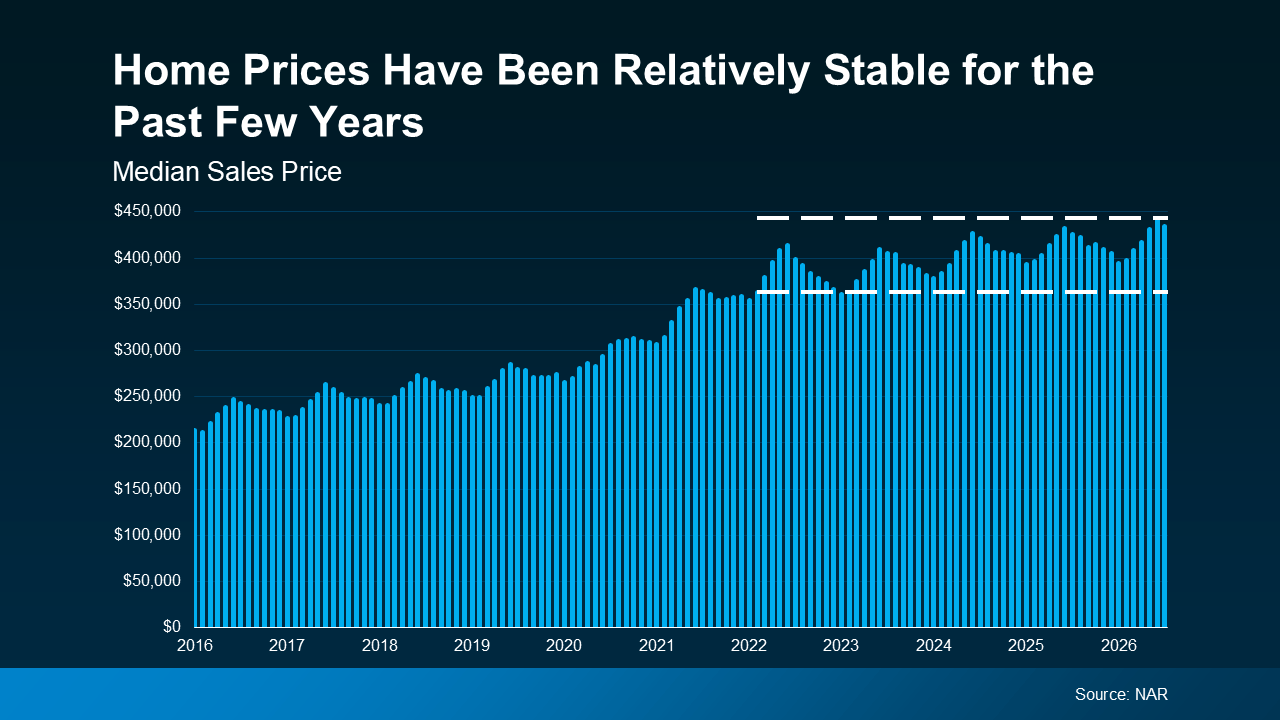 And experts say that’s what to expect going forward, too. As Selma Hepp, Chief Economist at Cotality, explains:
“In 2026, we expect home prices to remain broadly stable, with modest appreciation at a national level.”
No wild swings. Just slow, steady growth. That’s a healthy market. Of course, that pace can vary a bit depending on where you live. But nationally, steady growth like this makes it easier to plan your budget, whether you’re buying or selling.
The Supply of Homes for Sale Has Steadied
For years, the supply of homes for sale was a moving target. It dropped fast during the pandemic and has been climbing pretty reliably ever since. Now, that pace of growth has slowed down. According to Realtor.com, inventory today is very close to where it was this time last year (see graph below):
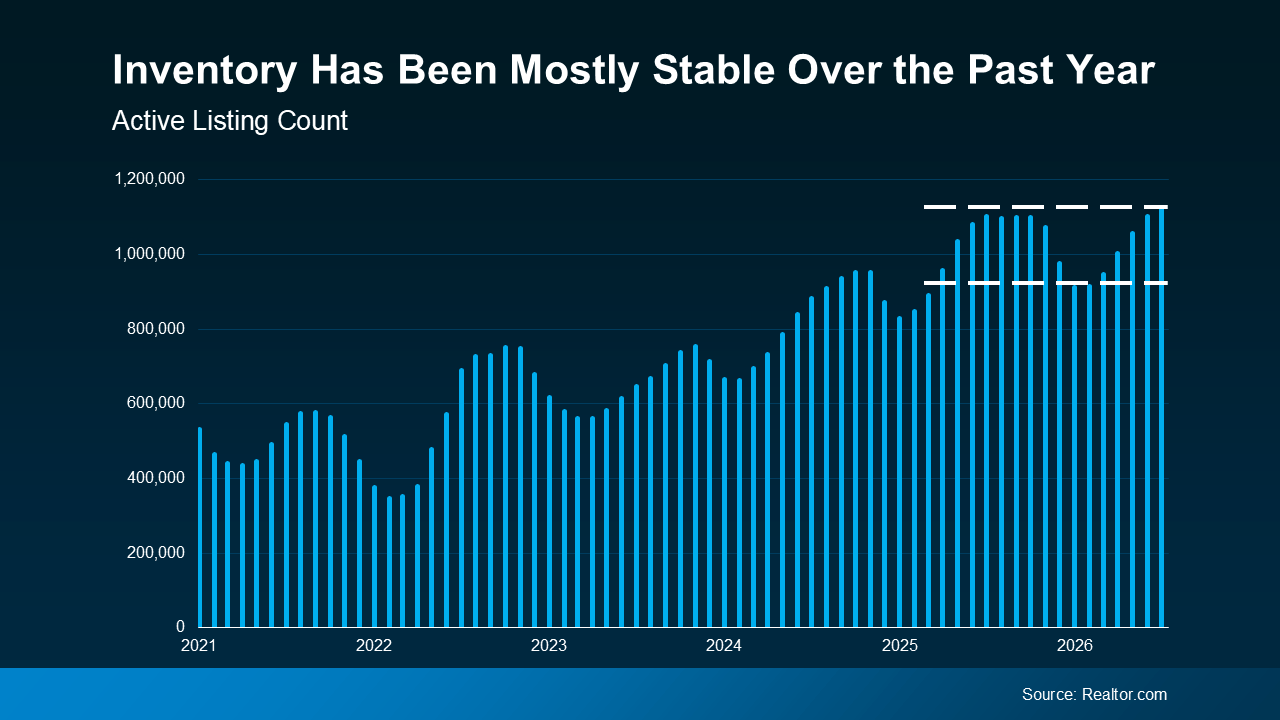 That’s helpful no matter which side you’re on. When the number of homes for sale isn’t changing much, you know what you’re walking into – how many options you’ll have as a buyer, and how much competition you’ll face as a seller.
Mortgage Rates Found Their Range
Yes, rates jumped dramatically back in 2022. But since then, Freddie Mac data shows they’ve stayed between 6% and 7% for the better part of the last 3 or so years (see graph below):
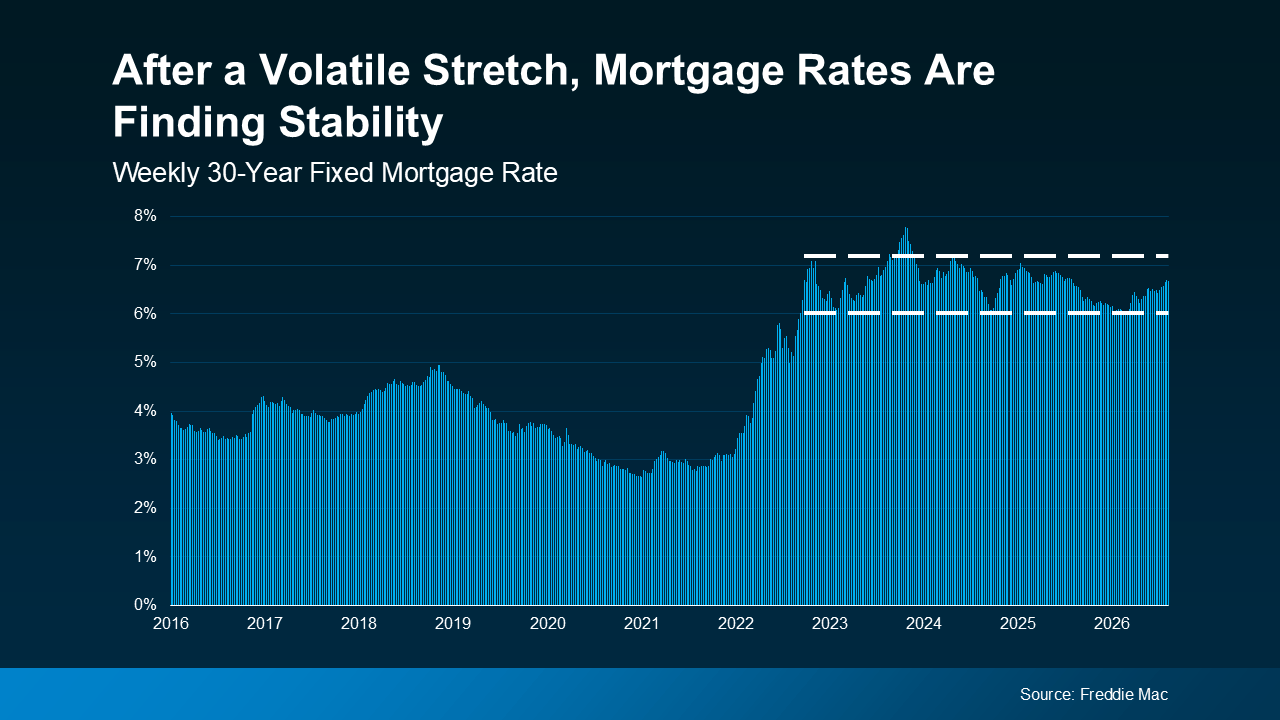 Yes, there was one brief spike above that threshold, but overall, rates have stayed in that range for a while now. That predictability helps when you’re planning a move.
And now that this seems to be a longer-term trend, people have accepted it as the new normal. Buyers have gotten comfortable purchasing in that range, and sellers have gotten just as comfortable listing in it.
That comfort’s important because when both sides know what to expect, they keep making moves. In other words, the market isn’t frozen waiting for something to change. It’s moving calmly.
Bottom Line
The rest of the world may feel unpredictable right now, but the housing market doesn’t have to. Prices, inventory, and rates have all found solid ground.
If stability is what you’ve been waiting for, it’s already here. Connect with a local real estate agent if you want to talk through what that means for your move.

Why There are More Homes for Sale Right Now (and What It Means for You)

Why Most People Are Still Glad They Bought a Home

Renovate or Relocate? What To Know Before You Decide To Age in Place



-

 For Sellers4 weeks ago
Selling This Fall? You Want To Get These 4 Things Right.
-

 Affordability3 weeks ago
3 Things You Can Actually Control About Your Mortgage Rate Right Now
-

 Affordability4 weeks ago
The Best Time To Buy a Home in 2026 Is Almost Here
-

 Agent Value3 weeks ago
There Are 4 Types of Housing Markets Right Now. Which 1 Are You In?
-

 Buying Tips2 weeks ago
Hoping for (or Dreading) a Housing Crash? The Experts Just Weighed In.
-

 For Sellers2 weeks ago
What Higher Mortgage Rates Mean for Home Sellers
-

 Affordability3 weeks ago
Why So Many Sellers Are Cutting Their Price Right Now
-

 Affordability2 weeks ago
The Mortgage Rate You See Online Isn’t Necessarily the One You’d Get.
You must be logged in to post a comment Login