


For Sellers
Why More Homeowners Are Giving Up Their Low Mortgage Rate

If you’re like a lot of homeowners, you’ve probably thought: “I’d like to move… but I don’t want to give up my 3% rate.” That’s fair. That rate has been one of your best financial wins – and it can be hard to let go. But here’s what you need to remember…
A great rate won’t make up for a home that no longer works for you. Life changes, and sometimes, your home needs to change with it. And you’re not the only one making that choice.
The Lock-In Effect Is Starting To Ease
Many homeowners have been frozen in place by something the experts call the lock-in effect. That’s when you won’t move because you don’t want to take on a higher rate on your next home loan. But data from Federal Housing Finance Agency (FHFA) shows the lock-in effect is slowly starting to ease for some people.
The share of homeowners with a mortgage rate below 3% (the yellow in the graph below) is slowly declining as more people move. And while some of the people with a rate over 6% are first-time buyers, the number of homeowners with a rate above 6% (the blue) is rising as others take on higher rates for their next home:
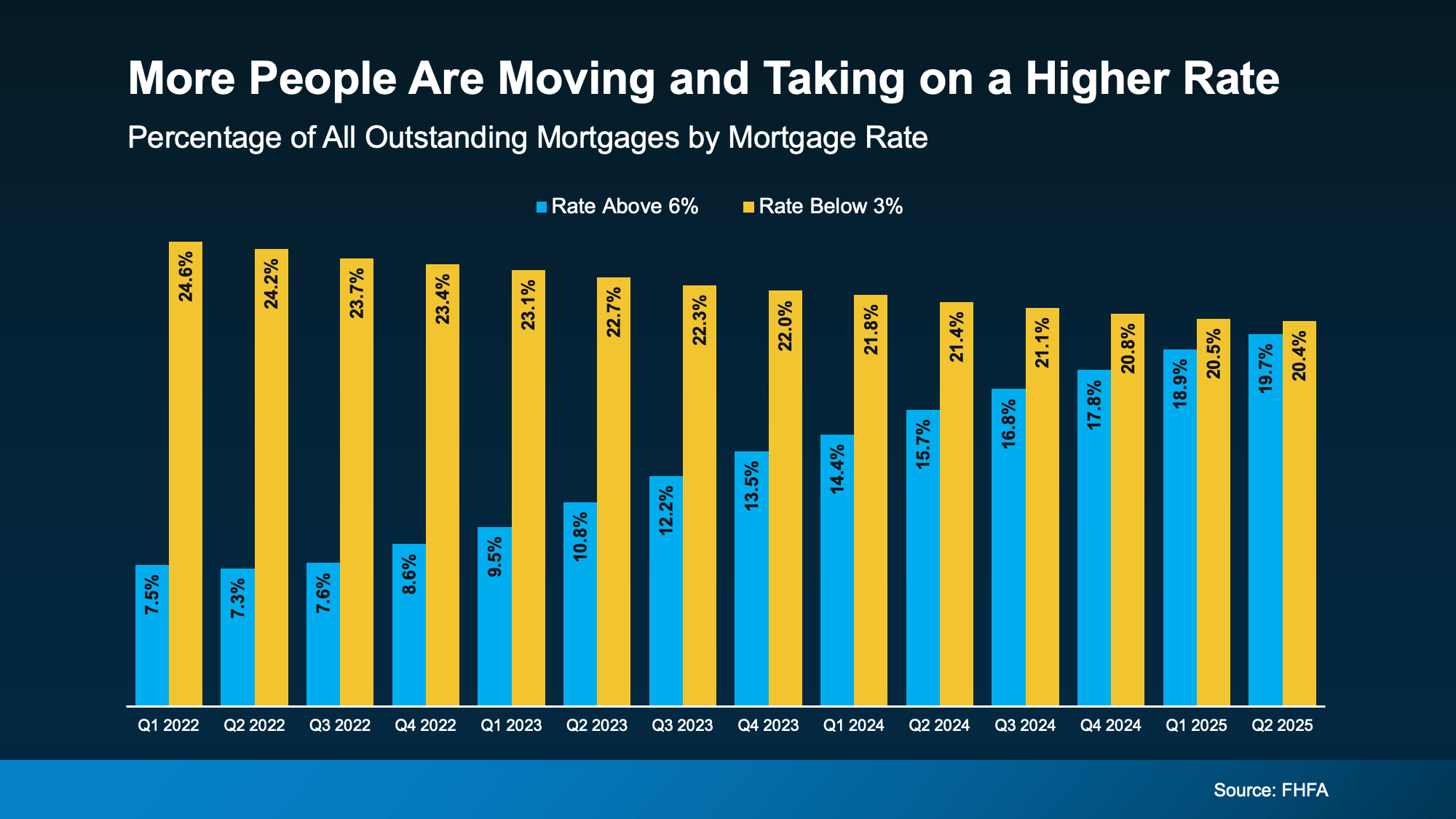
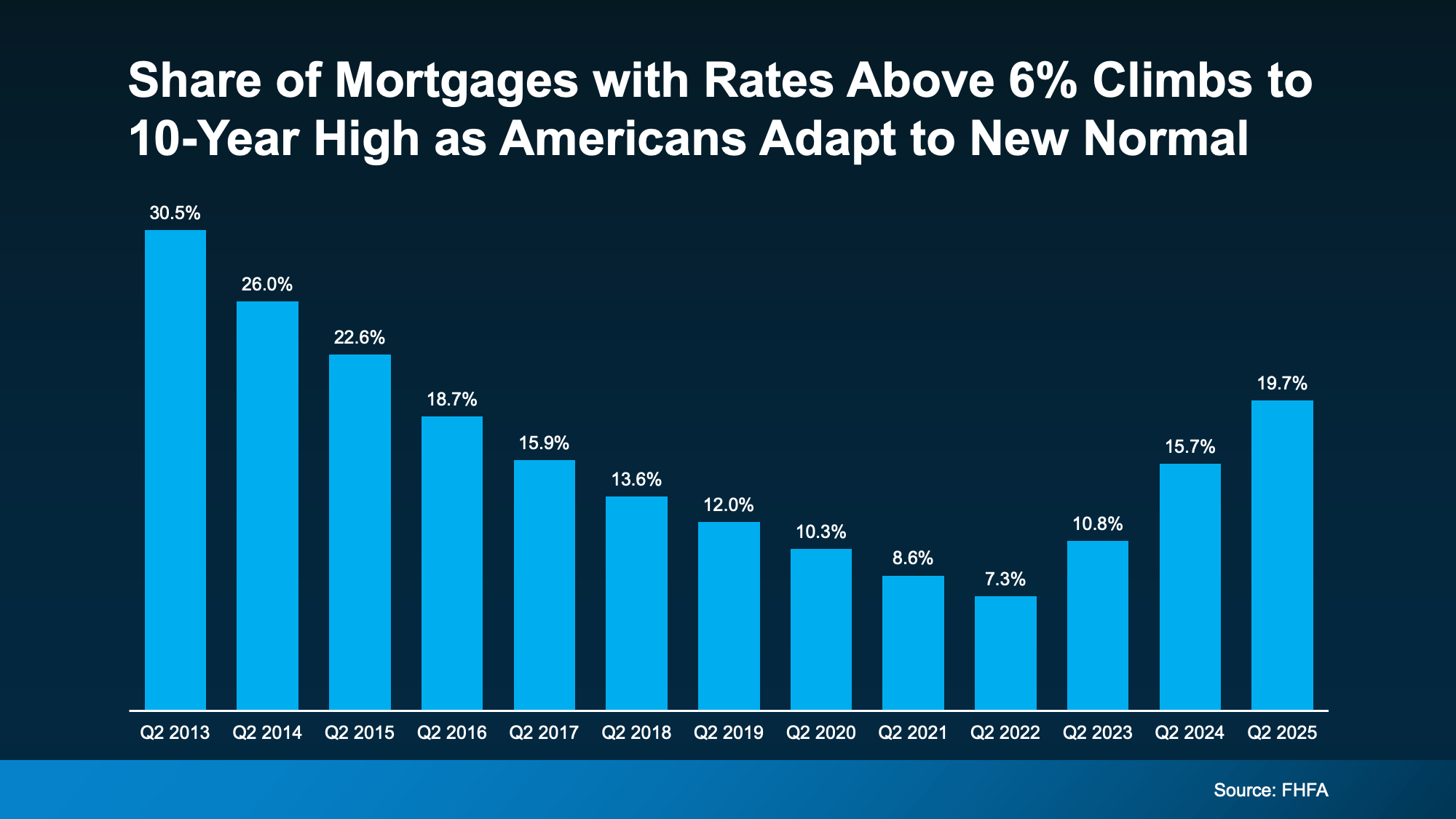
And while it may not seem that dramatic, it’s actually a pretty noteworthy shift. The share of mortgages with a rate above 6% just hit a 10-year high (see graph below). That shows more people are getting used to today’s rates as the new normal.
 Why Are More People Moving Now, if It Means Taking on a Higher Rate?
It’s simple. Sometimes they can’t put their life on pause anymore. Families grow, jobs change, priorities shift, and a house that once fit perfectly may not fit at all anymore – no matter how good their rate was. And that’s okay. As Chen Zhao, Head of Economic Research at Redfin, explains:
“More homeowners are deciding it’s worth moving even if it means giving up a lower mortgage rate. Life doesn’t standstill—people get new jobs, grow their families, downsize after retirement, or simply want to live in a different neighborhood. Those needs are starting to outweigh the financial benefit of clinging to a rock-bottom mortgage rate.”
First American refers to these life motivators as the 5 Ds:
- Diplomas: People with college degrees typically earn more, and that adds up to more buying power. Maybe you bought your house when you were younger and now that you’ve graduated and have a rising career, you’re ready to move up.
- Diapers: You’ve outgrown your space. If you’re welcoming a new baby, your current home might not be cutting it anymore.
- Divorce: Whether it’s ending a marriage (or starting one), it can create the need for a new place to call home.
- Downsizing: You’re ready to downsize. Maybe the kids have moved out and it’s time to simplify. Smaller house, less maintenance, more freedom.
- Death: If you’ve recently lost a loved one, maybe you’ve realized you want to be closer to family. Life’s too short to live far from the people who matter most.
Whatever your reason, here’s what you need to think about. Yes, your low rate is great. But staying put means your life may stay on hold. And maybe that’s not working for you anymore.
According to Realtor.com, nearly 2 in 3 potential sellers have already been thinking about moving for over a year. That’s a long time to press pause on your plans. On your needs. On your family’s goals. So, maybe the question isn’t: “Should I move?”
It’s actually: “How much longer am I willing to stay somewhere that no longer fits my life?”
Because we’ve already seen rates come down from their peak earlier this year. And they’re expected to ease a bit more in 2026. When you stack that on top of the very real reasons you may need a new home, it may be enough to finally move the needle for you.
Bottom Line
Life doesn’t wait for the perfect rate. Maybe you shouldn’t either.
With mortgage rates down from their peak and forecast to dip slightly more in 2026, moving may be more feasible than you think. If you’re ready to see what’s possible in your market, connect with a local agent and lender.

Spend about 5 minutes online searching for news about the housing market, and odds are you’ll see something pop up about home prices. You may even stumble onto social media influencers saying we’re headed for a crash. Let’s get you the context you need.
The truth is prices are going to vary depending on where you live. But they’re not crashing.
Here’s what you need to know.
The Local Perspective: Home Price Trends by Area
The biggest thing feeding into the confusion online is how different home price trends are by area right now. Take a look at this data from ResiClub and Zillow (see graph below).
About half of the largest metros are seeing prices go up.
The other half are seeing some declines.
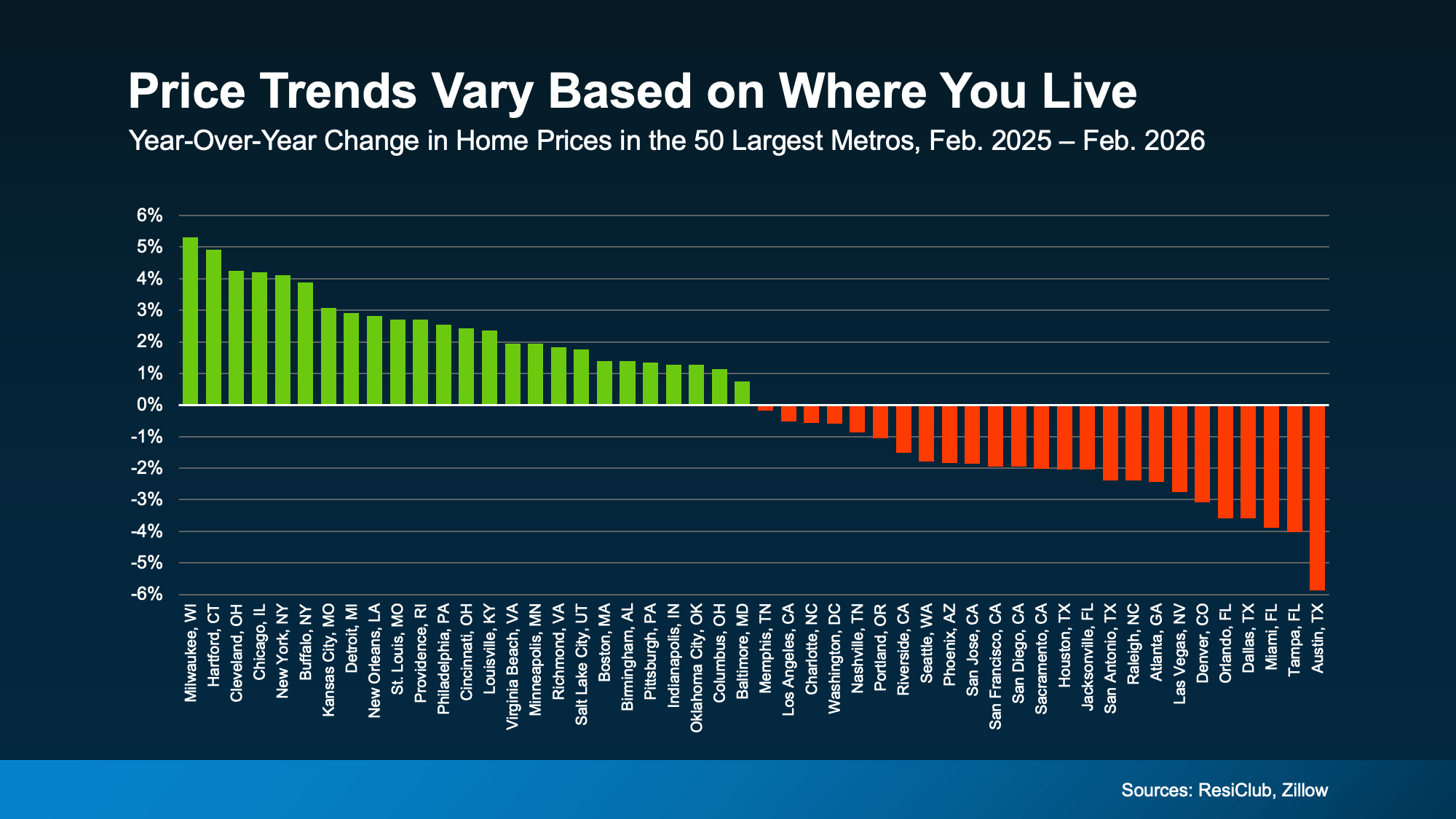 Unfortunately, the online chatter only focuses on the markets where prices are down – and that makes it sound like something bigger is happening.
But, as you can see in this graph, that’s only one side of the story. The full picture is different.
The National Perspective: Moderate Price Growth
As a country, when you average it all together to get a true baseline, one thing becomes clear, home prices are still net positive at the national level.
According to the Redfin, national home prices were up about 1% year-over-year in February. So, what we’re seeing right now isn’t a collapse. It’s a market that’s normalizing after a period of unusually fast growth. And that impacts some local markets more than others – particularly those where prices rose too far, too fast during the pandemic.
A true crash, like what happened in 2008, would mean prices dropping sharply across the entire country. That’s just not what the data shows today. And it’s not where things are going either.
Experts Agree This Isn’t 2008
In fact, Fannie Mae surveyed over 100 housing market experts to ask their opinions on where prices are headed from here. And the experts agree, nationally, prices are expected to keep rising over the next five years:
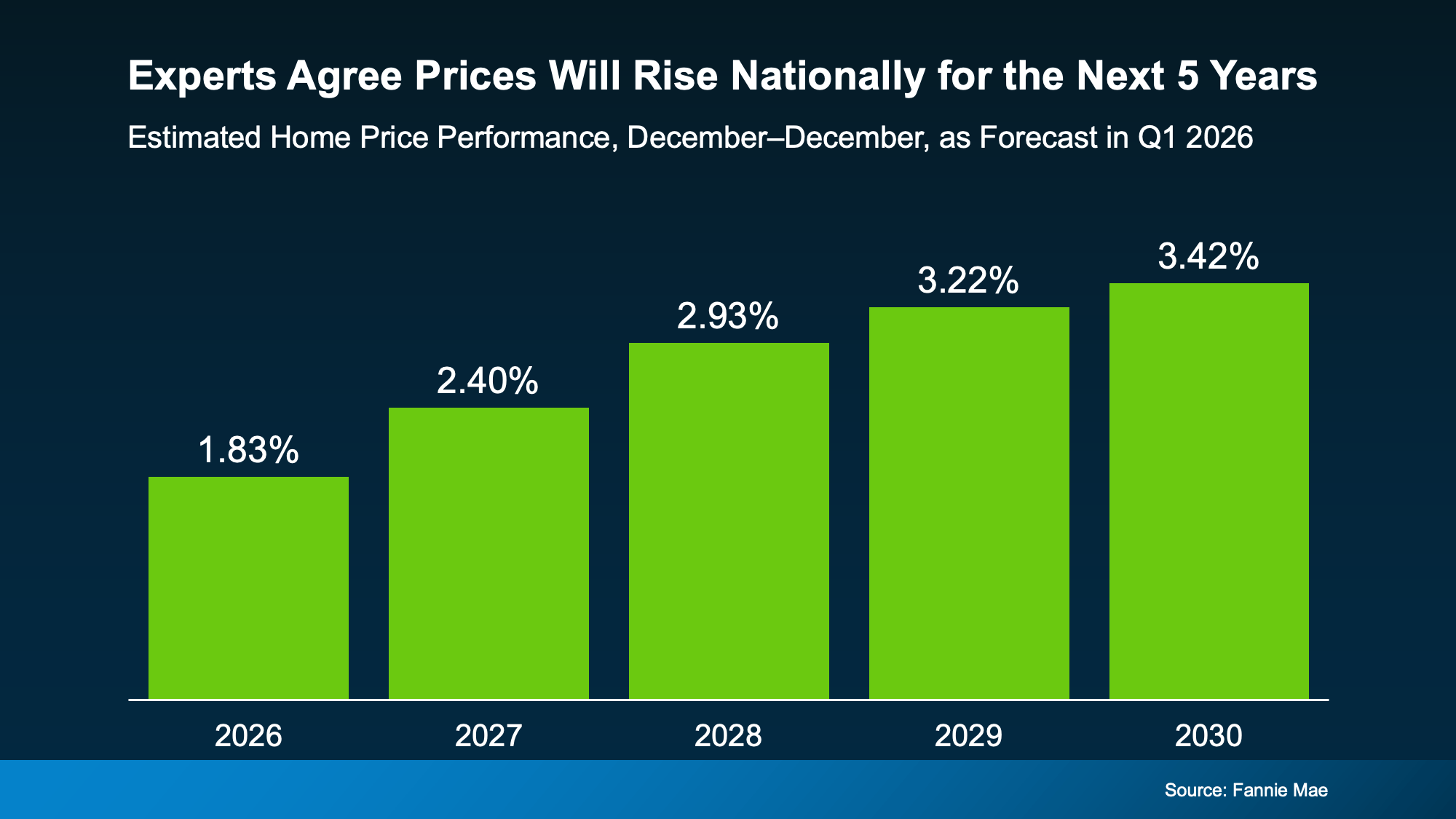 That rise will be moderate, particularly this year, but the trend is clear. Nationally, prices are forecast to grow every year now through at least 2030 – and that’s normal. Daryl Fairweather, Chief Economist, at Redfin explains:
“House prices aren’t going to fall on a national scale any time soon—and that’s actually a good thing. It’s normal for house prices to rise gradually over time . . .”
That’s why even in the select areas where prices have dropped slightly this year, the decline is expected to be temporary. According to that same quarterly Fannie Mae survey mentioned above, 85% of the experts say the markets that are seeing mild declines right now will return to positive price growth before the end of 2027.
The main takeaway? This isn’t a crash. And prices aren’t expected to fall nationally. If anything, the few areas experiencing declines are expected to rebound in the next year or so.
Bottom Line
It’s easy to get caught up in headlines that make it sound like something big is about to happen. But don’t be fooled. The housing market isn’t crashing. It’s just shifting.
The key is understanding what’s actually happening in your market, so you can make the right move for you. Connect with a real estate agent if you want the local perspective.


Your House Hasn’t Sold Yet. Should You Rent It Out Instead?

Before You Fall in Love with a House, Do This First.

Don’t Let Home Prices Headlines Fool You



-

 Agent Value4 weeks ago
If Your House Isn’t Getting Offers, Read This.
-

 Affordability4 weeks ago
Should You Wait for Lower Rates?
-

 For Buyers4 weeks ago
One Key Sign We’re Not Headed for a Wave of Foreclosures
-

 Agent Value3 weeks ago
The #1 Reason Buyers Walk Away (And How To Get Ahead of It)
-
 For Buyers7 days ago
Don’t Let Home Prices Headlines Fool You
-

 Affordability3 weeks ago
Affordability Has Improved in All 50 States
-

 Agent Value3 weeks ago
3 Must-Do’s for First-Time Home Buyers
-

 Equity2 weeks ago
The Remodel You’ve Been Dreaming About May Be Closer Than You Think
You must be logged in to post a comment Login