

Buying Tips
Before You Fall in Love with a House, Do This First.


If you’re trying to buy a home, affordability is probably what keeps you up at night. And as you watch mortgage rates tick up again lately, it’s fair to wonder if you should just hit pause and wait for them to go down.
For now, though, they’re headed the other way. Mortgage News Daily data shows how rates have risen this year (see graph below):
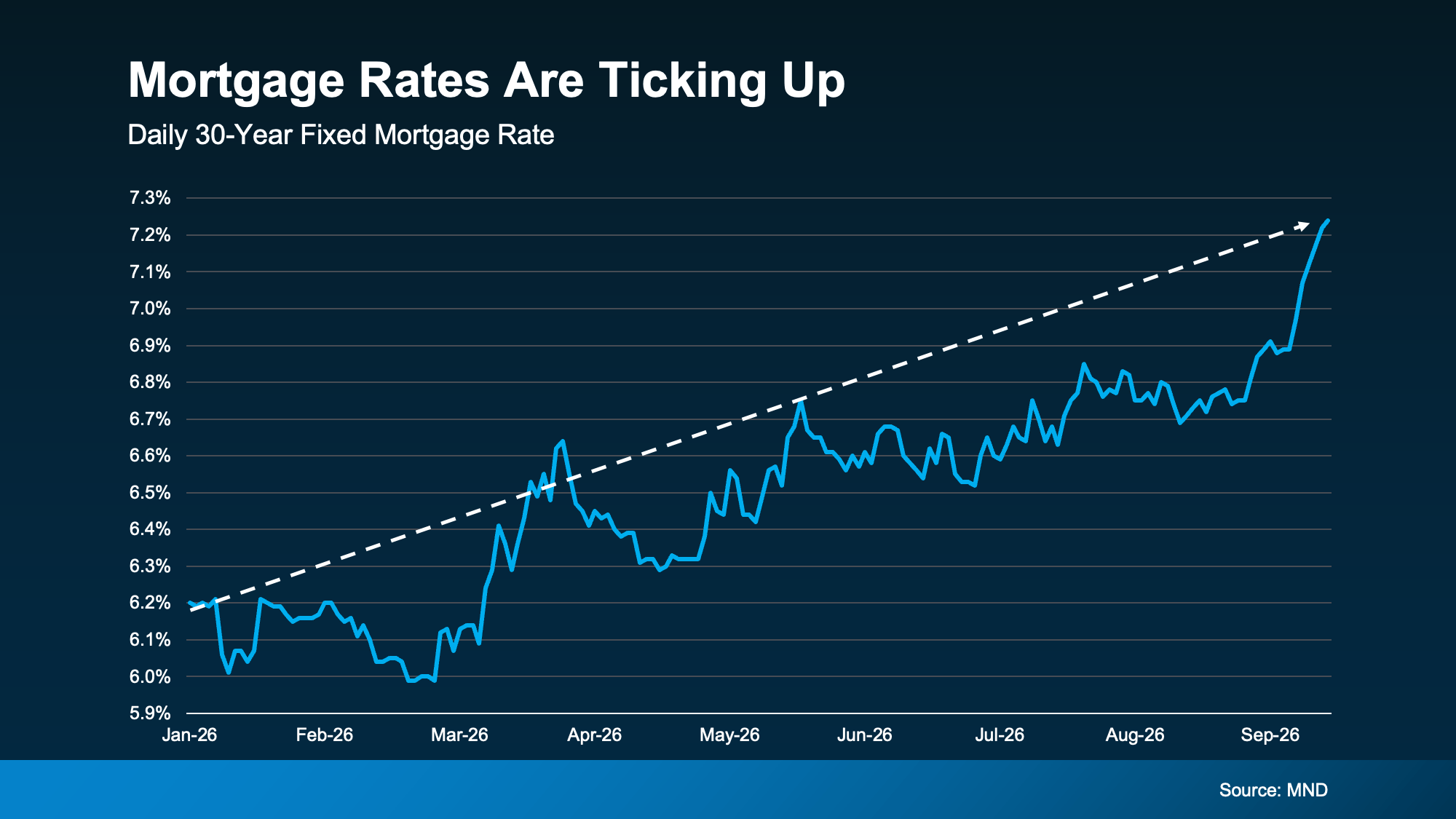
And if you’re wondering why? There are actually a number of reasons.
Mortgage rates are impacted by the situation overseas, economic data, inflation numbers, oil prices, and even decisions from the Federal Reserve (who recently decided to hike their Fed Funds Rate – which often affects mortgage rates too). As Danielle Hale, Chief Economist at Realtor.com, explains:
“The pressure on mortgage rates was here even before the Fed rate hike, and it doesn’t show signs of relenting. . .”
Now, that’s probably not what you wanted to hear. But, it doesn’t mean there’s nothing you can do. While you can’t control where rates go from here, you absolutely can control several things that shape the rate you actually get.
So where should you focus? Let’s walk through it.
Work on Your Credit Score
Your credit score plays a big role in the rate you qualify for, and even a small improvement can make a real difference in your monthly payment. As Freddie Mac puts it:
“Generally, the higher your credit score the more options will be available to you, including better loan terms and a lower interest rate.“
So, make sure you do what you can to keep your credit score up. If you’re not sure where your score stands right now, or how to improve it, talk to a trusted loan officer.
Explore Your Loan Options
The type and term of your loan both affect your rate. Conventional, FHA, VA, and USDA loans each come with their own requirements and rates, and your term (15, 20, or 30 years) changes both your payment and the total interest you’ll pay. The structure matters, too. A fixed-rate loan holds the same rate over time, while an adjustable-rate loan usually starts lower and can move later on. Bankrate explains it this way:
“. . . rates on fixed-rate loans are typically higher than introductory rates on adjustable-rate loans because the fixed-rate lender takes on the risk that rates could increase during the loan’s term. Likewise, government-backed FHA, VA and USDA loans sometimes have lower rates because they have a government guarantee or insurance that cuts the lender’s risk.“
It’s important to explore your options with a lender to see what makes the most sense for you. Just be sure to balance your goals, your possible rate, and any potential tradeoffs before making any decision. You may even want to talk to multiple lenders to see how the options vary.
Consider a Newly Built Home
Another path to a lower rate comes down to the kind of home you buy. Many builders are buying down mortgage rates, which lowers your monthly payment. It’s just one way they’re trying to attract buyers and get their homes sold.
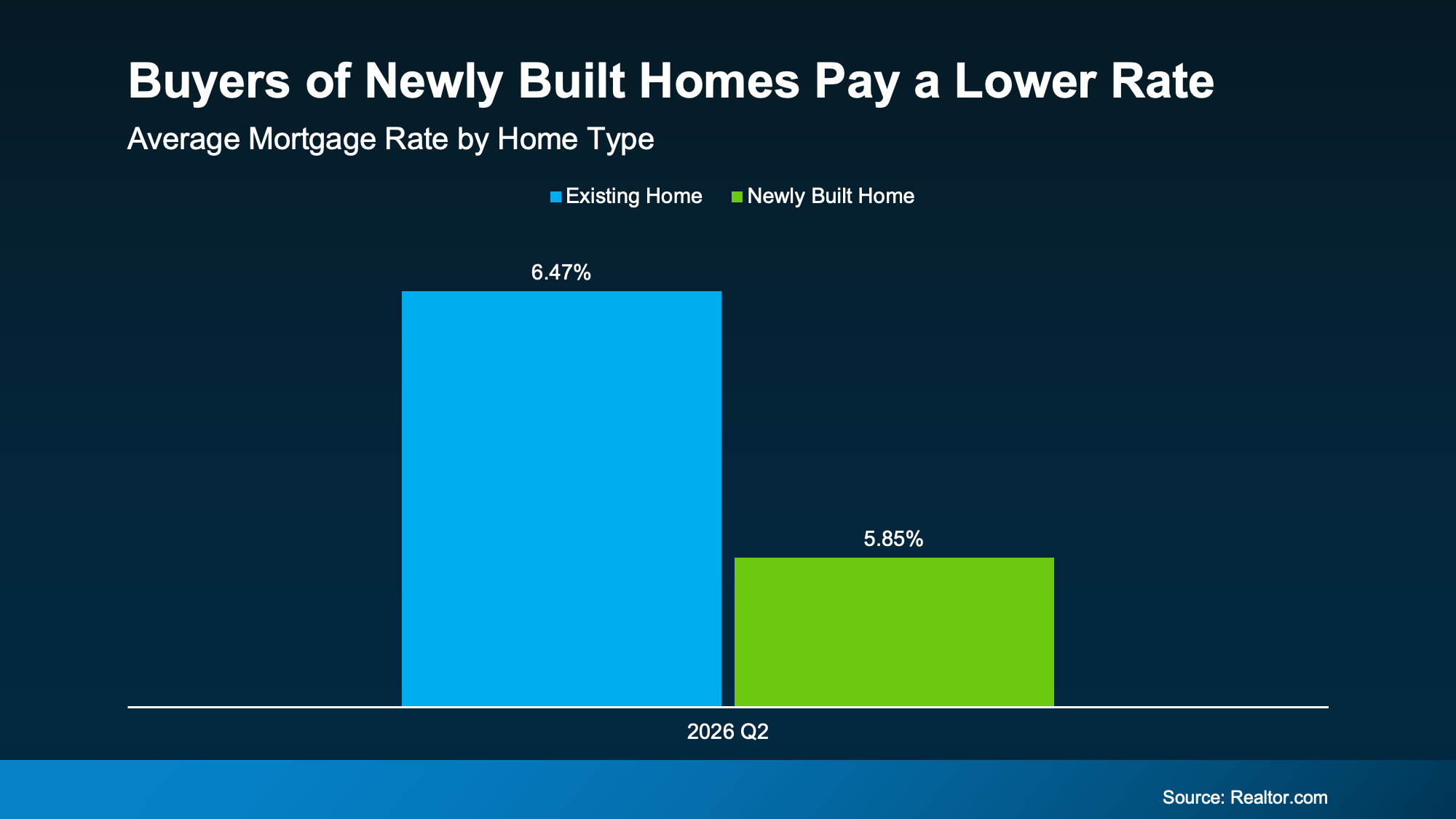
According to Realtor.com, buyers of newly built homes landed a lower average rate last quarter than buyers of existing homes (see graph below):
If a lower rate is your goal, it may be worth asking your agent to show you some new build communities that are offering this type of incentive locally.
Bottom Line
You can’t control where mortgage rates go, but you can control your credit, your loan, and the kind of home you buy. Working with a trusted lender can help you lock in the best rate you qualify for. And when you’re ready to make a move that fits your budget, connect with a local real estate agent.

Want to buy a house this year, but not sure if the timing’s right? Seasonally, it may actually be a better time to buy than you expect.
Yes, mortgage rates have been ticking up lately – and that’s creating some real challenges with affordability. No one’s arguing that. But there are also predictable trends that happen this time every year that can put some wind back in your sails.
According to research coming out of Realtor.com, nationally, the week of September 27 – October 3 will be the best time to buy this year for this very reason:
“The week of September 27–October 3 brings together the market conditions buyers value most—elevated inventory, less competition and prices that have eased from their seasonal high—giving prepared buyers a way to offset high rates with savings on price and room to negotiate with confidence.”
But that’s the national best week. Depending on where you live, your local sweet spot may come a little earlier or later (see map below):
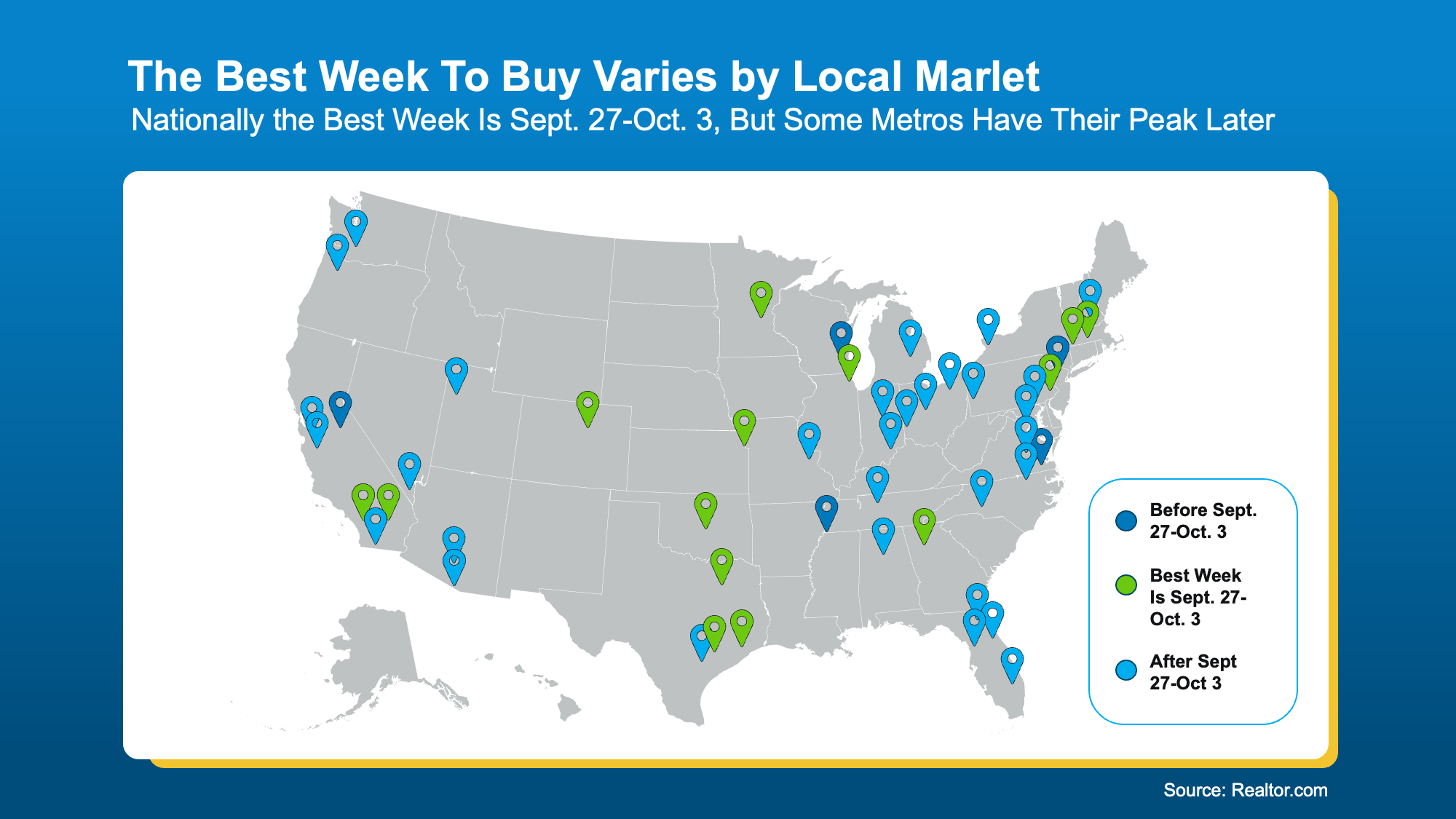
It all depends on local trends and how inventory and buyer demand ebbs and flows seasonally where you want to live. But no matter when your market hits its peak, here are some of the perks you can expect this time of year.
More Choices, Better Prices, and Less Competition
For starters, there are more homes to choose from. In fact, data from the National Association of Realtors (NAR) shows the number of homes for sale recently reached its highest level in more than 10 years:
“NAR’s data does show a strong uptick in for-sale inventory at the end of the summer, reaching the highest level in more than 10 years.”
That means you may have a better shot at finding something you love and can afford without making as many compromises. And that’s not the only advantage.
Realtor.com says buyers during this window could see home prices about $14,000 lower than the summer peak, along with 30% less competition from other buyers. Plus, homes tend to stay on the market almost 2 weeks longer (13 days), giving you a little more breathing room to make a decision.
-
More choices.
-
Better pricing.
-
Less competition.
That combination could be enough to ease some of the pressure higher mortgage rates are putting on your budget.
The Window Doesn’t Close After This One Week
But you certainly don’t have to buy during that very specific window. This isn’t a one-week-only opportunity. History tells us conditions should be tipped in your favor for the entire month of October:
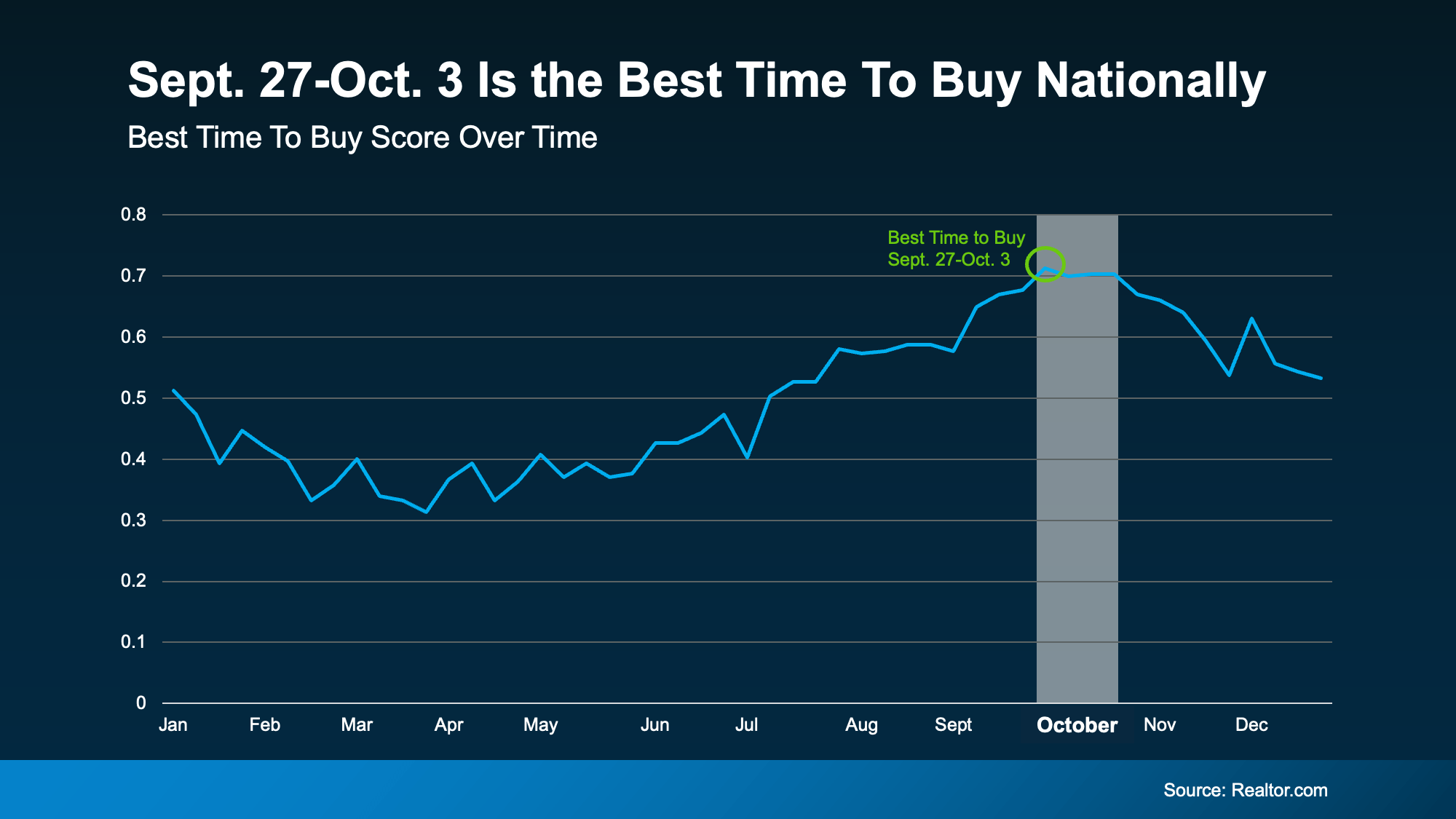
In fact, Realtor.com says 42 of the 50 largest metros see their best week to buy fall sometime during October. So, don’t feel like you have to rush to hit one specific date. Use the time now to get things lined up, then jump in when the timing is right for you. As Guaranteed Rate explains:
“The best time to buy a home depends on your needs. Certain seasons can give you an advantage when starting your homebuying journey.”
Bottom Line
If you want to buy a house this year, there’s still a way to make it happen, even with today’s rates. This fall gives you the chance to get some of the best seasonal perks the market has to offer.
Want help figuring out when those advantages typically show up in your market?
Have a quick conversation with a lender and a local agent about how your market works and the steps you’ll need to take to get ready.

For most first-time buyers, the hardest part of buying a home is making the numbers work. You budget, you save, and the finish line still feels far away.
But your salary is only half the equation. Where you live shapes what you can afford just as much. And if you can work remotely, you have an advantage a lot of buyers don’t.
You’re not tied to living where the jobs are, so you can look where your money goes further.
Where You Work Doesn’t Have To Dictate Where You Live
Remote job openings are on the rise. According to FlexJobs, remote job postings climbed 22% from the quarter before. That’s the second quarter in a row of double-digit growth.
More remote roles mean more people can choose a home base around the life they want to build. As Forbes puts it:
“Remote employees, freelancers, consultants, entrepreneurs, and business owners have the flexibility to choose a home base based on the life they want to build, whether that means more space, a lower cost of living, better access to nature, or simply somewhere new.”
And you can use that freedom to look somewhere more affordable.
Your Paycheck Goes Much Further in Some States
Your cost of living – what you spend on housing, groceries, utilities, and the rest of daily life – varies a lot from one state to the next. In some, according to data from Extra Space, it runs far enough below the national average to change what you can afford (see map below):
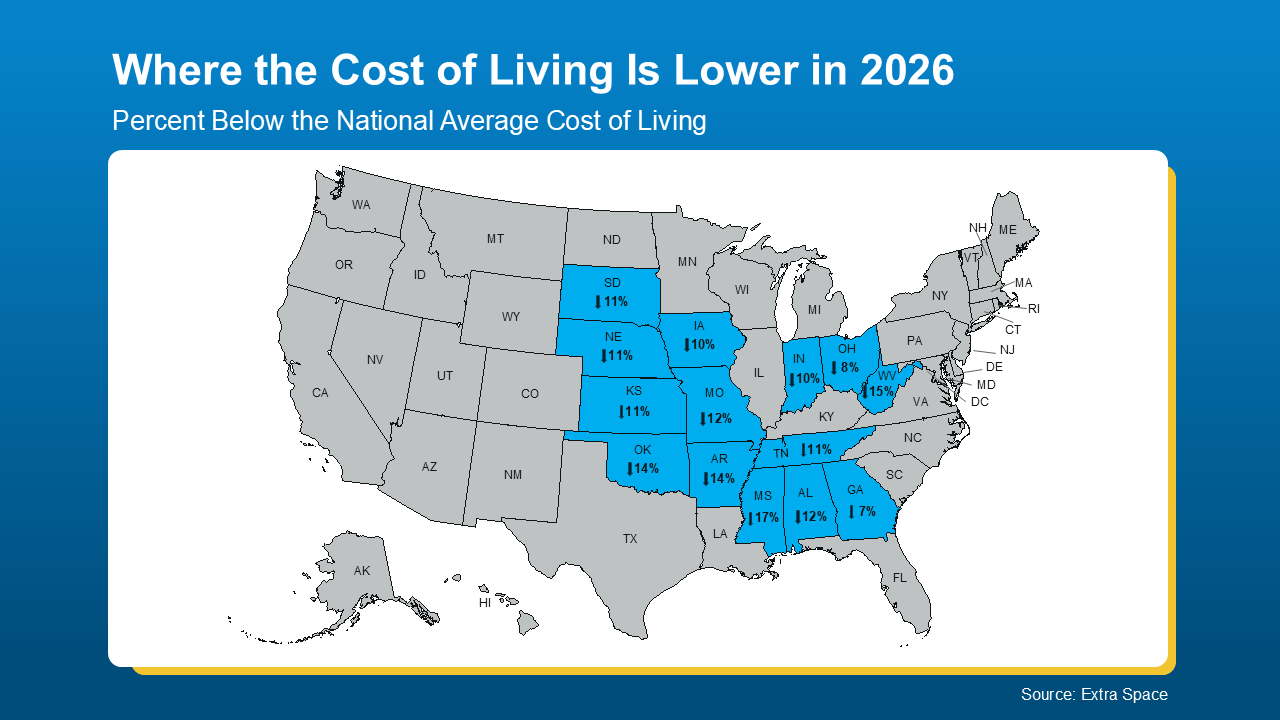 Take Mississippi, for example, where the cost of living sits about 17% below average, or West Virginia at roughly 15% below. When day-to-day life costs less, you can put more of your income toward your goals, homeownership included. Relocate Right describes it this way:
“Remote work has fundamentally changed the calculus of where to live. When your employer is in San Francisco, but you can work from anywhere, the question is no longer ‘where are the jobs’ but ‘where does my salary go furthest and what kind of life can I build.'”
For a first-time buyer, working remotely could be a chance to put down roots and finally buy. Because with that kind of flexibility, you get to choose where to live and which places work best for your life and goals.
What To Weigh Before You Go
A lower cost of living is a great start. But it’s also important to consider the things a budget spreadsheet won’t show you, because a place can look like a great fit on paper and still not feel like home.
-
Is the internet fast and steady enough to do your job without interruptions?
-
Will it be easy to make friends and settle into a routine once you arrive?
-
Does it have the amenities you want, like public transportation or decent takeout?
This is where a local real estate agent comes in. They can help you weigh a big move against a nearby one, because every state has more affordable pockets. Sometimes they’re closer than you think.
An agent will know which neighborhoods fit your budget and have the features you’re after, whether that’s walkability, good restaurants, parks, or a nearby farmer’s market.
Bottom Line
With remote work, where you live can be your decision instead of your employer’s. And that puts more affordable places within reach.
Want to explore where that could take you? Connect with a local real estate agent to see what’s possible.

3 Things You Can Actually Control About Your Mortgage Rate Right Now

Selling This Fall? You Want To Get These 4 Things Right.

The Best Time To Buy a Home in 2026 Is Almost Here



-

 For Buyers4 weeks ago
Worried About a Housing Crash? The Numbers Tell a Calmer Story.
-

 Agent Value4 weeks ago
Most Home Sales Close – Here’s How To Keep Yours on Track
-

 Affordability4 weeks ago
Sellers Are Cutting Prices To Meet Buyers Where They’re At
-

 Affordability3 weeks ago
Thinking About Tapping into Your 401(k) To Buy a Home? Read This First.
-
 Affordability3 weeks ago
Think New Homes Cost More? Not Right Now.
-
 Affordability3 weeks ago
Why Buyers Shouldn’t Overlook a Fall Move
-

 Affordability2 weeks ago
Remote Work Could Be Your Affordability Answer
-
 Agent Value2 weeks ago
The Housing Market Split in 2. Which Side Is Your House On?
You must be logged in to post a comment Login