


Economy
What’s the Impact of Presidential Elections on the Housing Market?

It’s no surprise that the upcoming Presidential election might have you speculating about what’s ahead. And those unanswered thoughts can quickly spiral, causing fear and uncertainty to swirl through your mind. So, if you’ve been considering buying or selling a home this year, you’re probably curious about what the election might mean for the housing market – and if it’s still a good time to make your move.
Here’s the good news that may surprise you: typically, Presidential elections have only had a small, temporary impact on the housing market. But your questions are definitely worth answering, so you don’t have to pause your plans in the meantime.
Here’s a look at decades of data that shows exactly what’s happened to home sales, prices, and mortgage rates in previous Presidential election cycles, so you can move forward with the facts as you weigh the pros and cons of your homeownership decision.
Home Sales
In the month leading up to a Presidential election, from October to November, there’s typically a slight slowdown in home sales (see graph below):
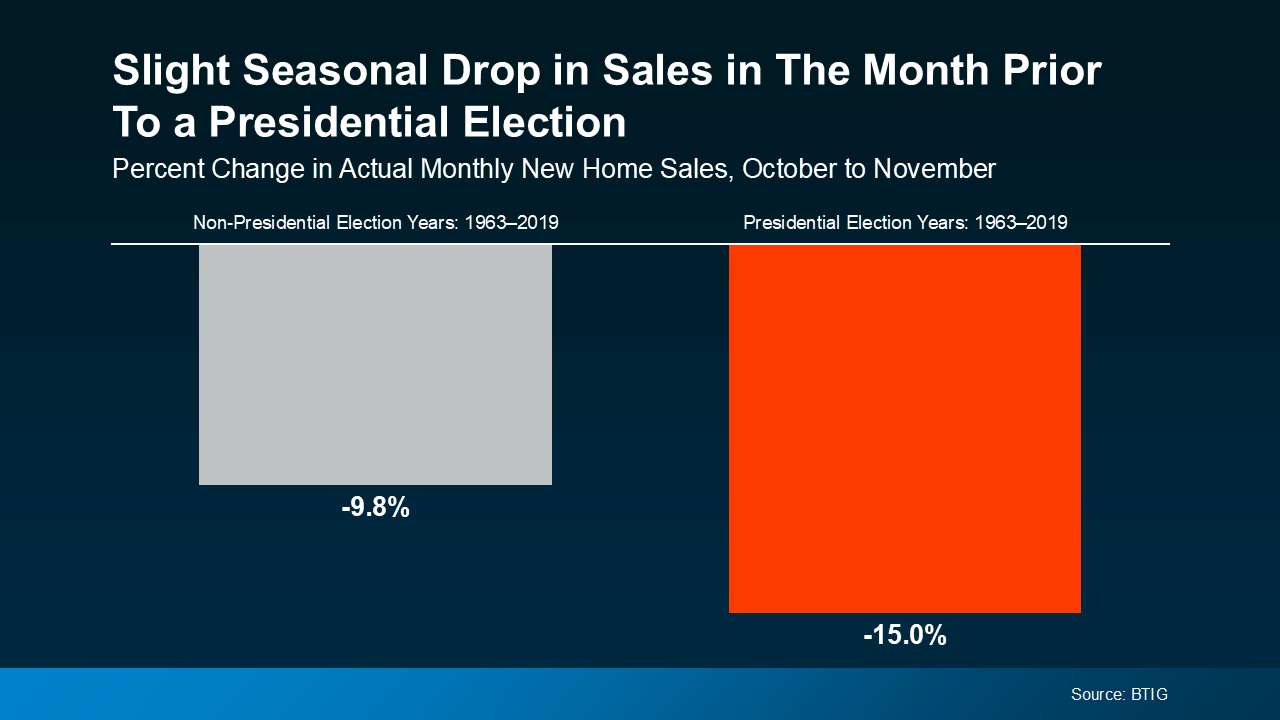 Some consumers will simply wait it out before they make their purchase decision. However, it’s important to know this slowdown is small and temporary.
Historically, home sales bounce right back and continue to rise the following year.
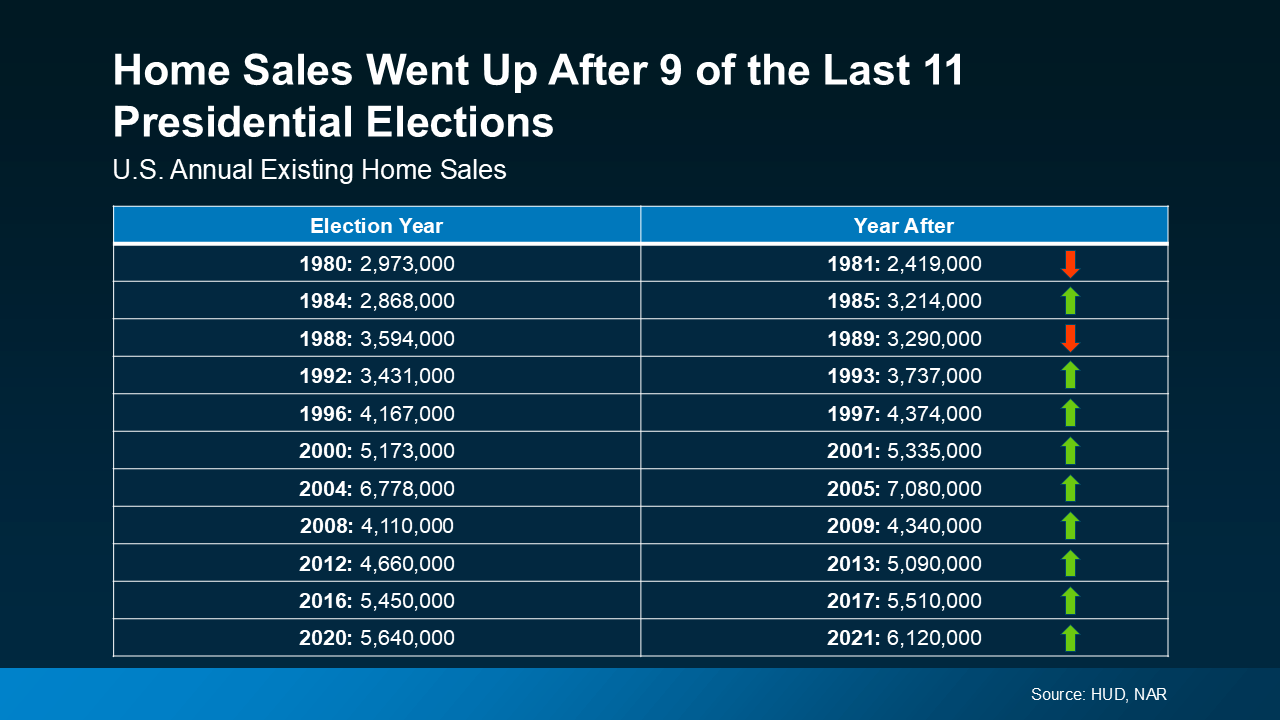
In fact, data from the Department of Housing and Urban Development (HUD) and the National Association of Realtors (NAR) shows after 9 of the last 11 Presidential elections, home sales went up the year after the election, and it’s been happening consistently since the early 1990s (see chart below):
 Home Prices
You may also be wondering about home prices. Do prices come down during election years? Not typically. As residential appraiser and housing analyst Ryan Lundquist notes:
“An election year doesn’t alter the price trend that is already happening in the market.”
Home prices generally rise over time, regardless of an election cycle. So, based on what history shows, you can expect the current pricing trend in your local market to likely continue, barring any unusual market or economic circumstances.
The latest data from NAR reveals that after 7 of the last 8 Presidential elections, home prices increased the following year (see chart below):
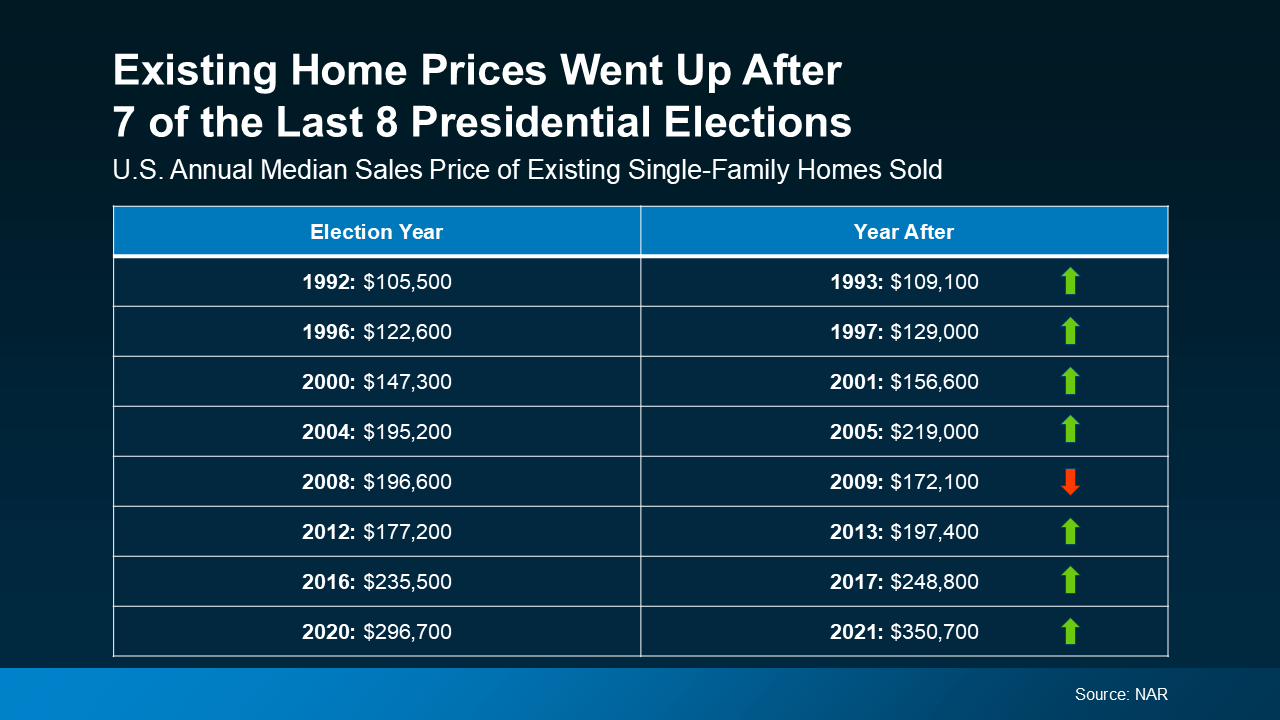 The one outlier was from 2008 to 2009, which was during the height of the housing market crash. That was certainly not a typical year. Today’s market, however, is much more resilient. And while prices are moderating nationally, they aren’t on an overall decline.
Mortgage Rates
And the third thing that’s likely on your mind is mortgage rates, since they impact your monthly payment if you’re financing a home. Looking at the last 11 Presidential election years, data from Freddie Mac shows mortgage rates decreased from July to November in 8 of them (see chart below):
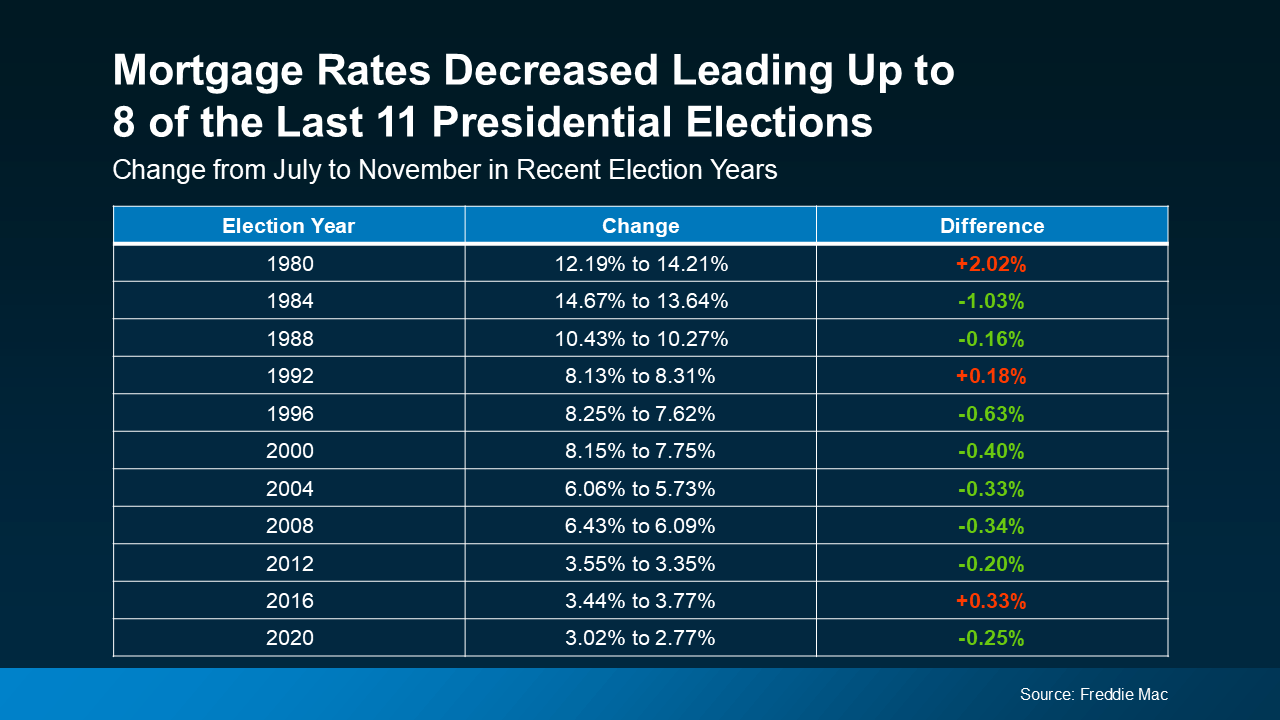 And this year, we’ve already started to see that happen. Most experts also forecast mortgage rates will ease slightly throughout the rest of 2024. If that happens – and all signs right now indicate it should – this year will continue to follow the trend of declining rates. So, if you’re looking to buy a home in the coming months, this could be great news for your purchasing power.
What This Means for You
What’s the big takeaway? While Presidential elections do have some impact on the housing market, the effects are usually minimal. As Lisa Sturtevant, Chief Economist at Bright MLS, says:
“Historically, the housing market doesn’t tend to look very different in presidential election years compared to other years.”
For most buyers and sellers, elections don’t have a major impact on their plans.
Bottom Line
While it’s natural to feel a bit uncertain during an election year, history shows the housing market remains strong and resilient. And this means you don’t have to pause your plans in the meantime. For help navigating the market during this election cycle, reach out to a local real estate agent.

Buying or selling a home is a big financial decision. And right now, it feels even bigger. Inflation is high, costs are high, and you want to be sure the timing is right before you make your move.
But if you do decide to go for it, whether you’re buying or selling, here’s something reassuring to hold onto. Not only does your move change your own life, but it also gives your whole community a boost.
Real estate is a huge part of the economy. In 2025, it added up to about $5.6 trillion, according to the National Association of Realtors (NAR). A good share of that comes from everyday people buying and selling homes, just like you.
Your Move Puts Real Money Into the Local Economy
Every sale sends money flowing through your area. NAR data shows that buying an existing home (one that’s already been lived in) adds about $64,000 to the local economy. Buy a newly built home, and that number climbs to more than $134,000 (see graph below):
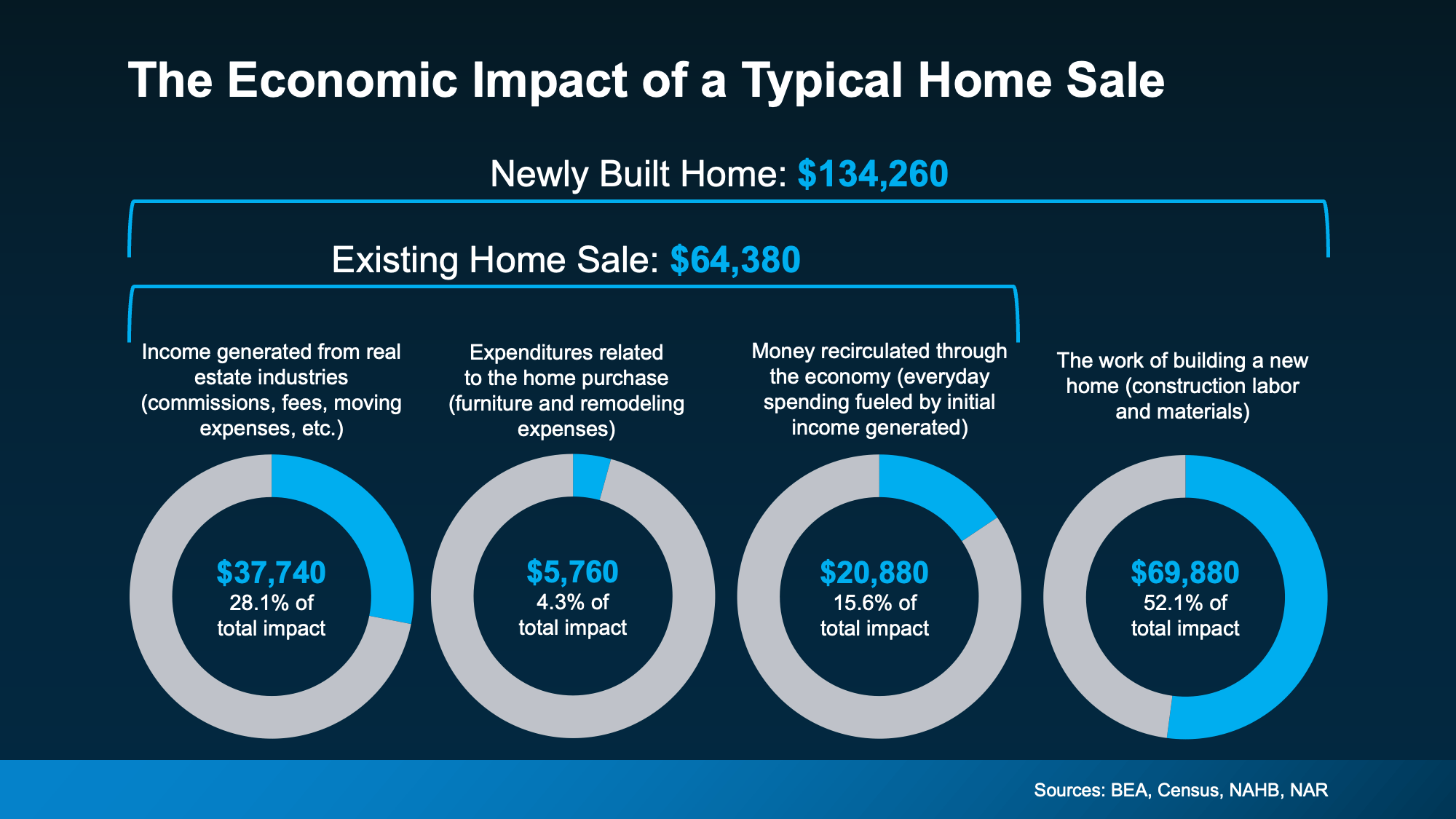
Over half of that comes from the work of building the home itself. The rest flows to real estate services, like agent and lender fees, plus what you spend settling in afterward, on things like furniture and remodeling.
And the money doesn’t stop there. As local businesses earn it, they spend it again in your area, so a single sale ripples further than the sale price alone.
One Sale Keeps a Lot of People Working
Behind every sale is a whole network of people doing their jobs. Contractors, lenders, inspectors, movers, and more. When you buy or sell, you help keep them busy. Lawrence Yun, Chief Economist at NAR, puts it this way:
“Increased home sales mean more economic activity — lawn care, furniture purchases, moving services, mortgage originations and other related business activities all get a boost.“
So, your move supports your neighbors’ livelihoods, too. The deal that gets you into your next home also helps a local crew make payroll. In a year when every paycheck counts, that’s no small thing.
Your Local Impact May Be Even Bigger
What your move financially adds to your community depends a lot on where you live. To help you see how it can vary, here’s a look at the impact of a typical newly built home sale by state.
The national average for a newly built home is about $134,000, but some states see far more (see map below):
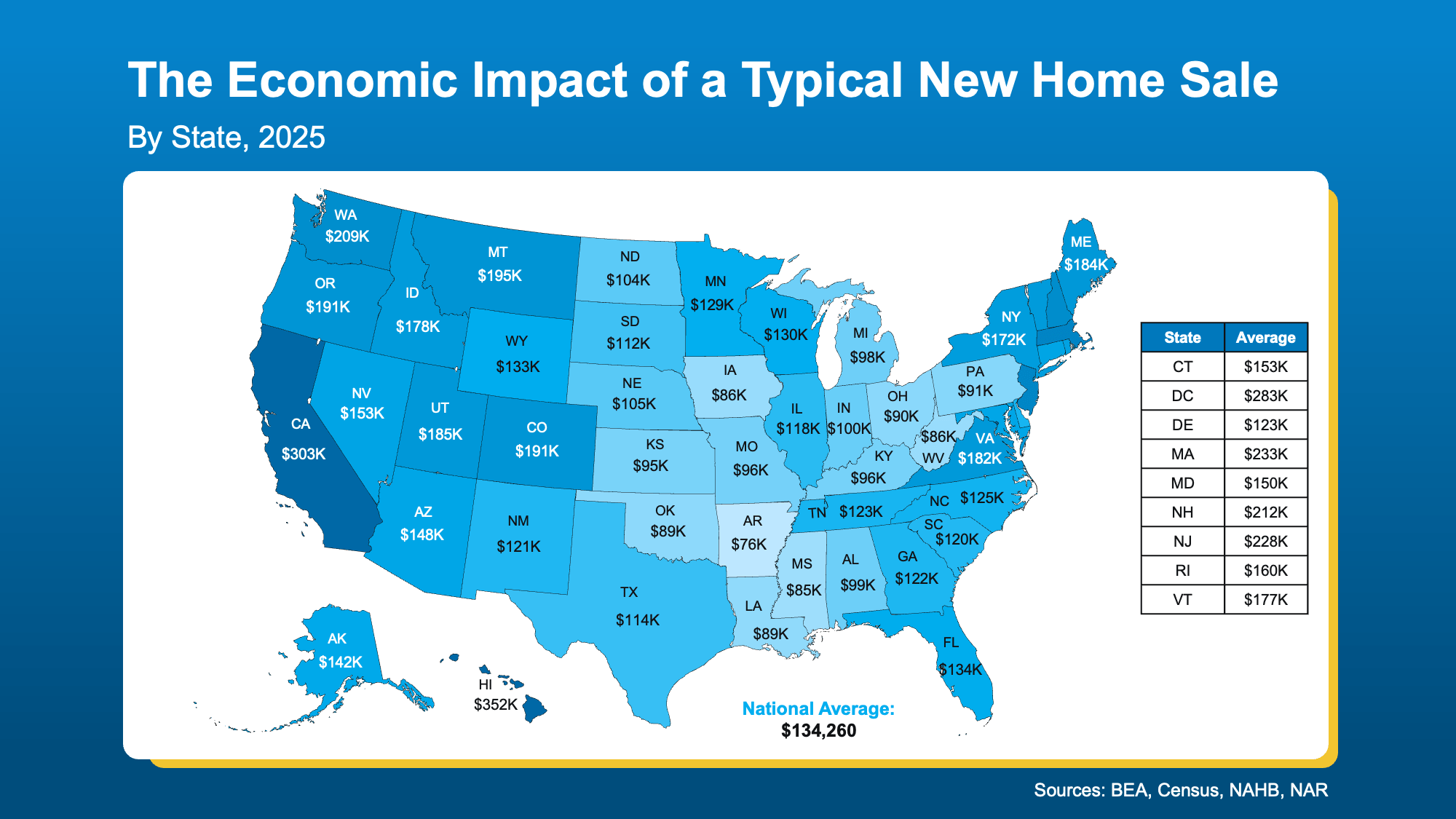
In California, a single sale adds more than $300,000 to the local economy. In Hawaii, it’s over $350,000. Even in the most affordable states, the number lands in the tens of thousands.
Want to know what a move would mean where you live? A local agent can show you the figure close to home.
Bottom Line
Moving is both a personal milestone and an investment in your community. So, if the time is right for you, connect with a local agent. You’ll make a difference for more people than you know.

You may be hearing that a near-record number of homeowners are pulling their houses off the market. And if that headline has you thinking, “Wait… is something bad about to happen?” You’re not alone.
Because when people start stepping to the sidelines, it sounds like a warning sign that something’s coming – or that they realize something you don’t know.
Here’s the thing. This trend gets spun like it means the market is about to crash. But the data tells a more practical story.
What the Numbers Actually Say
According to the latest data from Redfin, 5.5% of all listings were taken off the market in May. And it’s true that’s almost the highest it’s been since back in March 2020 (see graph below):
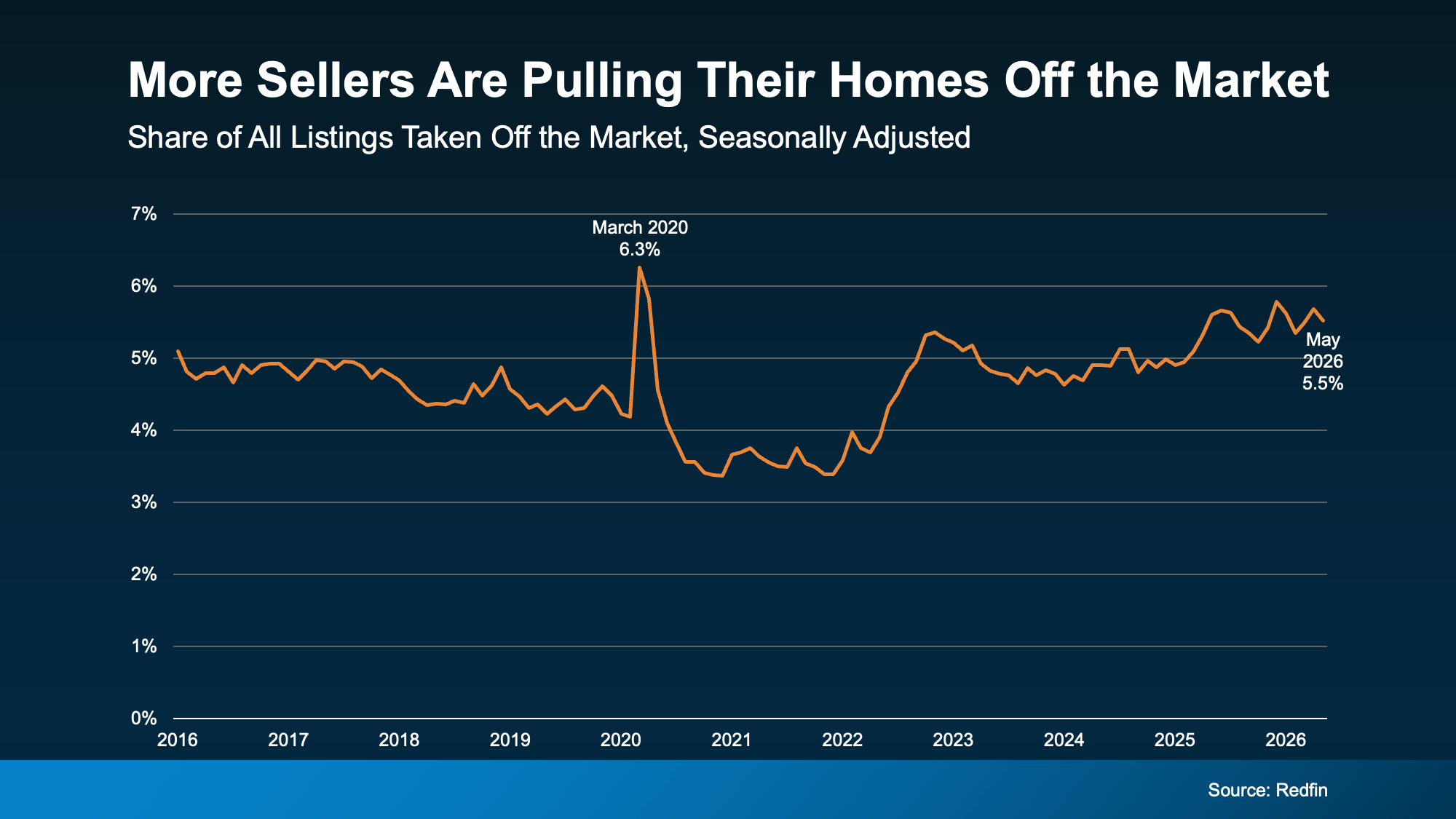
That can sound scary. But a lot of the fear comes from how this story gets told. “A near record number of sellers are pulling their listings” makes a great clickbait headline – and that sort of thing spreads fast, especially online. But sellers pull a house off the market for plenty of reasons that have nothing to do with a crash.
Redfin points to four main forces driving this trend:
-
Homes are taking longer to sell. When the pace slows down, some sellers get frustrated and decide to hold off.
-
The number of homes for sale is rising faster than demand. That means buyers have more options. And sellers who don’t price or prep right may not get many eyes on their house.
-
Some sellers still have pandemic-era price expectations. A price that would’ve worked a couple years ago may not match what today’s buyers will pay.
-
Economic uncertainty is making both buyers and sellers cautious. Buyers pause. Sellers second-guess. And that has an impact on overall sales volume and pace.
Notice what’s missing from that list? There isn’t a single mention of an impending market crash or price collapse.
This is about a shifting pace, more competition, and sellers deciding how they want to respond.
One Detail Most Headlines Leave Out
Want more peace of mind that this isn’t a crash? This next stat delivers. Yes, more sellers are taking their homes off the market. But Redfin also shows something you’re not going to see in social posts…
The number of re-listings is growing too.
While more sellers are pulling their listings, more are also deciding to give selling a second shot too. This is pretty much the highest re-listings have been since the pandemic hit.
While 5.5% got pulled in May, 2.3% were also put back on the market (see graph below):
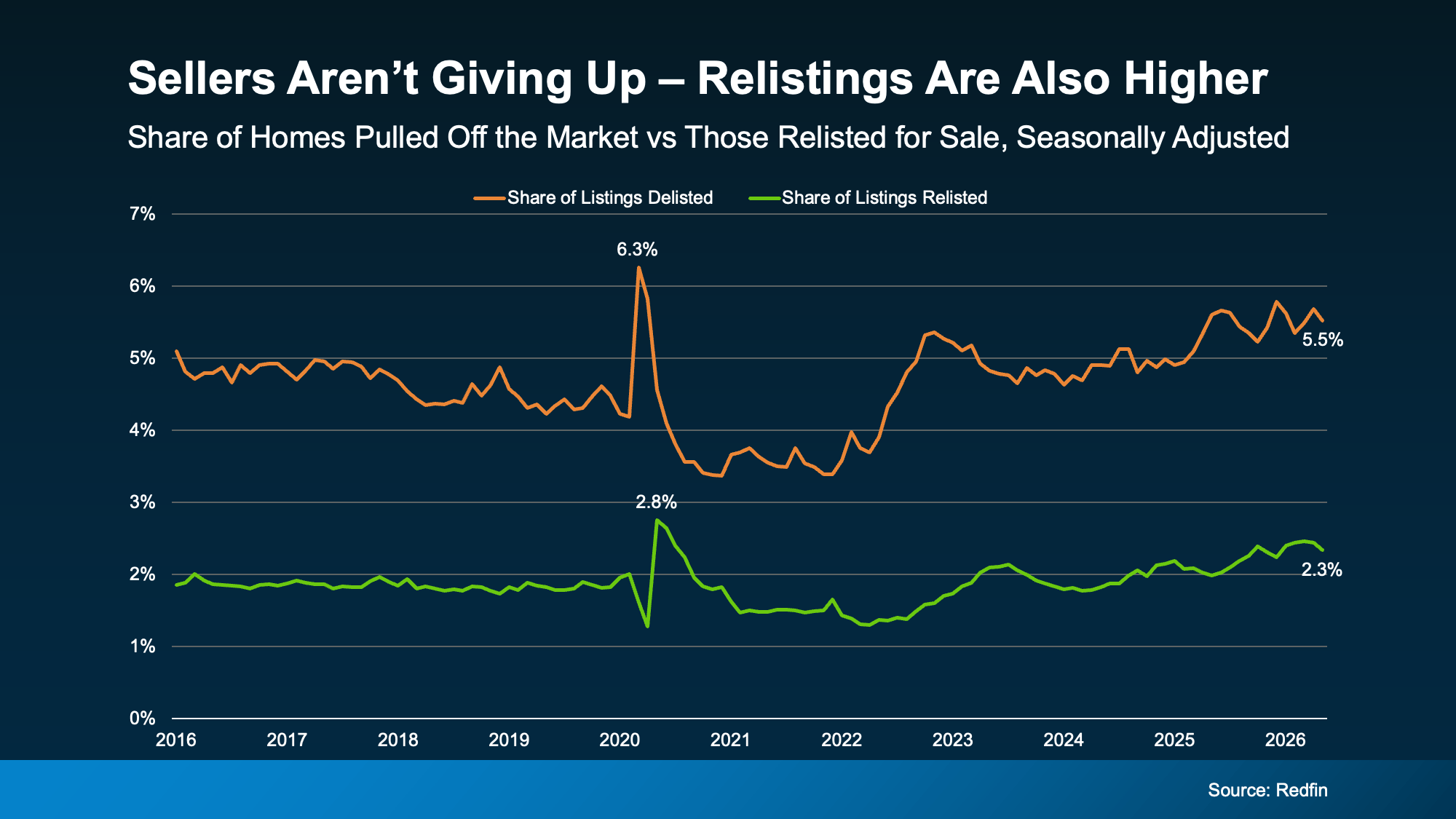
That’s a signal sellers aren’t giving up or running away in large numbers.
Some are simply stepping away briefly before deciding to try again. That tells you this often isn’t a permanent decision. In many cases, it’s a pause – and the seller comes back with a different approach.
A lot of the time that change in the overall strategy is all that’s needed to finally get a house sold.
And just in case you need more proof this isn’t a reason to worry, check this out. Buyer activity may be starting to pick back up – and that could bring more sellers back in or, at least, prevent some sellers from pulling back.
The National Association of Realtors (NAR) reports existing home sales increased 3.2% in May. That’s the biggest increase since December. As the Wall Street Journal puts it:
“Home sales in May posted the biggest rise this year, a sign that the housing market’s crucial spring selling season may be showing signs of life after a sluggish start.”
That doesn’t sound like a market in trouble.
Bottom Line
If you’re seeing headlines about how a record number of sellers are taking their homes off the market, don’t panic. It’s not a warning of an impending crash. It’s a market adjusting.

Data shows inflation is moving in the wrong direction. But before the headlines send anyone into a panic, here’s what’s actually going on, why it matters for the housing market, and what it means if you’re thinking about buying or selling.
Inflation Went Up – Here’s What That Actually Means
The government tracks inflation in a variety of ways. One is something called PCE – the Personal Consumption Expenditures Price Index. It measures how much more (or less) people are paying for goods and services compared to a year ago. And just based on your own expenses, you can probably guess which way that’s trending.
That’s the one everyone is talking about right now. Check out the yellow line to see how that’s spiked since February (see graph below). A big driver of this jump is the ongoing conflict in the Middle East, which has pushed gas and energy prices significantly higher.
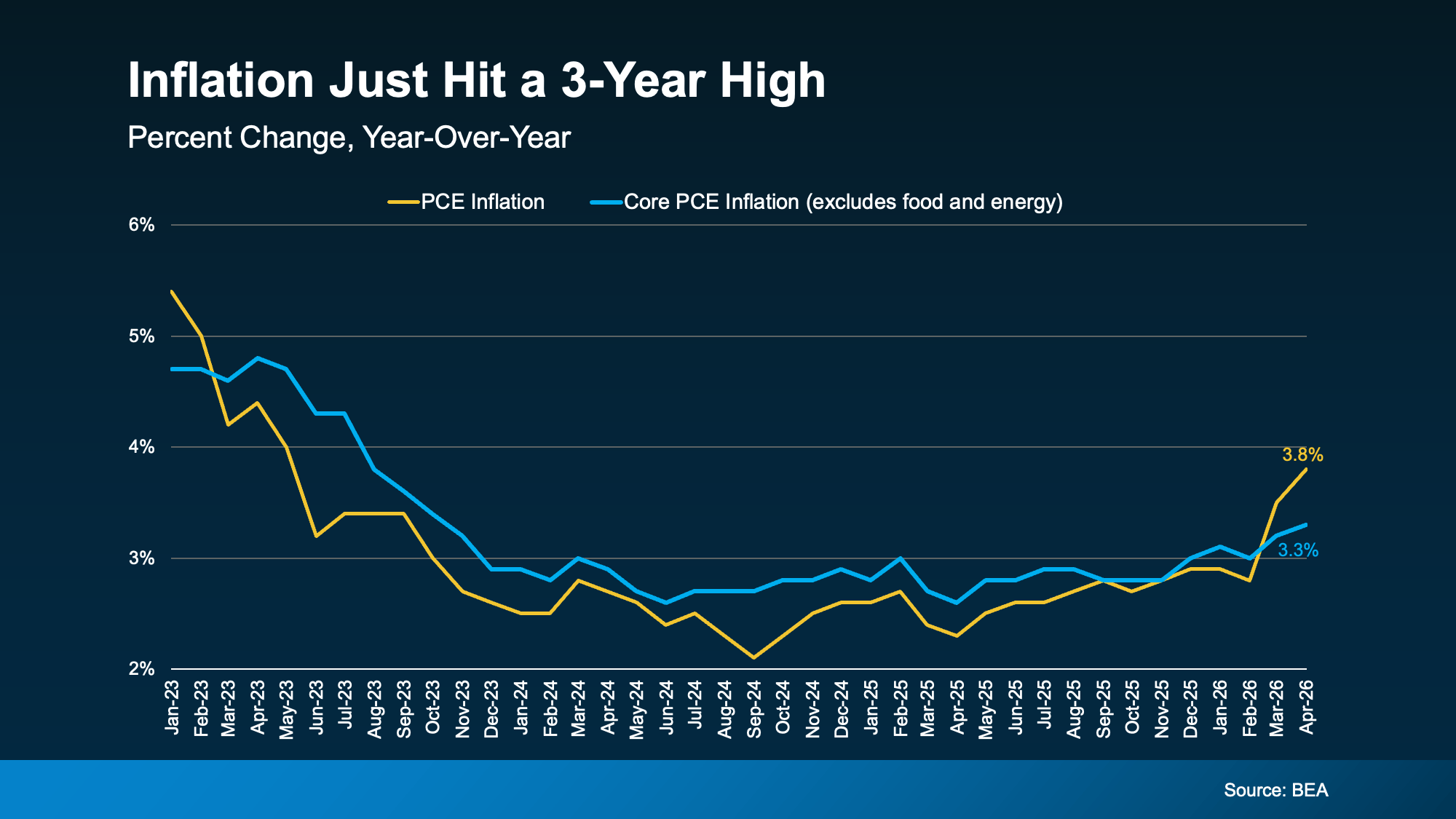
Now, you may have noticed there’s a second line. The blue line shows core PCE. That’s the same measure, but with gas and energy prices stripped out. The Federal Reserve (the Fed) actually watches this number most closely because energy prices swing around a lot and can be misleading.
And here’s the somewhat encouraging part.
Core PCE is rising, but not nearly as fast as the overall number. That suggests a good chunk of the inflation spike we’re seeing right now is tied directly to what’s happening overseas. So, when that situation settles down, inflation may settle a bit, too.
Why This Matters for Mortgage Rates
Here’s the housing connection. When inflation is high, the Fed tends to keep the Federal Funds Rate elevated or even raise it to try to taper spending and cool inflation back down. And while it’s not a one-for-one relationship, that Federal Funds Rate can have an impact on your mortgage rate when you buy.
Right now, based on the information we have, there’s roughly a 50/50 chance the Fed actually raises the Federal Funds Rate before the end of 2026, according to CME FedWatch (see graph below):
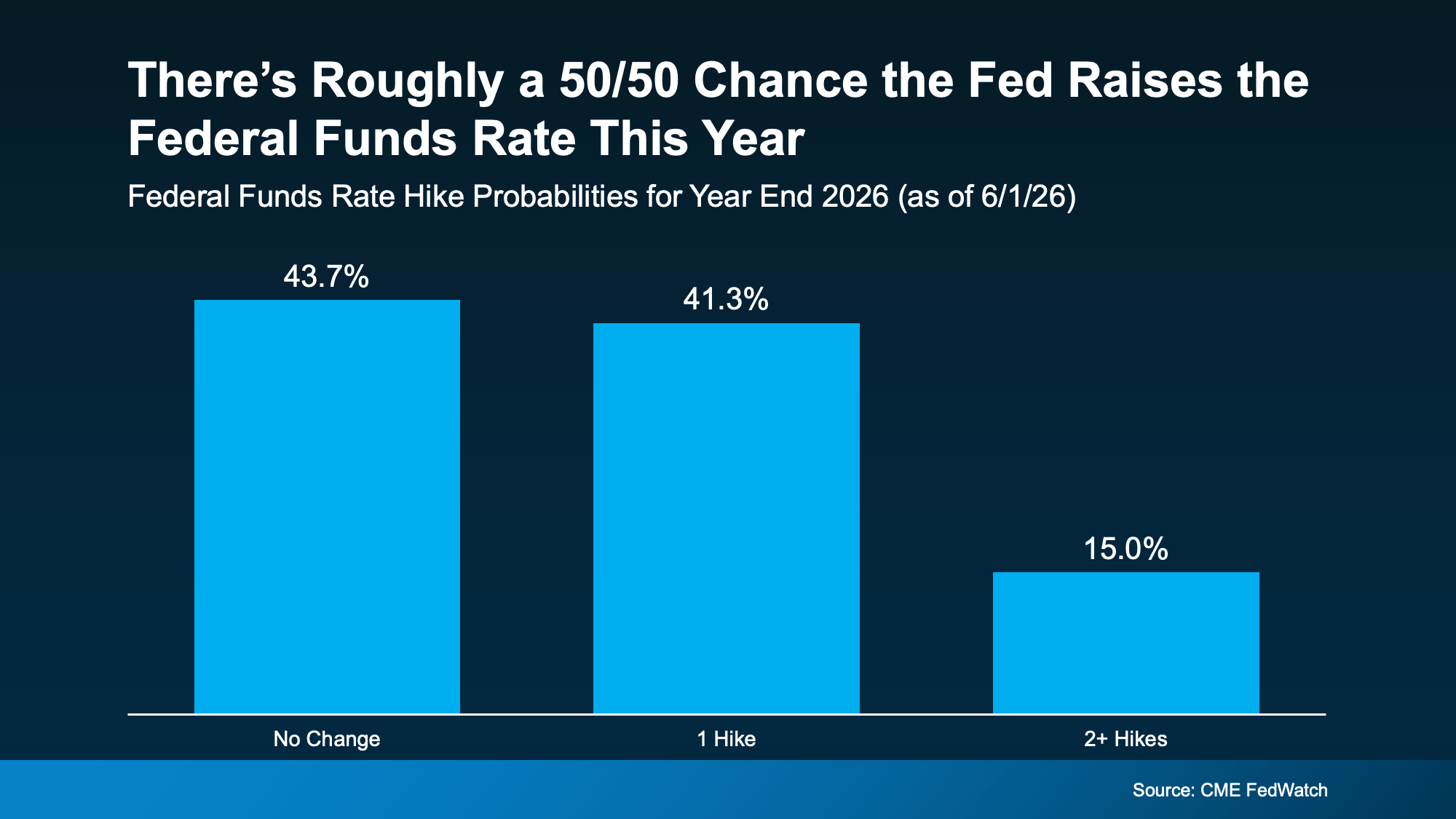
While it’s too soon to say where this goes for certain and if we’re headed for a rate hike, it does mean mortgage rates are probably not coming down as soon as most people were hoping.
If you’ve been waiting for rates to drop significantly before making a move, this report is a reminder that “higher for longer” is still very much on the table. It really all depends on where the economy goes from here. According to Bankrate:
“Oil prices and bond yields have dropped a bit . . . but they’re still way up compared to the start of spring. Until there’s a resolution to the war, look for both inflation and mortgage rates to stay high.”
But This Is Not 2008 – Not Even Close
Just remember, a tough economy does not equal a housing crash. The conditions today are very different from what led to the 2008 collapse. Here’s why:
-
Inventory is still relatively low. There’s no flood of homes hitting the market.
-
Most homeowners today have strong equity in their homes.
-
Lending standards are far stricter than they were before 2008.
-
Today’s challenge is affordability, not a wave of distressed underwater sellers.
Uncomfortable and unhealthy are not the same thing. The market feels hard right now, but “hard” and “crashing” are very different.
You Still Have Options. Here’s What To Do.
High rates don’t mean homeownership is out of reach. It just means the path looks a little different. There are real strategies that can help, depending on your situation:
-
Ask your lender about different loan options. Adjustable-rate mortgages (ARMs) or rate buydowns may help lower your monthly payment in the short term.
-
Explore first-time buyer programs, down payment assistance, or seller concessions that could help offset costs.
-
Stay in close touch with a trusted agent and lender. When rates shift, and they will, you’ll want to be ready to move fast.
The right strategy, tailored to your goals, matters a lot more than waiting for the perfect moment that may never come.
Bottom Line
Inflation is still above where the Fed wants it, and that means mortgage rates are likely to stay elevated for a while. But for people who need to move, strategy matters far more than trying to perfectly time the market.
Wondering what this means for your specific situation? Connect with a local agent or lender.

Student Loans Are Back in the News. Don’t Let It Put Your Homeownership Plans on Hold.

What Buying or Selling a Home Gives Back to Your Community

Down Payments Are Smaller Than They’ve Been Since 2021



-

 Buying Tips4 weeks ago
Two Big Reasons To Move This Summer
-

 Affordability4 weeks ago
Lower Asking Prices Are a Win for Today’s Buyers
-

 For Sellers3 weeks ago
Should You Pay for Your Buyer’s Closing Costs? What Sellers Need To Know.
-

 For Buyers3 weeks ago
Think Home Prices Will Crash? Here’s What the Experts Actually Expect.
-
 Affordability2 weeks ago
That House That’s Been Sitting Could Be Your Best Shot at a Deal
-

 Economy2 weeks ago
More Sellers Are Taking Their Homes off the Market. Here’s What You Need To Know.
-

 Agent Value3 weeks ago
Is It Still a Seller’s Market? Here’s What the Data Says.
-

 Agent Value2 weeks ago
Your House Didn’t Sell. Here’s How To Turn It Around.
You must be logged in to post a comment Login