
Real Estate Tips & News
The Latest Expert Forecasts for the 2025 Housing Market

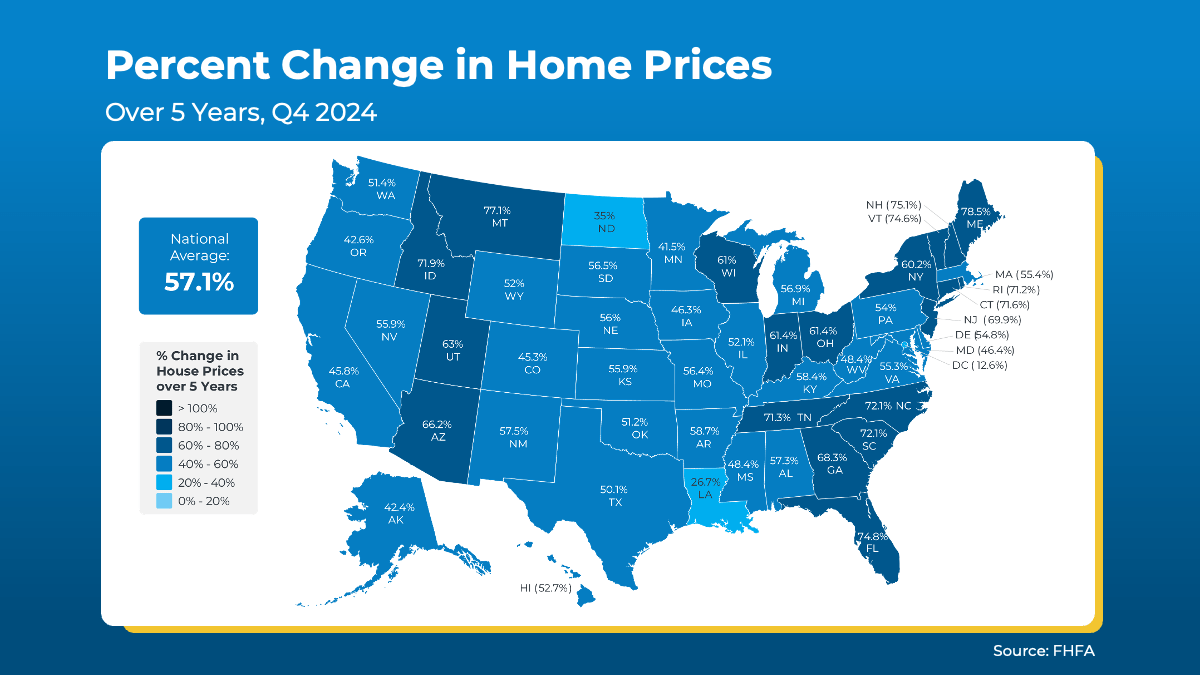
After several years of rising home prices and volatile mortgage rates, it looks like the housing market will start to head in a more normal direction in 2025 – at least according to the latest forecasts. And if you’ve been thinking about making a move, that means the uncertainty that could’ve been throwing off your plans may be coming to a close.
Here’s a look at the latest expert forecasts on two of the biggest factors expected to shape the market in the year ahead.
Will Mortgage Rates Come Down?
Everyone’s keeping an eye on mortgage rates, and they’re projected to settle in the mid-6% range by the end of the year (see chart below):
 But remember, rate projections will continue to shift as new information becomes available. Expert forecasts are based on what they know right now. If there’s increasing uncertainty around inflation, employment, government policies, or other key economic drivers, mortgage rates will move. So, don’t get caught up in the exact numbers or try to time the market. Instead, focus on the fact that a bit more stability in rates isn’t a bad thing – and even a small change can help your bottom line.
A trusted lender and your RE/MAX® agent will make sure you always have the latest data and the context to understand what it really means for you and your monthly payment.
Will Home Prices Fall?
The short answer? Not likely. Home prices are projected to keep rising in most areas – just at a slower, more normal pace. If you average the expert forecasts together, you’ll see prices are expected to go up by about 2.7%, with the majority of the projections hitting somewhere in the 3 to 4% range by the end of the year. And that’s a much more typical and sustainable rise (see graph below):
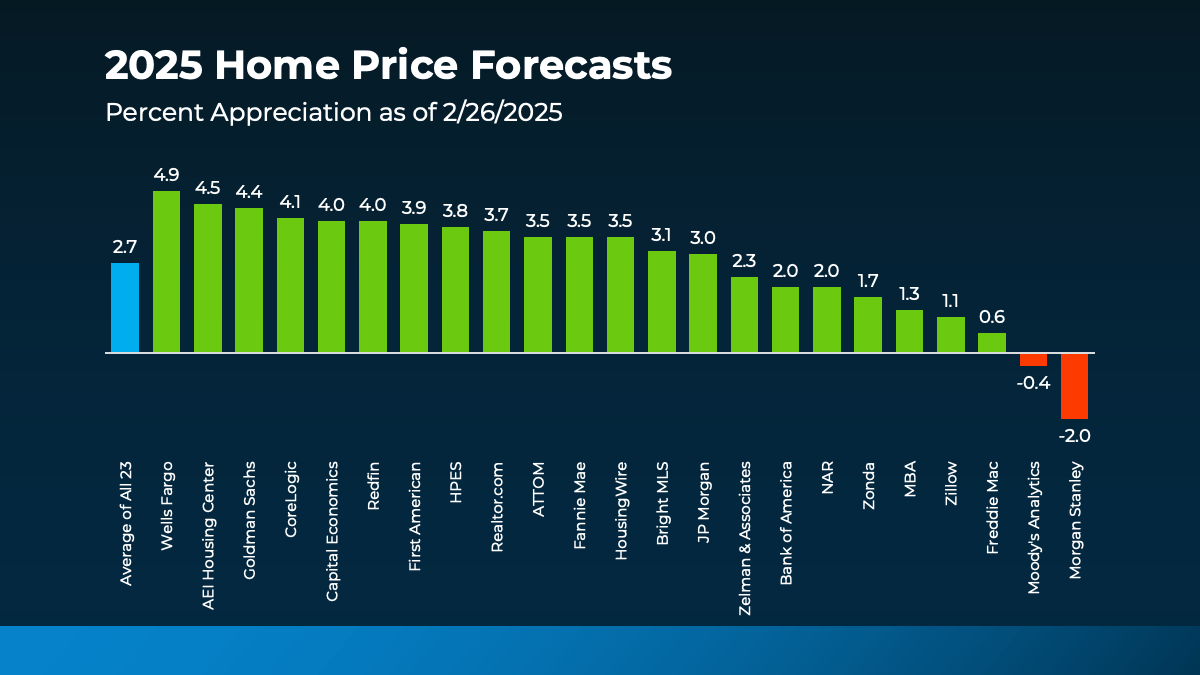 So, don’t expect a sudden drop that’ll score you a big deal if you’re thinking of buying this year. While that may sound disappointing if you’re hoping prices will come down, refocus on this. It means you won’t have to deal with the steep increases the market felt in recent years, and you’ll also likely see any home you do buy go up in value after you get the keys in hand. And that’s a good thing.
Prices normalizing is a welcome sign after years of unsustainable home price growth. It means we’re moving into a healthier market. And that’s something we haven’t been able to say in a while.
And if you’re wondering how it’s even possible prices are still rising, here’s your answer. It all comes down to supply and demand. Even though there are more homes for sale now than there were just a year ago, there still aren’t enough houses on the market to keep up with all the buyers out there.
Keep in mind, though, the housing market is hyper-local. So, this will vary by area. Some markets will see even higher price appreciation. And some may see prices level off or even dip slightly. In most markets though, prices will continue to rise (as they usually do).
If you want to find out what’s happening where we live, you need to lean on your local RE/MAX® agent who can explain the latest trends and what they mean for your plans.
Bottom Line
The housing market is shifting, and the experts say 2025 will move toward a more normal, healthier pace for the year. With rates stabilizing and home prices rising at a more typical and sustainable rate, it’s all about staying informed and making a plan that works for you.
What mortgage rate are you waiting for to make your move? Tell me your number, and I’ll show you how the math works out for your monthly mortgage payment. It may be more attainable this spring than you think.

If you’re a homeowner getting ready to move, one question usually comes first: should you buy your next home before you sell, or sell your current house before you start looking?
There’s no single right answer. The best call depends on your finances, your local market, and your timeline. And a trusted agent can help you weigh all of it.
But in a lot of cases these days, selling first puts you in the stronger spot.
The Advantages of Selling First
Selling is usually the trickier half of a move today, so getting it done first clears your biggest hurdle. And that’s especially true right now, because there are more homes for sale than there are buyers, which means houses are taking longer to sell than they did a year or two ago.
So how does leading with your sale pay off? Let’s start with the money.
1. You Won’t Get Stuck Paying Two Mortgages
Buy before you sell, and you could end up carrying two mortgages at once. And especially since houses are staying on the market longer these days, that overlap may drag on for more time than you’d planned. And if unexpected repairs come up, it could get even more expensive.
Selling first takes that risk off the table, so you’re not multitasking homeownership. As Ramsey Solutions puts it:
“It’s best to sell your old home before buying a new one to avoid unnecessary risks and possible headaches.“
2. You Can Use Your Equity To Fuel Your Move
This is always true, but one of the biggest perks of selling first is that you’ll know exactly how much money you’re walking away with. And one of the big figures that matters in that conversation is how much equity you have in your current place.
Equity is basically your house’s value minus what you still owe on your mortgage. And it adds up fast. According to Realtor.com, homeowners who’ve been in their home for 5 years have about $180,000 in equity on average. And those who’ve had their home for 6-10 years? They have over $340,000.
After you sell, you can use that money to cover your down payment or even buy your next home in cash. And knowing that profit up front helps you plan your next move.
3. Your Offer Will Be Hard To Pass Up
When your house is already sold, you don’t have to make your offer contingent on that sale. In a market where buyers are taking their time, that’s exactly what a seller wants to see.
Picture it from the seller’s side. If their house has been sitting for a while, they’ll gravitate toward the offer most likely to close without a snag.
That can also give you room to ask for a little more, like repairs, since a motivated seller would rather keep things moving than lose you and wait for another offer to come in. Your agent can help you make the most of your upper hand in that scenario.
Is There a Catch?
Selling first has its tradeoffs too, and it helps to see the pros and cons side by side before you decide. Here’s a quick breakdown based on information from Zillow (see visual below):

The cons are manageable with the right plan, so talk about them with your agent. They can help you negotiate things like a rent-back, where you stay in your house for a set time after closing, or line up flexible closing dates to keep the transition smooth.
Bottom Line
There’s no one-size-fits-all answer to buying and selling at once. But for a lot of homeowners, leading with the sale makes moving easier on their mind and their wallet.
Connect with a local agent, and they’ll help you navigate selling and buying with more confidence, more financial power, and less stress.


Why More Buyers Are Turning To Adjustable-Rate Mortgages Today

To Sell or Rent? How To Choose the Best Path for Your House.

Confused by Home Price Headlines? Here’s Why.



-

 Buying Tips3 weeks ago
Hoping for (or Dreading) a Housing Crash? The Experts Just Weighed In.
-
 For Sellers3 weeks ago
What Higher Mortgage Rates Mean for Home Sellers
-

 Affordability4 weeks ago
Why So Many Sellers Are Cutting Their Price Right Now
-

 Affordability4 weeks ago
The Mortgage Rate You See Online Isn’t Necessarily the One You’d Get.
-

 Affordability3 weeks ago
Two Moves That Can Get You Into Your First Home Sooner
-
 Affordability2 weeks ago
Myth vs. Reality: Does the Fed Control Mortgage Rates?
-

 Downsize2 weeks ago
Renovate or Relocate? What To Know Before You Decide To Age in Place
-

 Affordability2 weeks ago
Why Most People Are Still Glad They Bought a Home
You must be logged in to post a comment Login