


Real Estate Tips & News
Why the Average Homeowner Has $319K in Equity

If you already own a home, have you ever stopped to think about how much wealth you’ve built up just from being a homeowner? As home values rise, so does your net worth. And, if you’ve been in your house for a few years (or longer), there’s a good chance you’re sitting on a pile of equity — maybe even more than you realize.
What Is Home Equity?
Home equity is the difference between what your house is worth and what you owe on your mortgage. For example, if your house is worth $500,000 and you still owe $200,000 on your home loan, you have $300,000 in equity. It’s essentially the wealth you’ve built through homeownership. Right now, homeowners across the country are seeing near-record amounts of equity.
According to the Intercontinental Exchange (ICE), the average homeowner with a mortgage has $319,000 in home equity.
Why Have Homeowners Gained So Much Equity?
The rise in equity can be credited to two key factors:
1. Significant Home Price Growth
Home prices have climbed dramatically in recent years. In fact, according to the Federal Housing Finance Agency (FHFA), over the past five years, home prices nationwide have risen by 57.1% (see map below):
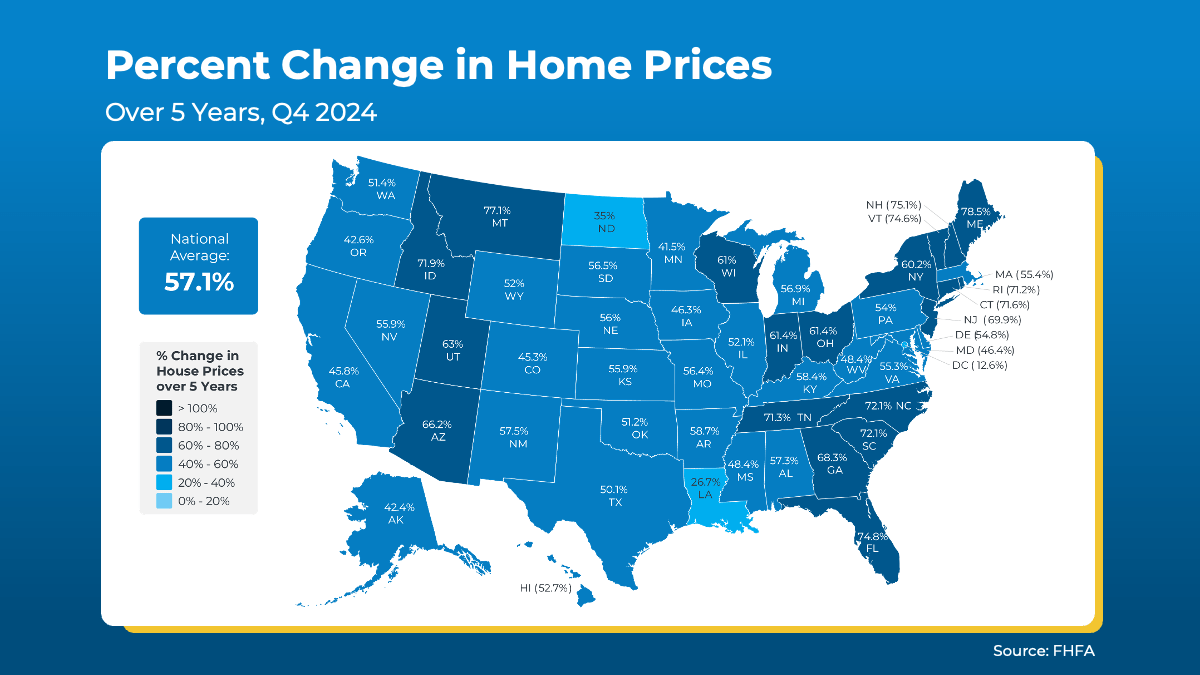 This appreciation means your house is likely worth much more now than when you first bought it.
2. Longer Tenure in Homes
Data from the National Association of Realtors (NAR) also shows people are staying in their homes longer than they used to, with the average tenure now being close to 10 years (see graph below):
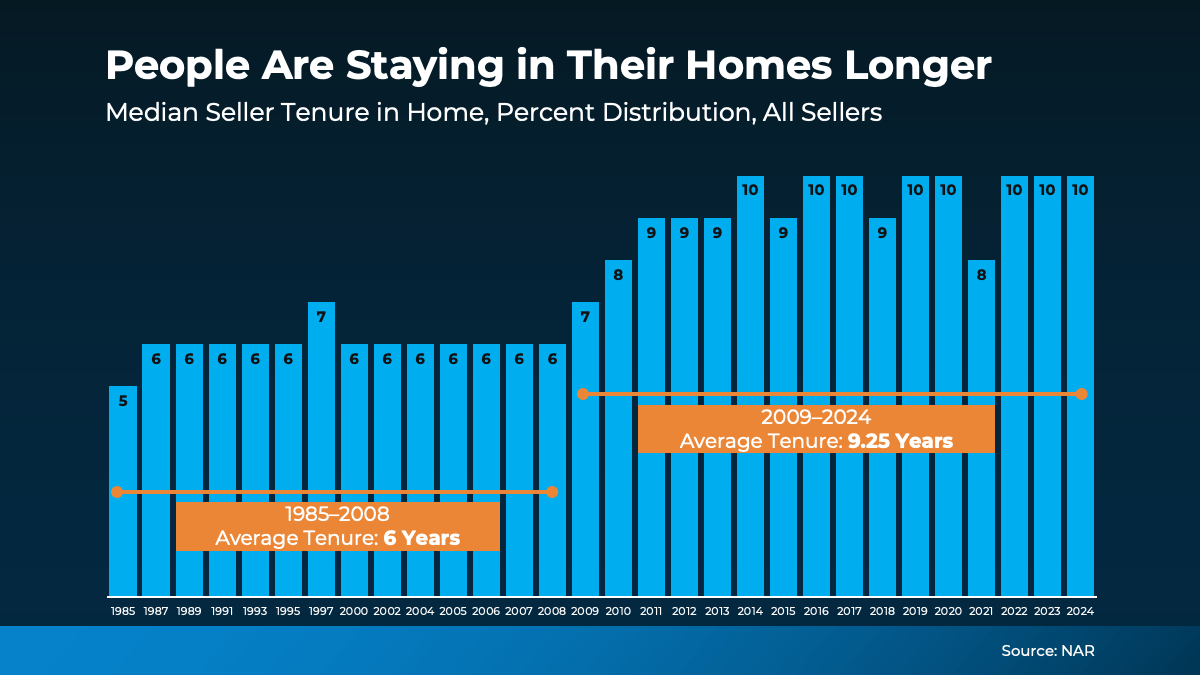 This increase means homeowners are benefiting even more from home values growing over time as they’re paying down their mortgages. That’s because the longer someone lives in their house, the more that home value grows, which directly increases equity.
And if you’re one of those people who’s been in their home for 10 years or more, know this – according to NAR:
“Over the past decade, the typical homeowner has accumulated $201,600 in wealth solely from price appreciation.”
The Benefits of Having Home Equity
What does this mean for you? Your house might be your biggest financial asset – and it could open some exciting opportunities for your future. Let’s break it down.
Moving to Your Next Home
Your equity could help you cover the down payment for your next home. In some cases, it might even mean you can buy your next house in all cash, especially if you’re looking to downsize or move to a less expensive area.
Financing Home Improvements
Thinking about upgrading your kitchen, adding a garage, or tackling other key projects? If you do it right, your equity can provide the funds to make those improvements happen, increasing the value of your home and making it more enjoyable to live in, too.
Starting a Business
If you’ve been dreaming about starting your own business, your equity could be the kickstart you need to make it happen. Whether it’s for startup costs, equipment, or marketing, leveraging your home’s value can help bring your entrepreneurial goals to life while driving your long-term earning potential forward.
Fueling Your Retirement
Your home equity could be the key to funding your next chapter, too. By downsizing or moving to a more affordable area, you can unlock cash to support your retirement goals or invest in the lifestyle you’ve been hoping for – all while simplifying your living situation.
Bottom Line
Whether you’re thinking about selling, upgrading, or simply want to understand your options, your home equity is a powerful resource – and your trusted RE/MAX® agent can help you understand exactly what you’re working with.
Want to find out how much your home is worth? Send me a quick reply, and I’ll do a professional assessment for you. The real number may surprise you.

If you’re a homeowner getting ready to move, one question usually comes first: should you buy your next home before you sell, or sell your current house before you start looking?
There’s no single right answer. The best call depends on your finances, your local market, and your timeline. And a trusted agent can help you weigh all of it.
But in a lot of cases these days, selling first puts you in the stronger spot.
The Advantages of Selling First
Selling is usually the trickier half of a move today, so getting it done first clears your biggest hurdle. And that’s especially true right now, because there are more homes for sale than there are buyers, which means houses are taking longer to sell than they did a year or two ago.
So how does leading with your sale pay off? Let’s start with the money.
1. You Won’t Get Stuck Paying Two Mortgages
Buy before you sell, and you could end up carrying two mortgages at once. And especially since houses are staying on the market longer these days, that overlap may drag on for more time than you’d planned. And if unexpected repairs come up, it could get even more expensive.
Selling first takes that risk off the table, so you’re not multitasking homeownership. As Ramsey Solutions puts it:
“It’s best to sell your old home before buying a new one to avoid unnecessary risks and possible headaches.“
2. You Can Use Your Equity To Fuel Your Move
This is always true, but one of the biggest perks of selling first is that you’ll know exactly how much money you’re walking away with. And one of the big figures that matters in that conversation is how much equity you have in your current place.
Equity is basically your house’s value minus what you still owe on your mortgage. And it adds up fast. According to Realtor.com, homeowners who’ve been in their home for 5 years have about $180,000 in equity on average. And those who’ve had their home for 6-10 years? They have over $340,000.
After you sell, you can use that money to cover your down payment or even buy your next home in cash. And knowing that profit up front helps you plan your next move.
3. Your Offer Will Be Hard To Pass Up
When your house is already sold, you don’t have to make your offer contingent on that sale. In a market where buyers are taking their time, that’s exactly what a seller wants to see.
Picture it from the seller’s side. If their house has been sitting for a while, they’ll gravitate toward the offer most likely to close without a snag.
That can also give you room to ask for a little more, like repairs, since a motivated seller would rather keep things moving than lose you and wait for another offer to come in. Your agent can help you make the most of your upper hand in that scenario.
Is There a Catch?
Selling first has its tradeoffs too, and it helps to see the pros and cons side by side before you decide. Here’s a quick breakdown based on information from Zillow (see visual below):

The cons are manageable with the right plan, so talk about them with your agent. They can help you negotiate things like a rent-back, where you stay in your house for a set time after closing, or line up flexible closing dates to keep the transition smooth.
Bottom Line
There’s no one-size-fits-all answer to buying and selling at once. But for a lot of homeowners, leading with the sale makes moving easier on their mind and their wallet.
Connect with a local agent, and they’ll help you navigate selling and buying with more confidence, more financial power, and less stress.


Why More Buyers Are Turning To Adjustable-Rate Mortgages Today

To Sell or Rent? How To Choose the Best Path for Your House.

Confused by Home Price Headlines? Here’s Why.



-

 Buying Tips3 weeks ago
Hoping for (or Dreading) a Housing Crash? The Experts Just Weighed In.
-

 For Sellers3 weeks ago
What Higher Mortgage Rates Mean for Home Sellers
-

 Affordability4 weeks ago
Why So Many Sellers Are Cutting Their Price Right Now
-

 Affordability4 weeks ago
The Mortgage Rate You See Online Isn’t Necessarily the One You’d Get.
-

 Affordability3 weeks ago
Two Moves That Can Get You Into Your First Home Sooner
-
 Affordability2 weeks ago
Myth vs. Reality: Does the Fed Control Mortgage Rates?
-

 Downsize2 weeks ago
Renovate or Relocate? What To Know Before You Decide To Age in Place
-

 Affordability2 weeks ago
Why Most People Are Still Glad They Bought a Home
You must be logged in to post a comment Login