


For Buyers
Thinking about an Adjustable-Rate Mortgage? Read This First.

If you’ve been house hunting lately, you’ve probably felt the sting of today’s mortgage rates. And it’s because of those rates and rising home prices that many homebuyers are starting to explore other types of loans to make the numbers work. And one option that’s gaining popularity? Adjustable-rate mortgages (ARMs).
If you remember the crash in 2008, this may bring up some concerns. But don’t worry. Today’s ARMs aren’t the same. Here’s why.
Back then, some buyers were given loans they couldn’t afford after the rates adjusted. But now, lenders are more cautious, and they evaluate whether you could still afford the loan if your rate increases. So, don’t assume the return of ARMs means another crash. Right now, it just shows some buyers are looking for creative solutions when affordability is tough.
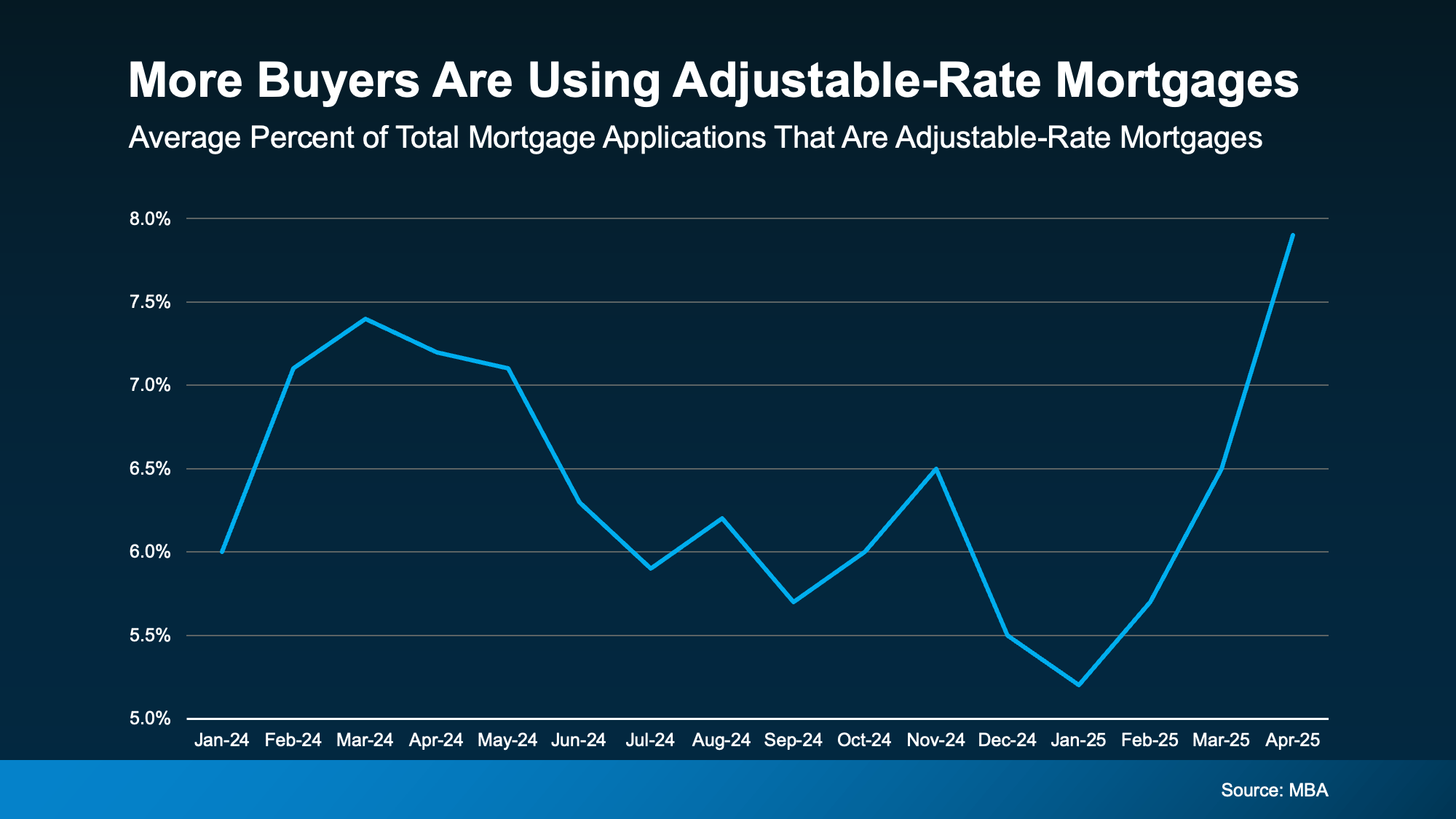
You can see the recent trend in this data from the Mortgage Bankers Association (MBA). More people are opting for ARMs right now (see graph below):
 And while ARMs aren’t right for everyone, in certain situations they do have their benefits.
How an Adjustable-Rate Mortgage Works
Here’s how Business Insider explains the main difference between a fixed-rate mortgage and an adjustable-rate mortgage:
“With a fixed-rate mortgage, your interest rate remains the same for the entire time you have the loan. This keeps your monthly payment the same for years . . . adjustable-rate mortgages work differently. You’ll start off with the same rate for a few years, but after that, your rate can change periodically. This means that if average rates have gone up, your mortgage payment will increase. If they’ve gone down, your payment will decrease.”
Of course, things like taxes or homeowner’s insurance can still have an impact on a fixed-rate loan, but the baseline of your mortgage payment doesn’t change much. Adjustable-rate mortgages don’t work the same way.
Pros and Cons of an ARM
Here’s a little more information on why some buyers are giving ARMs another look. They offer some pretty appealing upsides, like a lower initial rate. As Business Insider explains:
“Because ARM rates are typically lower than fixed mortgage rates, they can help buyers find affordability when rates are high. With a lower ARM rate, you can get a smaller monthly payment or afford more house than you could with a fixed-rate loan.”
On the flip side, just remember, if you have an ARM, your rate will change over time. As Barron’s explains there’s the potential for higher costs later:
“Adjustable-rate loans offer a lower initial rate, but recalculate after a period. That is a plus for borrowers if rates come down in the future, or if a borrower sells before the fixed period ends, but can lead to higher costs if they hold on to their home and rates go up.”
So, while the upfront savings can be helpful now, you’ll want to think through what could happen if you’re still in that home when your initial rate ends. Because while projections show rates are expected to ease a bit over the next year or two, no forecast is guaranteed.
That’s why it’s essential to talk with your lender and financial advisor about all your options and whether an ARM aligns with your financial goals and your comfort with risk.
Bottom Line
For the right buyer, ARMs can offer some big advantages. But they’re not one-size-fits-all. The key is understanding how they work, weighing the pros and cons, and thinking through if they’d be something that would work for you financially. And that’s why you need to talk to a trusted lender and financial advisor before you make any decisions.
Data centers probably weren’t on your list of things to think about when buying or selling a home.
School districts? Sure. How close you are to family? Absolutely. A large building full of computer servers down the road? Probably not.
But that may be changing.
Data centers are popping up in more communities across the country. And as they do, buyers and homeowners are starting to wonder what having one nearby could mean for everything from home values to utility bills. So, let’s get into what the data actually says. Because there’s a lot more nuance here than if they’re “good” or “bad.”
Data Centers Are Showing Up in a Lot More ZIP Codes
According to Realtor.com, back in 2015, only about a dozen ZIP codes had a large data center. But by the first half of 2026, that number had climbed to more than 100 – and it’s projected to rise even further by the end of the year (see graph below):
 That’s a pretty dramatic increase in just over a decade. HousingWire shows a lot of that growth is in Texas, Virginia, Georgia, Pennsylvania, Ohio, Utah, Illinois, Arizona, Indiana, and Nevada.
And that ramp up explains why this is becoming a real estate conversation. More buyers are going to encounter a data center during their search. More homeowners are going to hear about one being proposed nearby.
And both groups are going to want to know what that could mean for them.
The Big Question: What About Home Values?
One of the first concerns homeowners and buyers may have is: could a nearby data center hurt home values? So far, there’s no evidence that says it automatically will.
Researchers compared communities that have large data centers to similar communities without them. A recent HousingWire article reports:
“. . . home values in data center ZIP codes generally tracked their matched communities — with no statistically meaningful gains or losses. Listing prices showed a modest initial increase around openings . . .”
That’s important context. Historically, simply having a data center nearby hasn’t been enough to send home values dramatically higher or lower.
That doesn’t mean every property will react the same way. Proximity, the surrounding development, and the specific facility can all matter. But for the typical homeowner or buyer, the data so far doesn’t point to an automatic impact on home values.
Living Near a Data Center Can Come with Tradeoffs
Like any major development coming to town, data centers can bring benefits along with things buyers and homeowners will want to consider.
On the plus side:
-
They may be part of a bigger growth story. A data center can usher in broader development in an area and substantial property tax revenue that can be used to improve the community.
-
Infrastructure may get an upgrade. New roads, fiber, power infrastructure, and other improvements can come along with major development.
-
They can generate economic activity. A data center can generate jobs which in turn fuels local housing demand and supports local businesses.
On the flip side:
-
They’re not exactly invisible. Large facilities, transmission lines, substations, and construction can change the look and feel of an area.
-
Noise can matter. Cooling equipment, generators, construction, and truck traffic may be noticeable depending on how close you are.
-
They use more resources. These facilities can require significant electricity and, depending on the cooling system, water. That can raise questions about local infrastructure and whether growing electricity demand could affect what residents pay.
On that last point, J.P. Blackwood, Public Affairs Liaison and Media Spokesperson for the Ohio Consumers’ Counsel (OCC), explained his take on what consumers need to know about data centers and their potential to impact utility costs to HousingWire:
“Utility rate increases tend to be gradual, and so that’s what I would expect here. Again, a number of factors can drive electricity prices higher and are driving them higher, and this is one of them. There are steps being taken around the country to mitigate the effects of data centers.”
Basically, they’re just one factor that can have an impact. And the key word there is “can” because it depends on where you live and what rules are in place in your area.
So, What Should Buyers and Homeowners Do?
If you’re buying, find out what’s already there – and what’s approved or proposed nearby. Consider the facility’s proximity, potential noise, future development, and whether utility costs are something you want to factor into your budget.
If you’re selling, don’t assume a nearby data center automatically hurts your home’s value. But buyers may have questions. Knowing the facts about the facility, construction timeline, noise, and future plans can help you address those concerns upfront.
Bottom Line
As more data centers pop up, they’re becoming another piece of the puzzle buyers and homeowners need to understand.
Have a data center nearby or one coming soon? Talk to a local real estate agent about what it could mean for your home or your next move.

For most first-time buyers, the hardest part of buying a home is making the numbers work. You budget, you save, and the finish line still feels far away.
But your salary is only half the equation. Where you live shapes what you can afford just as much. And if you can work remotely, you have an advantage a lot of buyers don’t.
You’re not tied to living where the jobs are, so you can look where your money goes further.
Where You Work Doesn’t Have To Dictate Where You Live
Remote job openings are on the rise. According to FlexJobs, remote job postings climbed 22% from the quarter before. That’s the second quarter in a row of double-digit growth.
More remote roles mean more people can choose a home base around the life they want to build. As Forbes puts it:
“Remote employees, freelancers, consultants, entrepreneurs, and business owners have the flexibility to choose a home base based on the life they want to build, whether that means more space, a lower cost of living, better access to nature, or simply somewhere new.”
And you can use that freedom to look somewhere more affordable.
Your Paycheck Goes Much Further in Some States
Your cost of living – what you spend on housing, groceries, utilities, and the rest of daily life – varies a lot from one state to the next. In some, according to data from Extra Space, it runs far enough below the national average to change what you can afford (see map below):
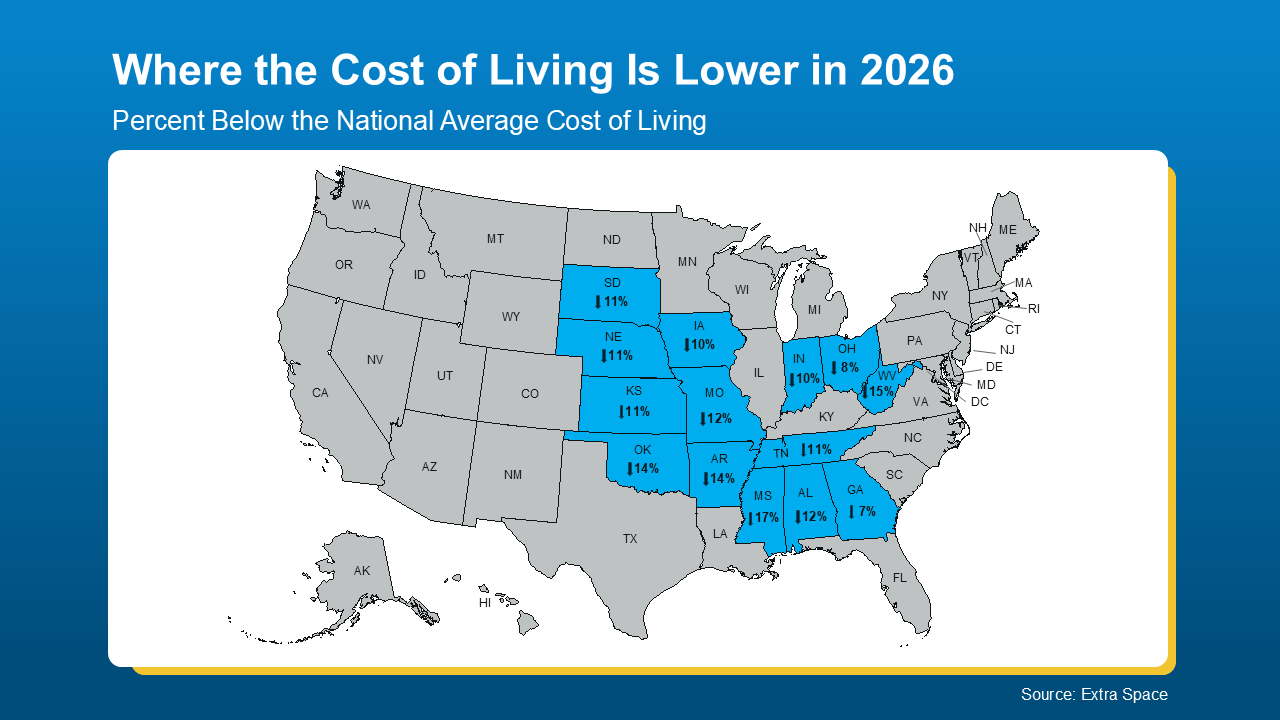 Take Mississippi, for example, where the cost of living sits about 17% below average, or West Virginia at roughly 15% below. When day-to-day life costs less, you can put more of your income toward your goals, homeownership included. Relocate Right describes it this way:
“Remote work has fundamentally changed the calculus of where to live. When your employer is in San Francisco, but you can work from anywhere, the question is no longer ‘where are the jobs’ but ‘where does my salary go furthest and what kind of life can I build.'”
For a first-time buyer, working remotely could be a chance to put down roots and finally buy. Because with that kind of flexibility, you get to choose where to live and which places work best for your life and goals.
What To Weigh Before You Go
A lower cost of living is a great start. But it’s also important to consider the things a budget spreadsheet won’t show you, because a place can look like a great fit on paper and still not feel like home.
-
Is the internet fast and steady enough to do your job without interruptions?
-
Will it be easy to make friends and settle into a routine once you arrive?
-
Does it have the amenities you want, like public transportation or decent takeout?
This is where a local real estate agent comes in. They can help you weigh a big move against a nearby one, because every state has more affordable pockets. Sometimes they’re closer than you think.
An agent will know which neighborhoods fit your budget and have the features you’re after, whether that’s walkability, good restaurants, parks, or a nearby farmer’s market.
Bottom Line
With remote work, where you live can be your decision instead of your employer’s. And that puts more affordable places within reach.
Want to explore where that could take you? Connect with a local real estate agent to see what’s possible.
You’ve been waiting for something to change before you buy. It just might not be the thing you expected…
While everyone’s paying attention to mortgage rates, only the savviest buyers know that the changing season can start tipping things in their favor.
Because every fall, buyers tend to get more to choose from, better prices, and more room to negotiate. And that’s why Hannah Jones, Senior Economist at Realtor.com, says:
“We always see that the best time to buy window usually falls in the early fall around October.”
And that’s exactly why, if you’ve been waiting for a better moment to buy, this season may be worth a closer look – even with rates where they are.
1. There Are More Homes To Choose From
One of the biggest frustrations buyers have had over the past few years has been a lack of choices. Fall tends to help with that.
Based on seasonal trends, Realtor.com data shows there are typically more homes available for sale in September through November than during any other season of the year (see graph below):
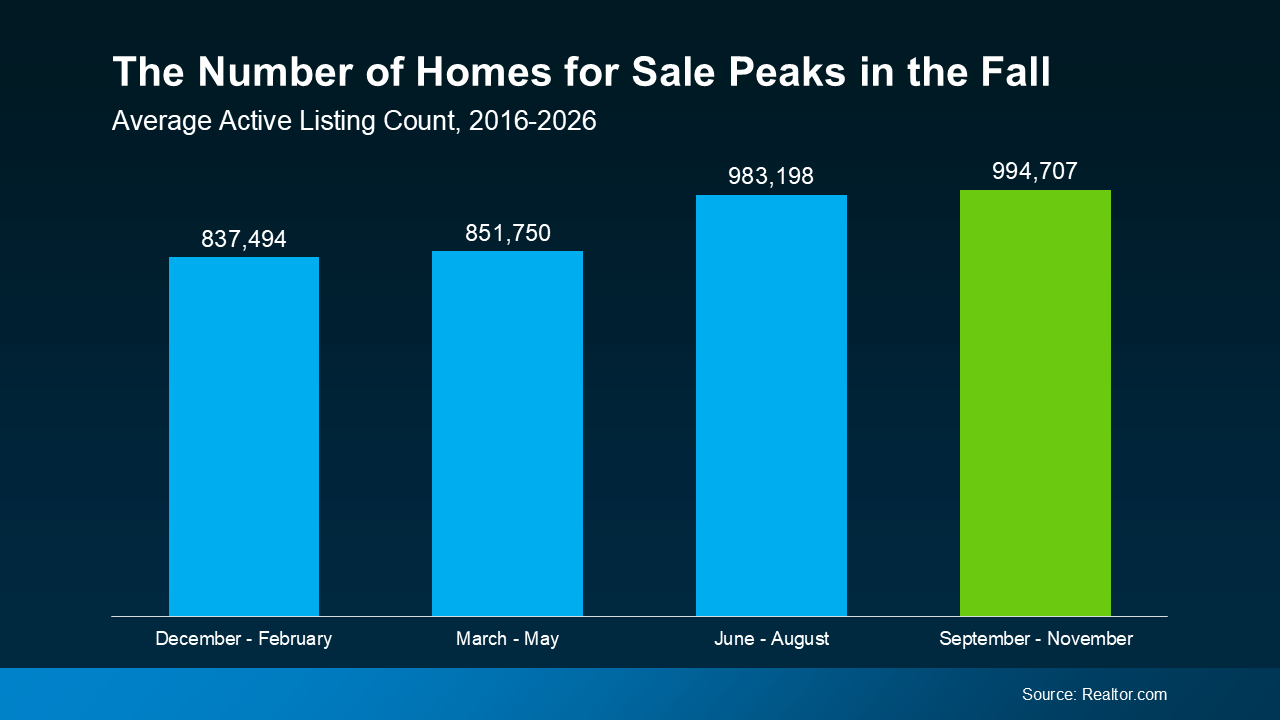 Why does this happen? Homes that hit the market in spring and summer don’t all close right away. Some sit. New listings keep coming. And inventory builds as the year goes on.
By fall, you’re looking at the largest pool of available homes all year. That makes it easier to find one that works for your needs and your budget. And if anything, this should be more true this year. Rates that are higher for longer tend to help inventory grow even more.
More choices can mean fewer compromises. You’re more likely to find the right home, not just the one that happens to be available.
2. Asking Prices Start To Drop
Having more choices is great. But if every home is still priced too high, that only gets you so far. That’s where fall’s second advantage kicks in: asking prices start their seasonal decline.
HousingWire data shows this trend over time (see graph below):
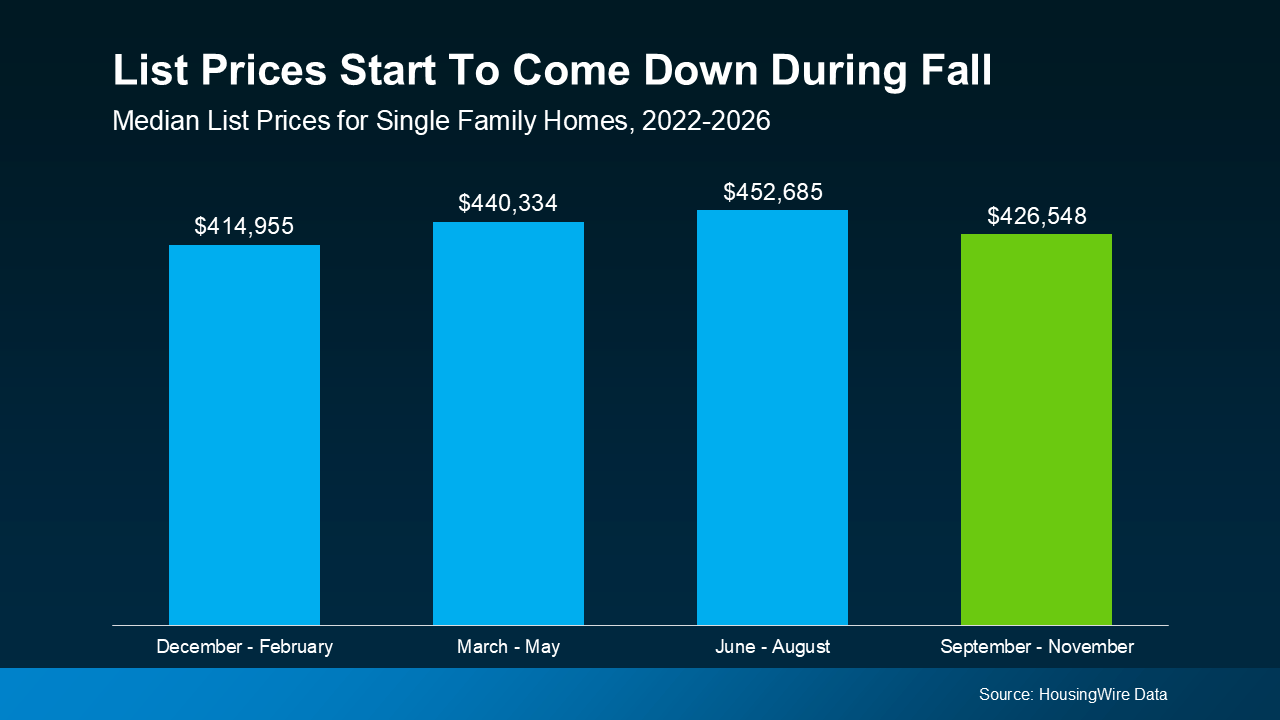 It works like this. Spring and early summer are when sellers feel the most confident because that’s when demand is typically strongest. So, many homeowners price their homes higher during those periods because of the uptick in demand.
But every year, like clockwork, that dynamic starts to change by fall. Buyer activity slows down as the weather cools off. So, sellers have to price a bit lower to try to draw buyers in. And that’s good for your bottom line.
3. More Sellers Are Willing To Negotiate
But fall doesn’t just bring more choices and lower asking prices. It also brings more sellers who are increasingly motivated to get a deal done.
You can see it in the data. Most years, fall is when price cuts peak according to Realtor.com data (see graph below):
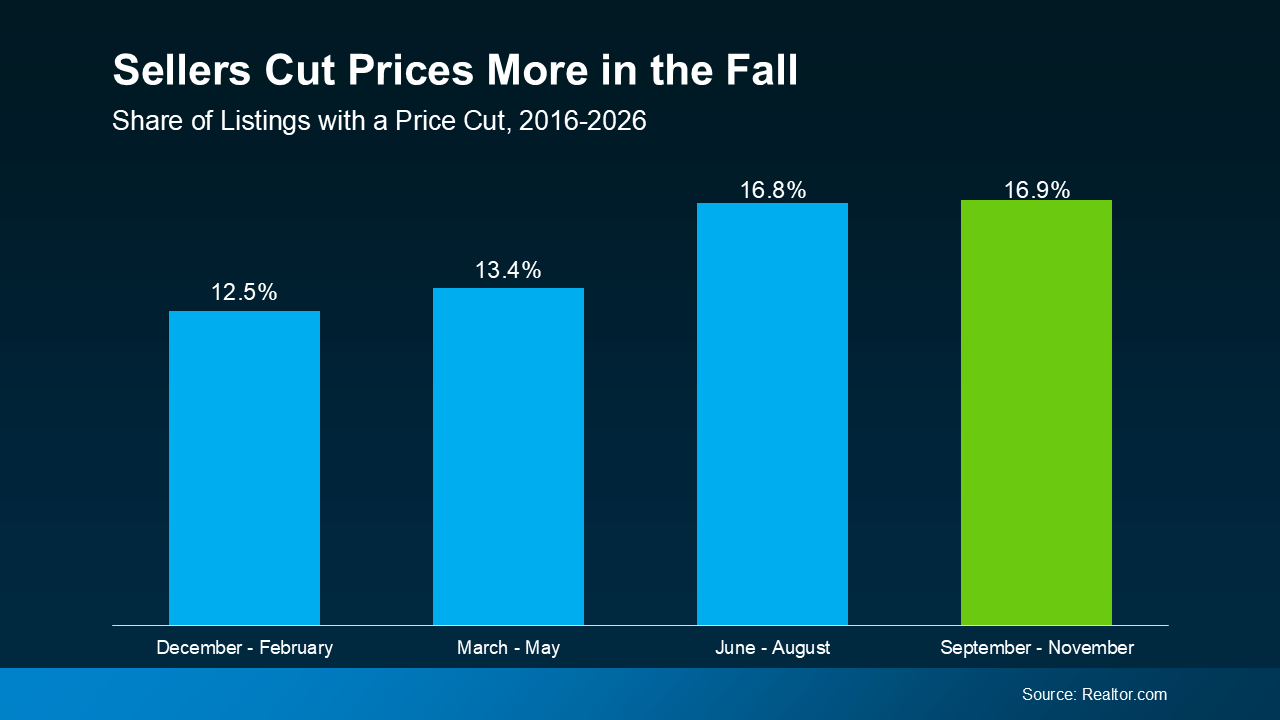
While it’s not a big difference from summer, this fall you’ll have more negotiation power than you’d have if you wait until the first half of 2027. Here’s why.
If a home is on the market in the fall, many sellers are eager to get it sold before the holidays. And since there are usually fewer buyers active in the fall, that often leads to another opportunity to snag a better deal. As the National Association of Realtors (NAR) explains:
“Less competition can lead to better deals. While homes are not selling as fast as during the summer, sellers may be more willing to negotiate.”
Even a small seller compromise here can make a meaningful difference for you.
As an example, a 5% price drop on a $500,000 home is $25,000. That could mean you end up borrowing less, keeping more money in savings, having room in the budget for updates after you move in, or simply making the monthly payment feel more manageable.
Bottom Line
Of course, every market moves a little differently. But here’s what doesn’t change: Fall consistently buyers. More homes. Lower asking prices. Motivated sellers.
If you’ve been waiting for your search to feel a little more doable, this season may be worth another look.
Have a quick conversation with a local agent about what’s happening in your market. That way you can find out whether this fall gives you opportunities you may not have had a few months ago.

Data Centers Are Moving Closer to Homes. What Does That Mean for You?

The Housing Market Split in 2. Which Side Is Your House On?

Remote Work Could Be Your Affordability Answer



-
 Affordability4 weeks ago
Here’s Why Mortgage Rates Are What They Are Right Now
-

 Buying Tips4 weeks ago
Who Has the Upper Hand in Today’s Housing Market?
-

 Downsize4 weeks ago
The Kind of House Buyers Are Willing To Pay More For
-
 Downsize3 weeks ago
One Number Could Change Everything About Your Next Move
-

 For Buyers3 weeks ago
Higher Rates Could Actually Help Housing Supply – Here’s How.
-

 Agent Value3 weeks ago
Most Home Sales Close – Here’s How To Keep Yours on Track
-

 For Buyers2 weeks ago
Worried About a Housing Crash? The Numbers Tell a Calmer Story.
-

 Affordability2 weeks ago
Sellers Are Cutting Prices To Meet Buyers Where They’re At
You must be logged in to post a comment Login