


Agent Value
The 3 Things You Risk by Pricing Too High

When selling your house, the price you choose isn’t just a number, it’s a strategy. And in today’s market, that strategy needs to be sharp.
The number of homes for sale is climbing. And that means buyers have more choices and can be more selective. If your price doesn’t line up with what else is out there, they’ll scroll right past it and go on to the next one.
Pricing right from the start is your best move – and a great agent can help make sure you do.
Overpricing Comes at a Cost
And more sellers are finding that out the hard way. They list their house based on how things were a year ago – or based on a neighbor’s sale that happened under completely different circumstances. Then, when their house doesn’t sell, they’re left with three tough choices:
- Drop the price: Cutting the price might help get more eyes on the house again, but it can also trigger red flags. Buyers may wonder what’s wrong with it. And that’s going to impact any offers you get after the price cut.
- Take it off the market: Some sellers give up on the idea of selling right now. The worst part about this is it means putting their future plans on the back burner. That dream of more space, downsizing, or relocating? On pause.
- Rent it out: Others go the landlord route, but managing tenants and navigating leases isn’t always the simple fallback it seems. Renting can work, but it’s often a lot more hassle than people expect.
None of those options were part of the original plan. And honestly, none of them are where you should end up if you wanted to sell. Here’s a look at how a local agent’s expertise can help you avoid these headaches. Let’s use price cuts as an example.
Where You Live Makes a Difference
While the number of price cuts is up nationally, data shows some parts of the country are seeing far more of them than others. It all comes down to how much inventory has grown in that area (see map below):
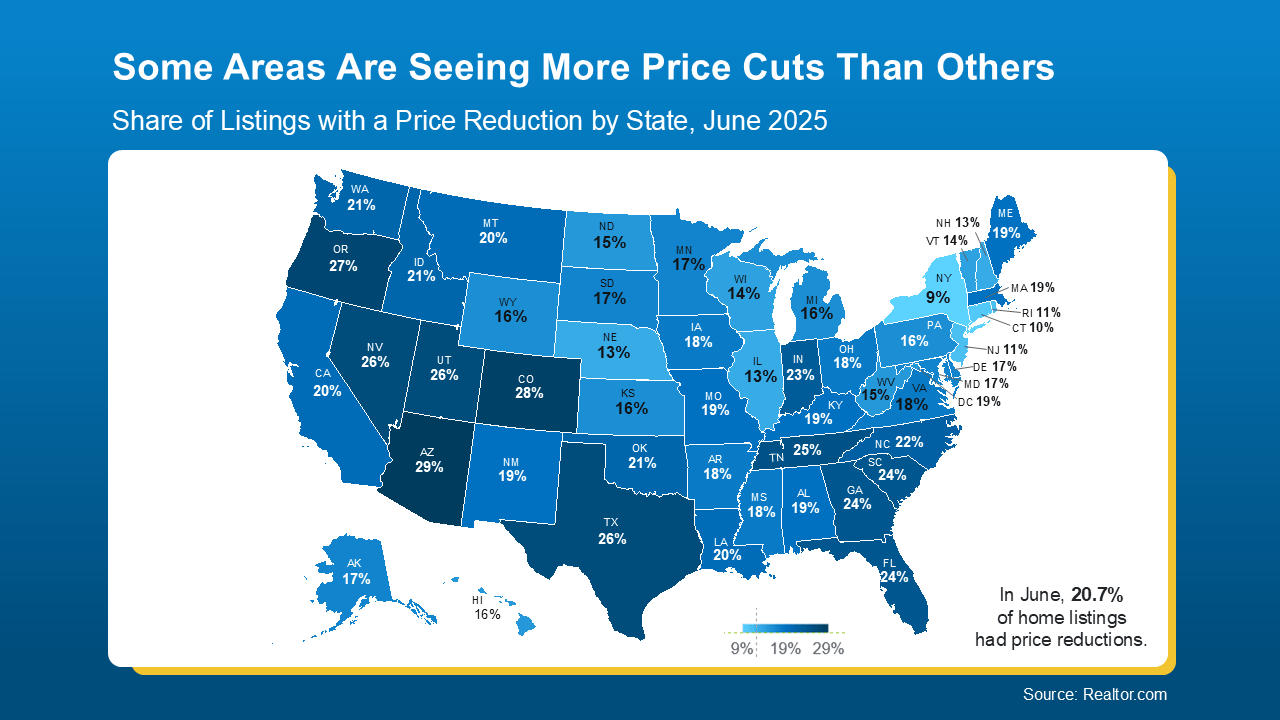 As Realtor.com explains:
“Regionally, price reductions in June were significantly more common in the South and West (23% of listings) than they were in the Northeast (13% of listings), reflecting the inventory divergence across these regions.”
That means pricing isn’t one-size-fits-all. What’s happening nationally might not reflect what’s happening in your zip code, and that’s why you shouldn’t try to determine your list price on your own.
How a Great Agent Helps You Nail the Price
A skilled agent doesn’t just toss out a number. As Zillow says:
“Well-priced homes are more likely to sell quickly, but pricing your home to sell quickly and for maximum dollar requires strategy and knowledge of your local market. You need to have a clear-eyed view of your home in relation to the competition, and knowledge about whether you’re in a buyers or sellers market. It also helps to know what buyers in your area can afford.”
And that’s all knowledge your agent will have. They study your local market, compare recent sales, and factor in your goals and buyer behavior. Based on what’s happening where you live, sometimes the best play will be pricing right at current market value. Other times pricing a little lower actually will spark more offers and ultimately get you a better final sale price.
So don’t skimp on the strategy or on your agent. With their local market know-how, you’ll be able to sell quickly, even in a shifting market.
Bottom Line
Overpricing can lead to tough choices you never want to face. But with the right price, and the right guidance, you can skip the stress and sell with confidence. Connect with a local agent so you have a pricing strategy that works for today’s market and gets you where you want to go.
Most people think a newly built home costs more than an existing one. But right now, that’s actually backwards. Newly built homes are more affordable than existing ones in a lot of markets. And that’s because builders are cutting prices and stacking on incentives to try to keep their inventory moving.
Here’s why that’s really important for any would-be homebuyer to know.
Newly Built Homes Are the Better Deal Right Now
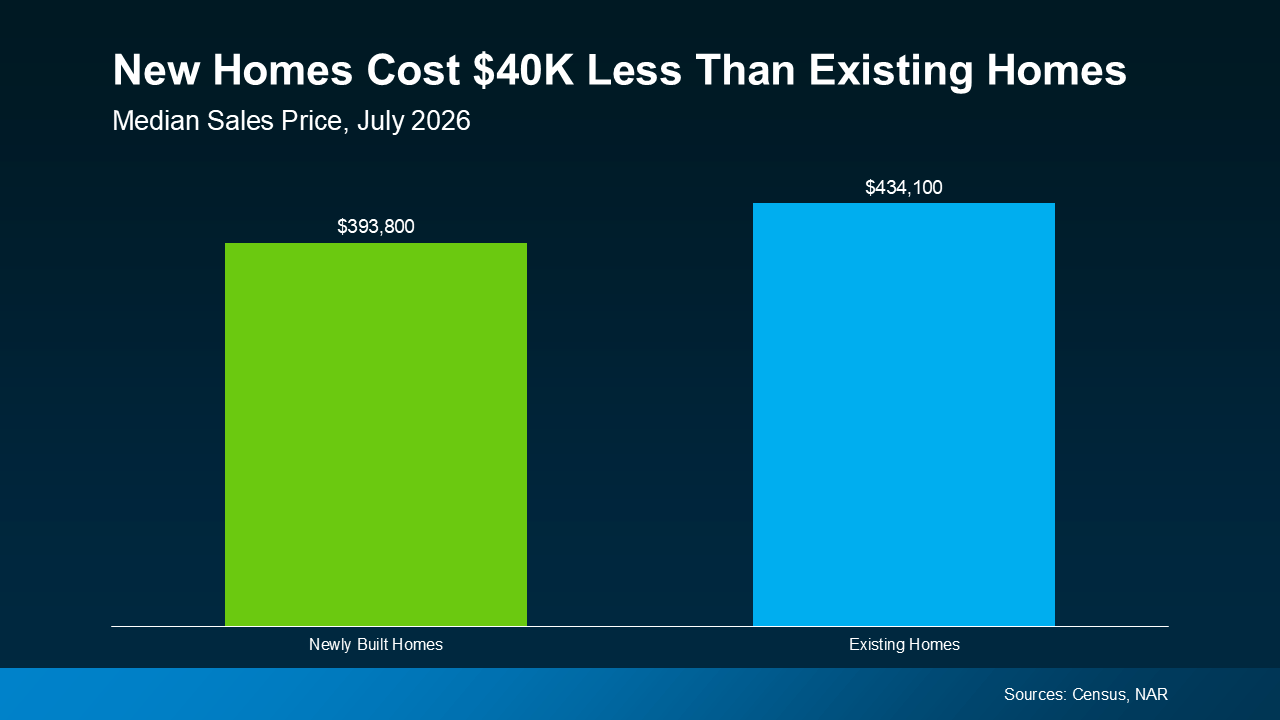
According to the latest data from the Census and the National Association of Realtors (NAR), a newly built home now typically costs about $40,000 less than an existing one (see graph below):
 Builders aren’t like homeowners who can wait for the right offer. Unsold homes cost them money as long as they sit empty. So, builders cut prices and add incentives to keep them moving. That trend has carried into August. NAHB’s latest numbers:
-
35% of builders cut prices, with an average reduction of 6%.
-
63% offered incentives like covering closing costs or buying down your mortgage rate.
And those incentives can make a real dent in what you pay upfront and every month after. Plus, since everything is new and many builders offer warranties, you could save on home maintenance costs too. And with affordability where it is, every dollar counts.
So, don’t cross new builds off your list just yet. Yes, you may think they cost more, but that’s not always the case.
If you can get brand-new everything for less than buying an existing home, isn’t that at least worth looking into?
Don’t Let the Builder Pick Your Teammate
But before you tour a single model home, there’s one thing worth figuring out first – who’s actually working for you once you walk through that door.
That friendly rep in the builder’s sales office works for the builder, not you. Their job is to protect the builder’s bottom line, not yours. Your own agent flips that.
They know the local market, so they can tell you if the builder’s price and upgrades stack up against other options nearby. They’ll negotiate on your behalf, whether that’s a lower price, free upgrades, or a rate buydown.
A good agent will also push for a home inspection. Builders won’t always bring it up, but it’s a step you shouldn’t skip, even on a new build. And your agent will be in your corner, so you know what you’re buying and get the best deal possible.
Bottom Line
New homes may actually cost less than an existing home right now. And that’s opening up a window for you to get brand-new for less.
If you want a list of new home communities near you that are currently offering incentives or doing price cuts, reach out to a local agent. When you have your own agent, you’ll have someone in your corner helping you get the best deal possible.

Few things are as rattling as the thought of your home sale falling through at the last minute, right before closing. All that waiting, all that progress, out the window.
But if you’re getting ready to sell, here’s what you should know. Even in today’s market, it rarely comes to that. Buyers who are moving at today’s rates and prices are generally moving because of some big life change. That means they’re motivated, and eager to get all the way to the closing table.
According to the latest data from Redfin, only about 1 in 7 pending sales are falling through. Meaning the vast majority make it all the way to closing.
And the single biggest thing that puts a deal at risk is the one you have the most power to prevent. It just takes a little smart planning before your house hits the market.
Why Some Deals Fall Apart Before Closing
A Redfin survey sheds light on the most common things that trip up a sale (see visual below):
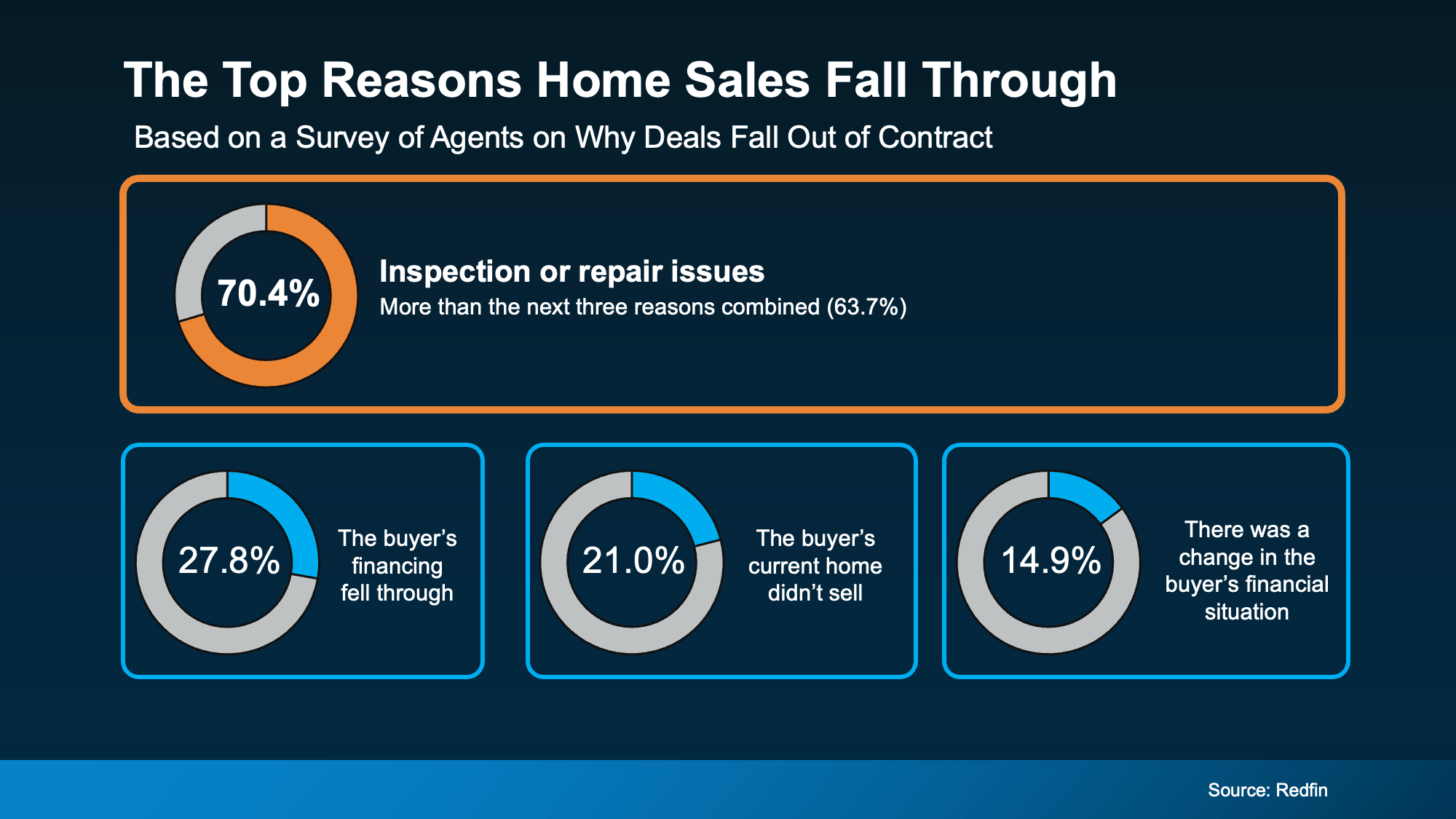
Here’s a bit more information on each one.
-
Inspection or repair issues. This is the big one. When a buyer’s inspector finds a problem, whether with the roof, the plumbing, the foundation, or elsewhere, the buyer can push back, ask you to make repairs, request a credit so they can do it themselves, or see if you’ll lower your price. If they don’t get what they want, they may walk away from the deal altogether.
-
The buyer’s financing fell through. Their mortgage loan has to be fully approved in time for closing day. If the loan doesn’t come together, the sale can’t move forward.
-
The buyer’s current house didn’t sell. Some buyers need to sell their own home before they can close on yours. If that takes longer than expected, you may run into some issues with your timeline or even see them give up on their move.
-
There was a change in buyer’s financial situation. A new job, a big purchase, or new debt can change what a buyer qualifies for on their mortgage loan, even after they were pre-approved.
Where Your Agent Makes the Difference
Some of those reasons are outside your control, like whether a buyer’s loan clears or whether they sell their own home in time. But according to Zillow, there are a few proactive things you can do to help make sure your sale goes as smoothly as possible:
-
Save yourself the headache and get a pre-listing inspection. That’s when you get your own inspection before a buyer gets theirs. It lets you find the big issues before a buyer’s inspector does, so you can fix them or disclose them on your terms, instead of scrambling once you’re under contract. In this situation, your agent will help you decide what’s worth addressing and what to just disclose. Handle it now, and the biggest risk to your sale is behind you before a buyer ever brings it up.
-
Look at more than just the offer price. Your agent will help you weigh the whole offer, including the buyer’s timeline and any contingencies attached. When a buyer’s offer depends on selling their own home first, the success of your sale rides on a second deal you can’t see. Sometimes, a slightly lower offer with fewer strings is the safer one. Your agent will help you weigh your options and make a plan that works well for you.
One of those is something you can’t do until you have offers in hand, but the other is something you can get ahead of right now. The pre-listing inspection.
That relatively small cost upfront can save you the much bigger hassle of a deal falling apart later. And while getting your own inspection before listing may not make sense in every market, your agent can tell you whether it’s worth it based on your market, your house, and what buyers are prioritizing in your area.
Sometimes the smartest move is staying one step ahead.
Bottom Line
Most home sales still close, and the biggest thing that could get in the way of yours is the one thing you can actually do something about.
With the right prep, your sale has every reason to make it to the finish, and a good local agent can help you get there.

When your house doesn’t sell, it’s not just disappointing. It messes with your timing. Your plans. Your confidence. You start second-guessing everything, including the decision to move in the first place. And that raises 2 big questions:
Do you try again?
Is that even worth it?
Here’s the secret to getting a better outcome the second time around.
Different Agent. Different Results.
Most sellers who re-list and ultimately sell don’t wait for market to magically change. They change their approach. And there’s data to back that up.
Research from REDX shows homeowners who put their house back on the market with a different agent are more likely to sell than homeowners who re-used the same agent. Not to mention, they see their homes sell faster (see graph below):
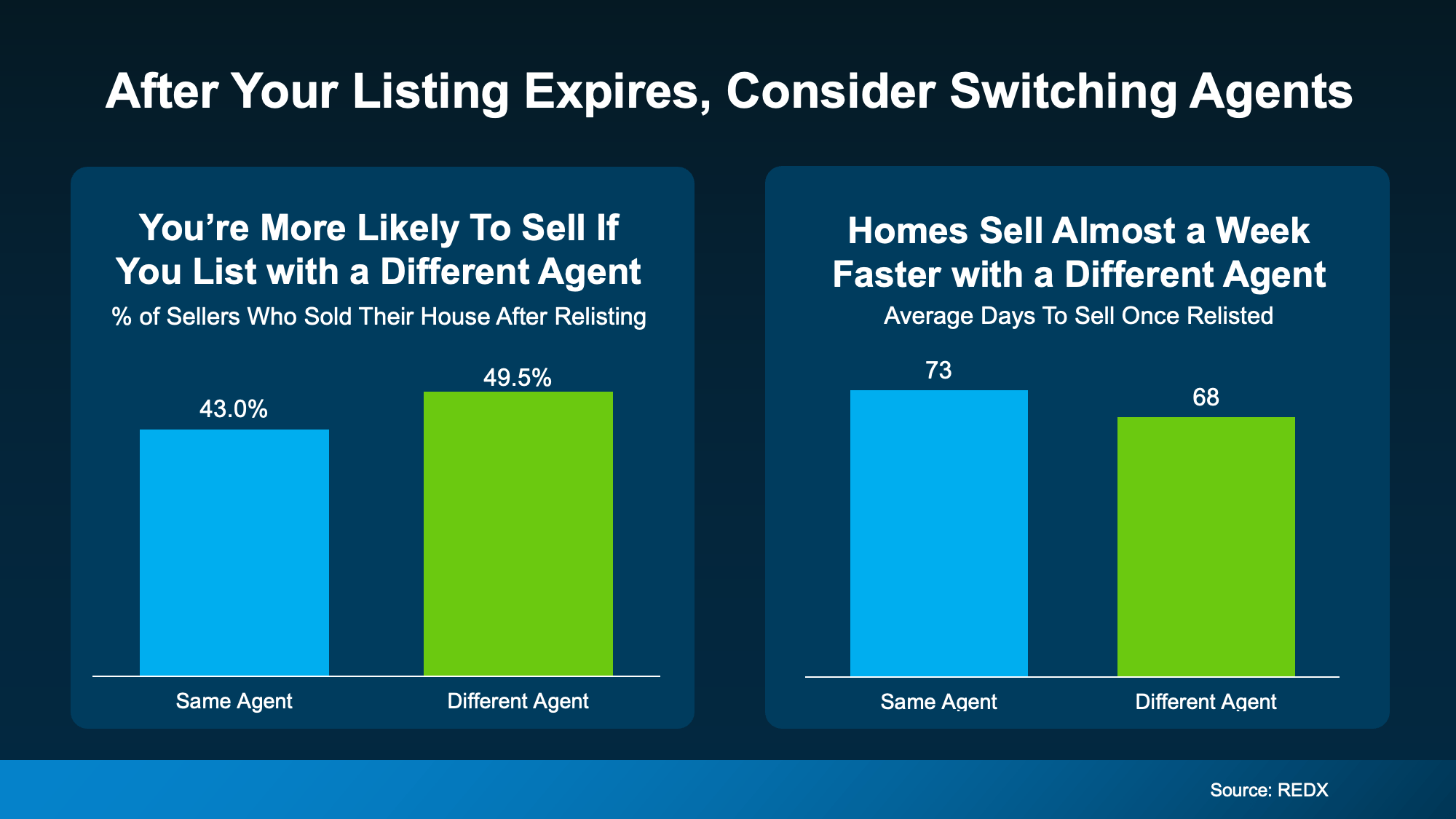
That’s the power of a fresh set of eyes. Because in a moment like this, the worst thing you can do is rerun the same set of plays and expect a different outcome. A different agent can bring a new perspective on where things went off track – and a lot of the time, one of these things happened.
1. The Asking Price Didn’t Match Buyer Reality
There’s a saying that’s especially important in today’s market, and it’s: “if your price isn’t compelling, it’s not selling.” Maybe that’s what happened with your house.
With mortgage rates where they are and inflation driving up the cost of everyday purchases, buyers have less room to stretch. If they feel like your house is priced even a little high, it’s going to get skipped over. And if no one looks at it, it’s not going to sell.
The Fix: Price to draw buyers in, not push them away. Have an agent pull fresh data from recent sales so your asking price matches what buyers are actually paying right now.
2. The First Impression Didn’t Win the Click
Most buyers decide whether they want to tour a home in seconds. If the photos look dark, or dated, they scroll right past. And while you may think: “If they just saw it in person, they’d get it,” you may not get that chance.
And honestly, even in person, small things can quietly kill momentum – worn down paint, outdated fixtures, clutter, or a yard that feels high-maintenance. Individually, they’re small. Stacked together, they create doubt.
The Fix: Walk the house like you’re a buyer, not the owner. Start with what’s easy and obvious – paint, lighting, curb appeal, decluttering. Then update the photos so they match the best version of your house.
3. The Marketing Was Too “Set It and Forget It”
Today, the number of homes for sale has grown in many areas. Buyers have more options, which means your house needs a plan to stand out. A generic description and a basic upload to the MLS can blend in fast.
The Fix: Find an agent who can build stronger exposure through digital marketing and social platforms, plus content that makes buyers stop – strong photos, a smart description, a video walk-through, and a plan for open houses and follow-up.
4. There Was No Clear Plan for Feedback
Sometimes the house gets showings, but no offers. If that was your experience, it actually tells you something important. Buyers liked it enough online to come see it. So, something else was holding them back.
Those buyers were sending a message. It just wasn’t translated into action.
The Fix: Make sure your agent has a clear plan for seeking out and acting on feedback quickly. That dialogue often points to the one change that would get a house sold.
5. The Deal Couldn’t Get Over the Finish Line
Even when a house is priced well and marketed right, deals fall apart when there’s no plan for the human side of the transaction.
Buyers today are more likely to ask for repairs, credits, or help with closing costs than a few years ago. In this type of market, being unwilling to negotiate can cost you more than a reasonable concession ever would.
The Fix: Decide ahead of time what matters most to you and where you can be flexible. Keep the dialogue open and lean on your agent for advice.
Bottom Line
If your house didn’t sell the first time, you’re not stuck. You just need a different strategy, and maybe a different partner.
When you’re ready for a fresh set of eyes on what happened and what to change first, connect with a local agent.

Why Buyers Shouldn’t Overlook a Fall Move

Think New Homes Cost More? Not Right Now.

Thinking About Tapping into Your 401(k) To Buy a Home? Read This First.



-

 Affordability4 weeks ago
Thinking About Waiting for Lower Mortgage Rates? Read This First.
-

 First-Time Buyers4 weeks ago
Big Investors Are Backing Off and That’s Your Opening
-

 Affordability3 weeks ago
The Case for Putting 20% Down on Your Next Home
-

 Buying Tips3 weeks ago
Who Has the Upper Hand in Today’s Housing Market?
-
 Affordability3 weeks ago
Here’s Why Mortgage Rates Are What They Are Right Now
-

 Downsize2 weeks ago
The Kind of House Buyers Are Willing To Pay More For
-
 Downsize2 weeks ago
One Number Could Change Everything About Your Next Move
-

 For Buyers2 weeks ago
Higher Rates Could Actually Help Housing Supply – Here’s How.
You must be logged in to post a comment Login