


For Buyers
2026 Housing Market Outlook

After a couple of years where the housing market felt stuck in neutral, 2026 may be the year things shift back into gear. Expert forecasts show more people are expected to move – and that could open the door for you to do the same.
More Homes Will Sell
With all of the affordability challenges at play over the past few years, many would-be movers pressed pause. But that pause button isn’t going to last forever. There are always people who need to move. And experts think more of them will start to act in 2026 (see graph below):
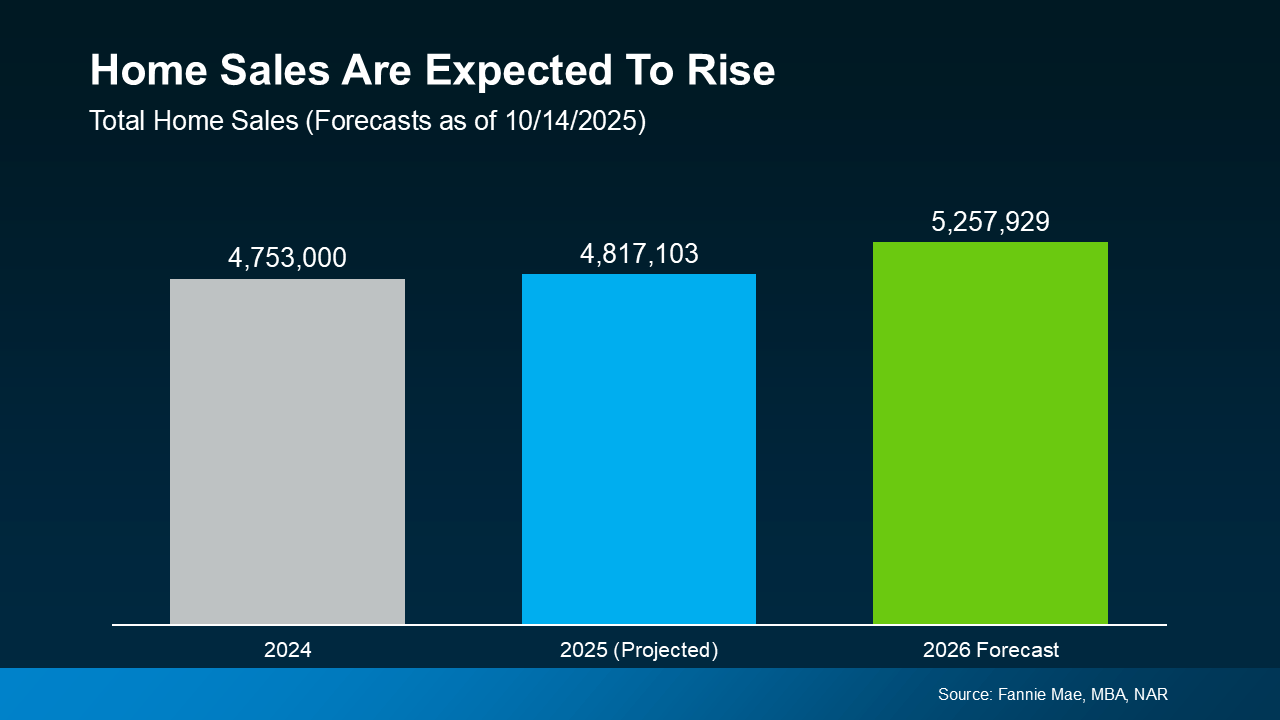 What’s behind the change? Two key factors: mortgage rates and home prices. Let’s dive into the latest expert forecasts for both, so you can see why more people are expected to move next year.
Mortgage Rates Could Continue To Ease
The #1 thing just about every buyer has been looking for is lower mortgage rates. And after peaking near 7% earlier this year, rates have started to ease.
The latest forecasts show that could continue throughout 2026, but it won’t be a straight line down (see graph below):
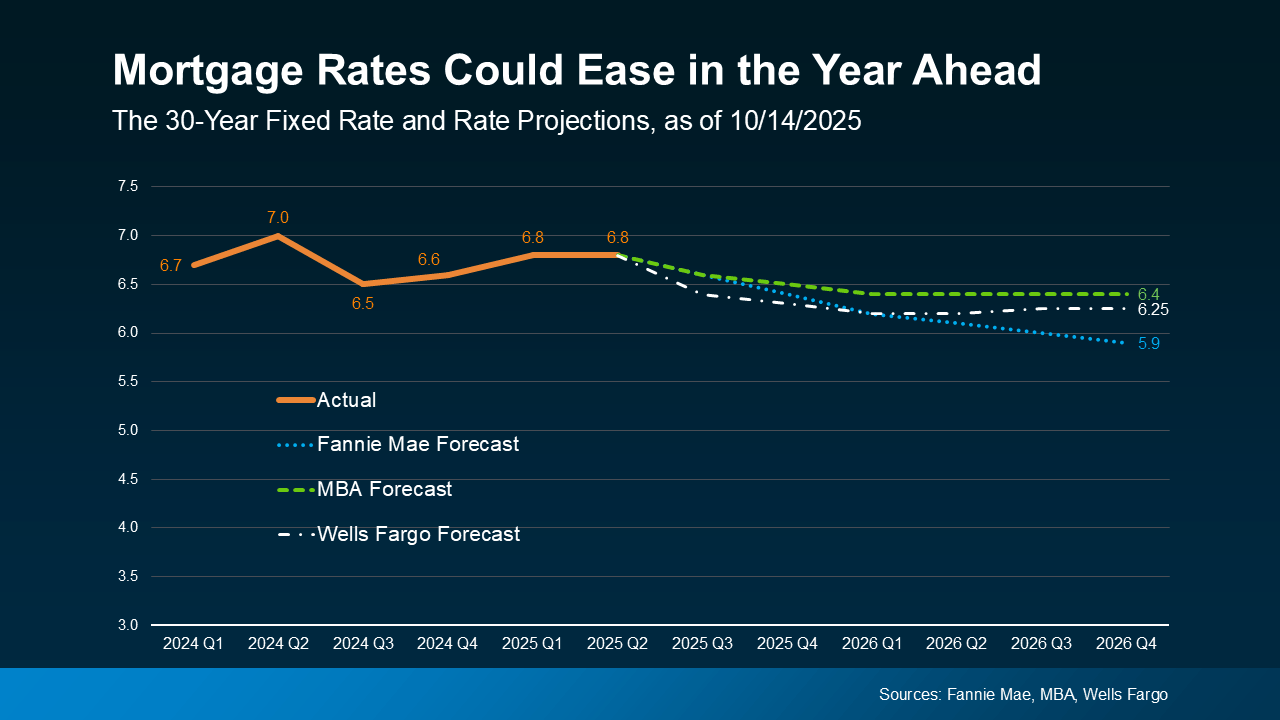 There’s a saying: when rates go up, they take the escalator. But when they come down, they take the stairs. And that’s an important thing to remember. It’ll be a slow and bumpy process.
Expect modest improvement in mortgage rates over the next year but be ready for some volatility. There will be volatility along the way as new economic data comes out. Just don’t let it distract you from the bigger picture: the overall trend will be a slight decline. Forecasts say we could hit the low 6s, or maybe even the high 5s.
And remember, there doesn’t have to be a big drop for you to feel a change. Even a smaller dip helps your bottom line.
If you compare where rates are now to when they were at 7% earlier this year, you’re already saving hundreds on your future mortgage payment. And that’s a really good thing. It’s enough to make a real difference in affordability for some buyers.
Home Price Growth Will Be Moderate
What about prices? On a national scale, forecasts say they’re still going to rise, just not by a lot. With rates down from their peak earlier this year, more buyers will re-enter the market. And that increased demand will keep some upward pressure on prices nationally – and prevent prices from tumbling down.
So, even though some markets are already seeing slight price declines, you can rest easy that a big crash just isn’t in the cards. Thanks to how much prices rose over the last 5 years, even the markets seeing declines right now are still up compared to just a few years ago.
Of course, price trends will depend on where you are and what’s happening in your local market. Inventory is a big driver in why some places are going to see varying levels of appreciation going forward. But experts agree we’ll see prices grow at the national level (see graph below):
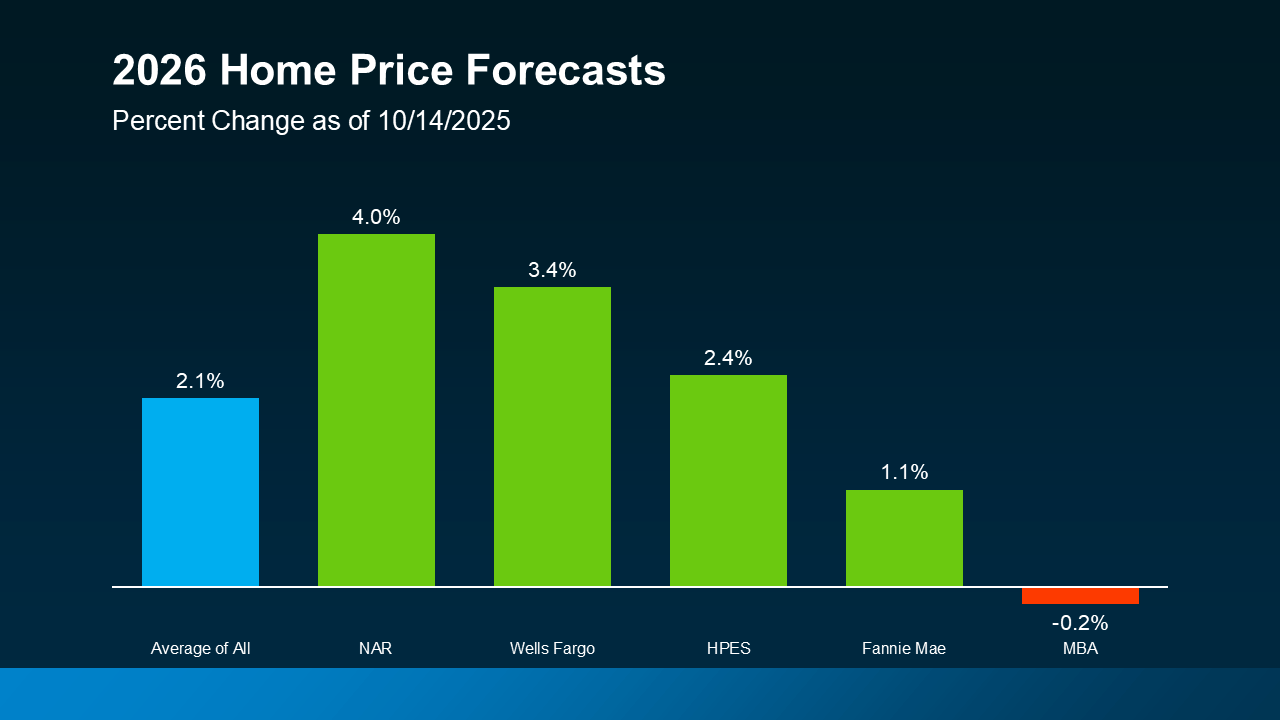 This is yet another good sign for buyers and overall affordability. While prices will still go up nationally, it’ll be at a much more sustainable pace. And that predictability makes it easier to plan your budget. It also gives you peace of mind that prices won’t suddenly skyrocket overnight.
Bottom Line
After a quieter couple of years, 2026 is expected to bring more movement – and more opportunity. With sales projected to rise, mortgage rates trending lower, and price growth slowing down, the stage is set for a healthier, more active market.
So, the big question: will you be one of the movers making 2026 your year?
Connect with an agent if you want to get ready.

There’s a lot of noise out there right now about investors in the housing market.
Some headlines make it sound like big Wall Street firms are buying up everything in sight. And if you’re trying to purchase a home yourself, that can make it feel like the odds are stacked against you.
But when you take a closer look at the data, a very different picture starts to come into focus.
Most Investors Are Just Everyday Owners
For starters, when you hear the word investor, you probably picture big corporations. And that misconception is a large part of what’s feeding into the myth that they’re buying up all the homes.
Most investors aren’t big companies, at all.
They’re everyday people just like you.
They’re someone who owns a second home (like a vacation house at the river), a neighbor who has 1 or 2 rentals, or even a homeowner who tried to sell their home, didn’t get the price they wanted, and decided to rent it instead.
And when all of these groups are lumped together in the headlines, the number of investors sounds high – especially if you’re operating under the assumption all investors are big investors.
But here’s what the numbers really show when you drill down.
Institutional Investors Are a Small Slice of the Housing Market
Large institutional investors, those big companies buying homes, actually make up a very small share of the overall housing market.
According to BatchData, the largest investors (those with 1,000+ homes) own just 0.4% of the 86 million single-family homes in the country. And their share of the market is actually shrinking.
Data from Parcl Labs shows big investors are selling 4 homes for every 1 they’re buying right now (see visual below):
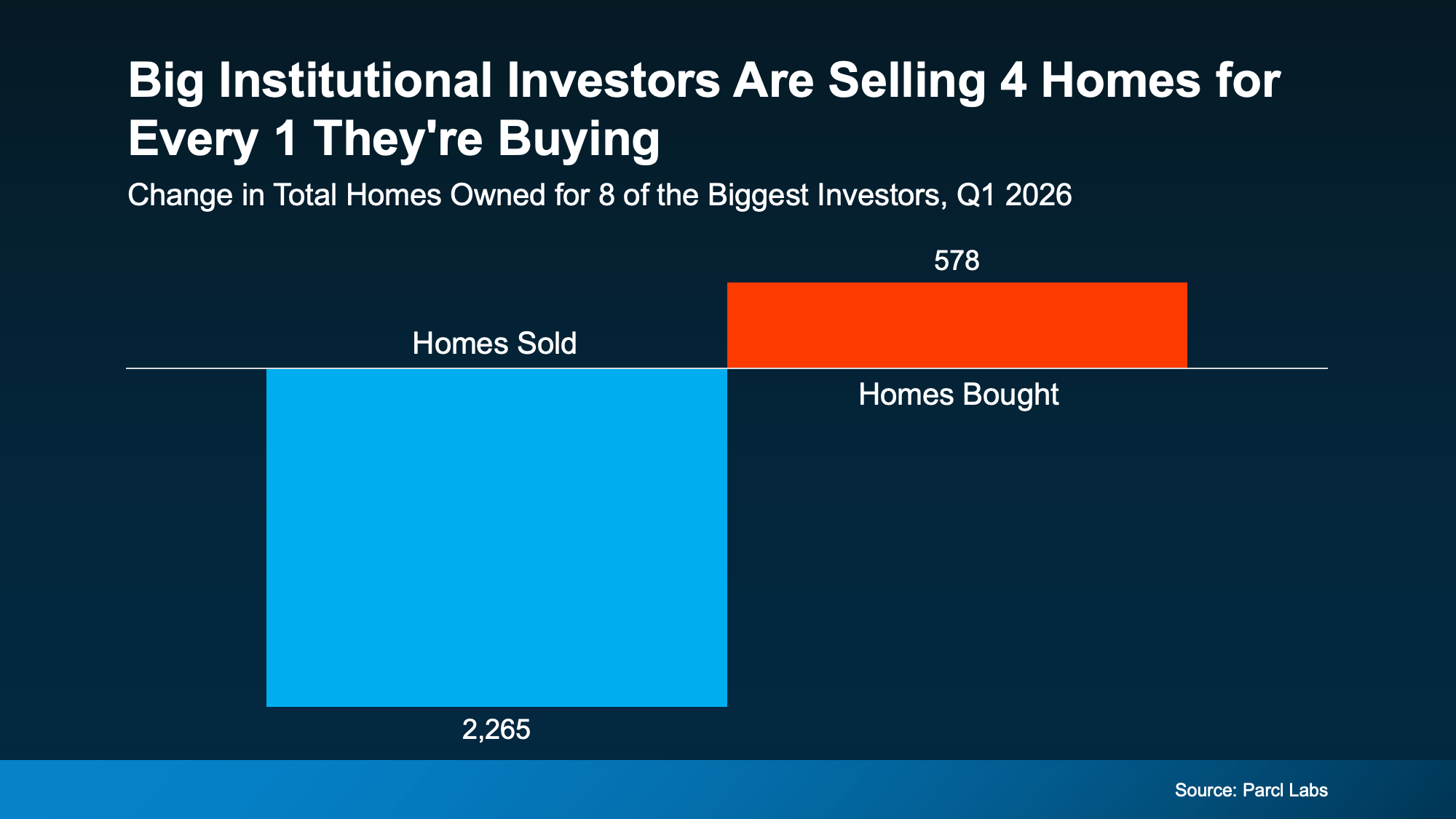 That means they’ve actually added almost 1.7k homes back into the market lately.
What This Means for You
The story is clear. Instead of aggressively buying up homes, most of these companies are stepping back, which means less competition from them than you might expect. If you were someone who thought they were dominating the market, let that give you some peace of mind.
Most of the competition you’ll face is from other everyday buyers – people just like you. And with most large investors stepping back, there may be more opportunity in the market than you think.
Bottom Line
It’s easy to assume big investors are taking over the housing market, but the data tells a different story. If you want an expert’s opinion on what investor activity looks like in our area, talk to a local agent.
Because odds are, it’s not as big a factor as you may think.

Mortgage rates have been volatile lately. And if you’re thinking about buying a home, that can make it harder to plan. But there are still things you can do to get the best rate possible in today’s market. It starts with having the right information.
So, what’s causing the bumps in rates? And what can you do about it? Let’s break it down.
Mortgage Rate Volatility Is Normal
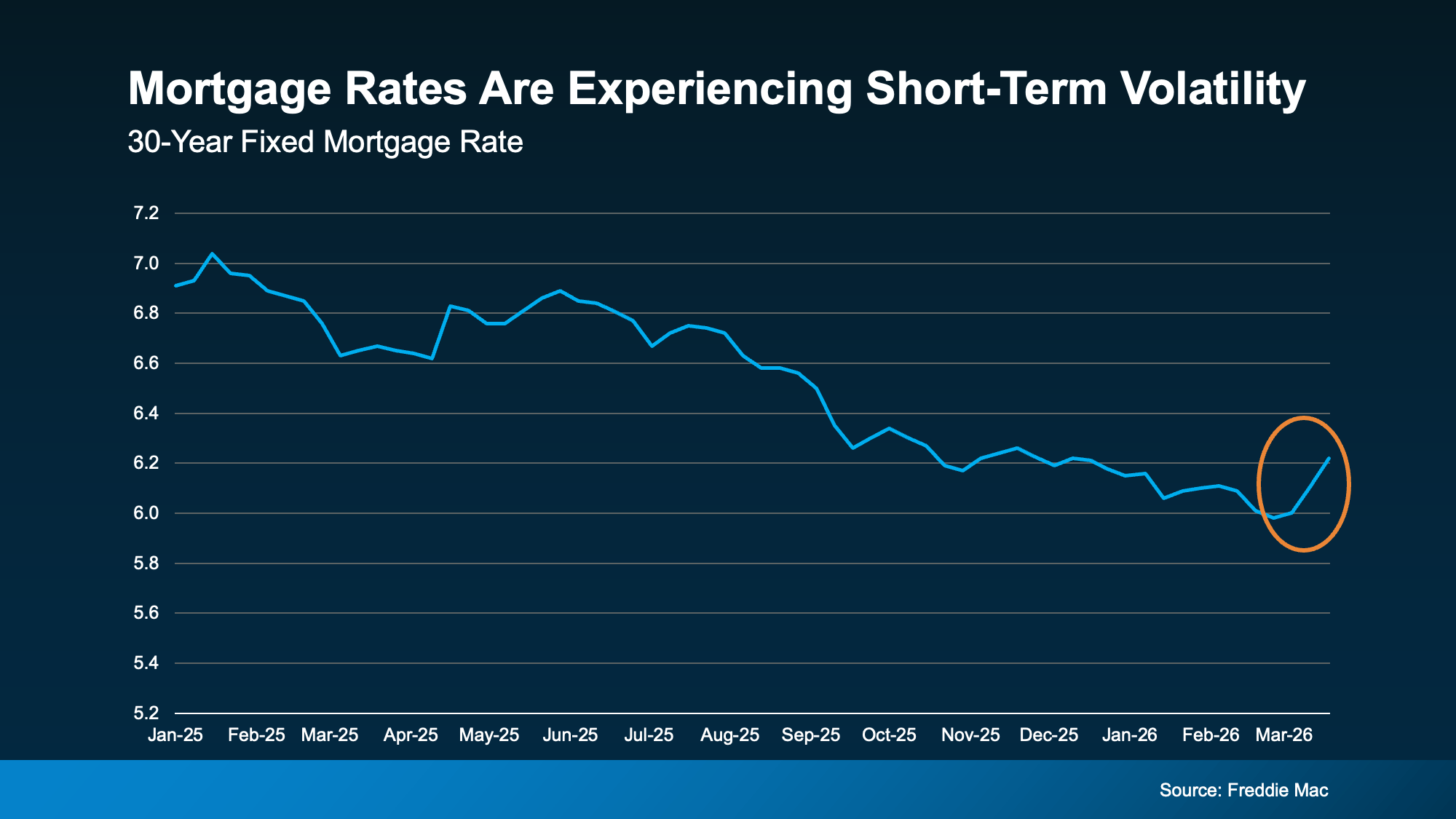
Data from Freddie Mac shows the recent volatility. After trending down for well over a year, there was a rise this month (see graph below):
While it’s easy to be distracted by the changes, here’s what you need to remember.
It’s normal for rates to bounce around a bit here and there. For example, if you look back at the graph, you’ll see that even within the past year there have been times like this when rates inched up. We’re in one of those moments right now and you need to be aware of that.
Especially when there’s economic uncertainty or big global events happening, volatility like this is expected. As Investopedia explains:
“Mortgage rates don’t move in isolation. When global events inject uncertainty into financial markets . . . that can ripple through to borrowing . . . mortgage costs can respond quickly to geopolitical developments. As long as uncertainty remains elevated, rate swings may continue.”
And that’s one of the reasons why trying to time the market isn’t a wise move.
You can’t control what happens with mortgage rates. But there are still things you can do to help you get the best rate possible in today’s market. And here’s where to focus your effort.
Your Credit Score
Your credit score plays a big role in the rate you qualify for. Even a small improvement can make a noticeable difference in your monthly payment. As Bankrate puts it:
“Your credit score is one of the most important factors lenders consider when you apply for a mortgage. Not just to qualify for the loan itself, but for the conditions: Typically, the higher your score, the lower the interest rates and better terms you’ll qualify for.”
So, make sure you do what you can to keep your credit score up. If you’re not sure what your score is or how you can improve it, talk to a trusted loan officer.
Your Loan Type
There are also different types of home loans – and each one can have unique requirements, benefits, and rates for qualified buyers. The Consumer Financial Protection Bureau (CFPB) explains:
“There are several broad categories of mortgage loans, such as conventional, FHA, USDA, and VA loans. Lenders decide which products to offer, and loan types have different eligibility requirements. Rates can be significantly different depending on what loan type you choose.”
That’s why it’s so important to explore your options with a lender. You may even want to talk to multiple lenders to see how the options vary.
Your Loan Term
The length of your loan matters too. Most lenders typically offer 15, 20, or 30-year loans. Freddie Mac offers this advice:
“When choosing the right home loan for you, it’s important to consider the loan term, which is the length of time it will take you to repay your loan before you fully own your home. Your loan term will affect your interest rate, monthly payment, and the total amount of interest you will pay over the life of the loan.”
Again, to figure out what makes the most sense for your budget and long-term goals, have a lender walk you through all your options.
Bottom Line
Thinking about buying right now? The best advice is to accept that you can’t control where rates are going to go from here.
What you can do is work with a trusted lender and take steps that’ll help you get the best rate possible.
So, if you want to move today, talk to an agent and a lender to make it happen. You just need to control the controllables and focus where it counts.

For the past few years, affordability has been what’s stopped a lot of buyers in their tracks. Maybe it stopped you, too.
At some point you probably did the math, looked at the monthly payment, and decided to pause your search and wait for things to get better. But here’s something you may have missed while you’ve been sitting on the sidelines.
Over the last year, housing affordability has improved in all 50 states. Yes, you read that right. It’s gotten better in every single state.
That’s based on new research coming out of First American. And while housing is still fairly expensive compared to historical standards, the pressure buyers felt over the last few years is finally starting to ease.
Some Areas Are Seeing Bigger Improvements
The first thing you need to know is that this isn’t just happening in one region or in a small handful of cities. The trend is happening almost everywhere.
Sure, individual states, cities, and even neighborhoods are going to vary – sometimes by a lot. But overall, more buyers are able to buy again. And in 48 of the top 50 metros, affordability has improved over the past year.
That same research breaks down which cities are seeing the biggest gains:
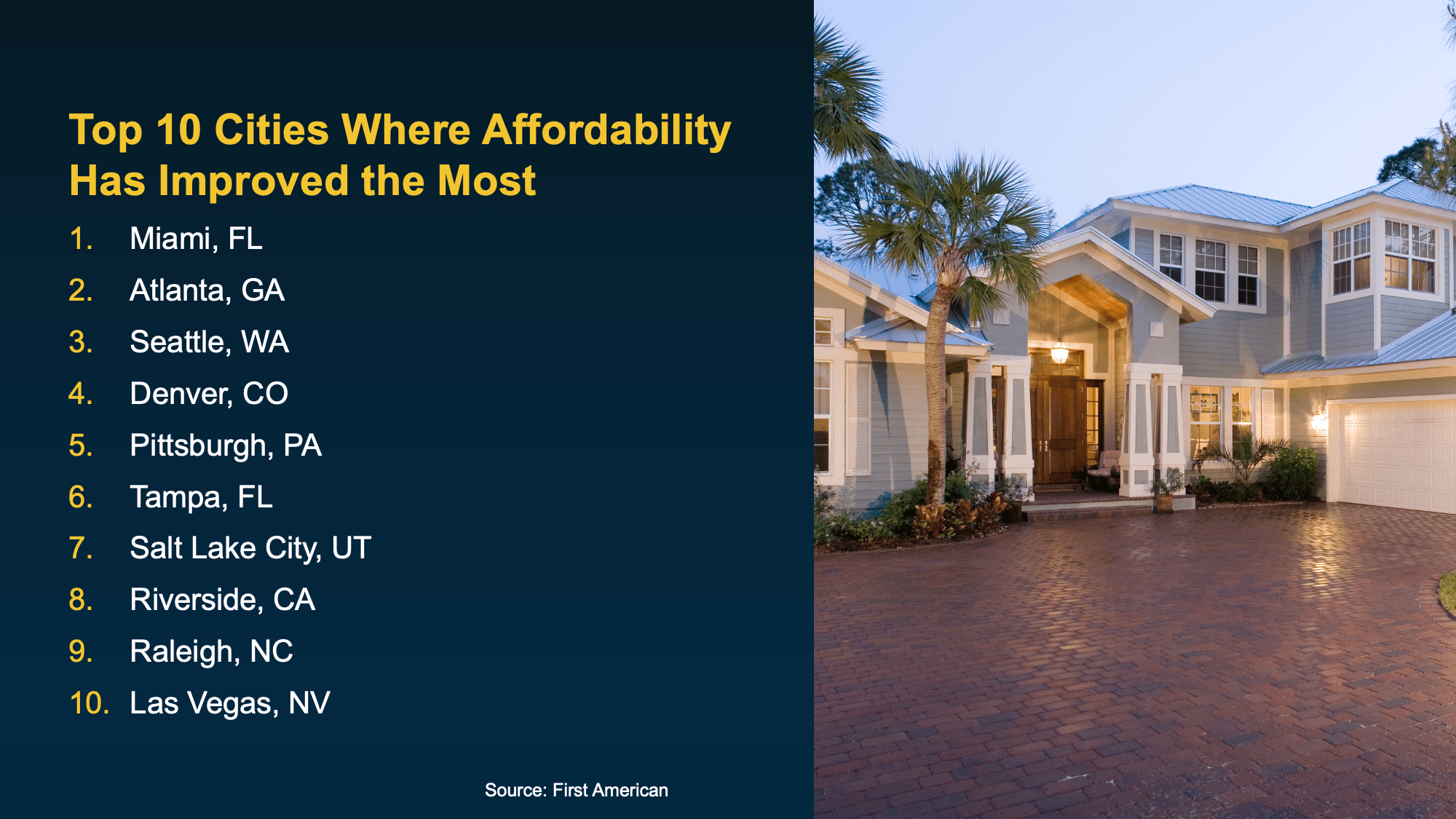 Just in case you’re wondering: why these areas? It’s simple. In many cases, it comes down to the number of homes for sale.
When buyers have more choices, it creates a healthier balance in the market and that can help bring affordability back within reach. With homes up for grabs, it opens the door a bit wider for buyers to negotiate with sellers for credits, price cuts, and more. And it gives you more chances to find a house that works for your needs and budget.
It may make more of a difference than you think.
None of this means affordability challenges have completely disappeared. Buying a home is still a big financial decision. But the trend is moving in a direction many buyers have been waiting for.
As Chen Zhao, Head of Economic Research at Redfin, puts it:
“The housing affordability crisis is showing signs of easing . . . opening the door for more Americans to make the jump to homeownership.”
Bottom Line
If you were holding off on buying, this could be exactly the signal you’ve been waiting so long for. To find out how much affordability’s improved in your area, connect with a local real estate agent.

This’ll Change What You Think About Investors in Today’s Housing Market

The Best Week To List Your House Is Just Around the Corner

You Can’t Control What’s Happening with Mortgage Rates. But You Can Control This.



-

 For Sellers4 weeks ago
Spring Sellers Have an Edge. Here’s Why.
-

 Downsize4 weeks ago
The Hidden Advantage Repeat Buyers Have Right Now
-

 Equity4 weeks ago
Are Home Prices Dropping? Here’s the Real Story.
-

 Agent Value3 weeks ago
If Your House Isn’t Getting Offers, Read This.
-

 Affordability3 weeks ago
Should You Wait for Lower Rates?
-

 Agent Value2 weeks ago
The #1 Reason Buyers Walk Away (And How To Get Ahead of It)
-

 For Buyers3 weeks ago
One Key Sign We’re Not Headed for a Wave of Foreclosures
-

 Affordability2 weeks ago
Affordability Has Improved in All 50 States
You must be logged in to post a comment Login