


Agent Value
Don’t Let Unrealistic Pricing Cost You Your Move

These days, you’re going to want to get your price right when you get ready to sell your house. Honestly, it’s more important than ever. Why? While you may want to list high just to see what happens, that’s a plan that can easily backfire, and it’s going to cost you in today’s market.
And the risk isn’t just missing out on offers, it’s missing out on the move you needed to make in the first place.
The Real Pitfall of Overpricing
Many homeowners remember what their neighbor’s house sold for a few years ago, and they want to chase that same sky-high number. The problem is, that was a different market.
Today, there are more homes for sale. Buyers have more options to choose from. They don’t have to get into bidding wars where they offer way over asking just to compete. Now they can come in at, or even below, list price. And if you’re not open to that, they’ll move on. Lisa Sturtevant, Chief Economist at Bright MLS, explains:
“Buyers will have more leverage in many, but not all, markets. Sellers will need to adjust price expectations to reflect the transitioning market.”
But here’s the good news. You still have one big advantage as a seller. According to the Federal Housing Finance Agency (FHFA), home values went up by a staggering 54% over the last 5 years. So, even if you compromise just a little bit on your sale price today, odds are you’ll still come out way ahead.
The challenge? Most sellers aren’t thinking about it that way. They’re stuck on what a neighbor got months or years ago – and that’s a costly mistake.
Overpricing Can Stall Your Whole Move
Here’s what happens. A seller lists too high. Buyers stay away. No offers come in. The house sits. And suddenly, that seller is facing a tough decision. Do they cut the price? Stick it out? Or give up altogether?
Unfortunately, a late price cut may not be enough. Buyers often see that as a red flag that something’s wrong with the house. That’s why some sellers are opting to just pull their listing off the market entirely.
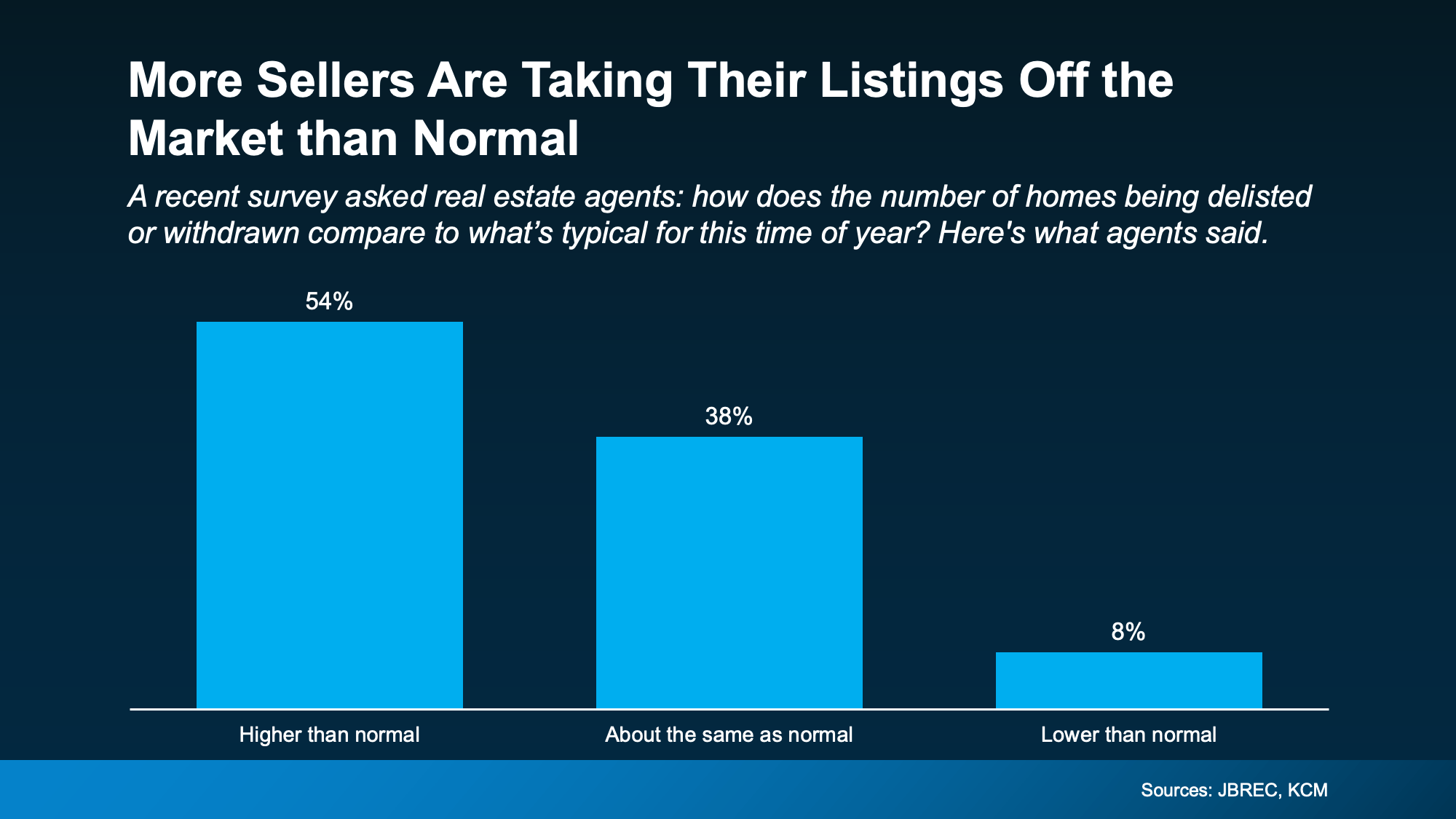
In a recent survey from John Burns Research and Consulting (JBREC) and Keeping Current Matters (KCM) over half of agents (54%) say there are more homes being taken off the market than usual.
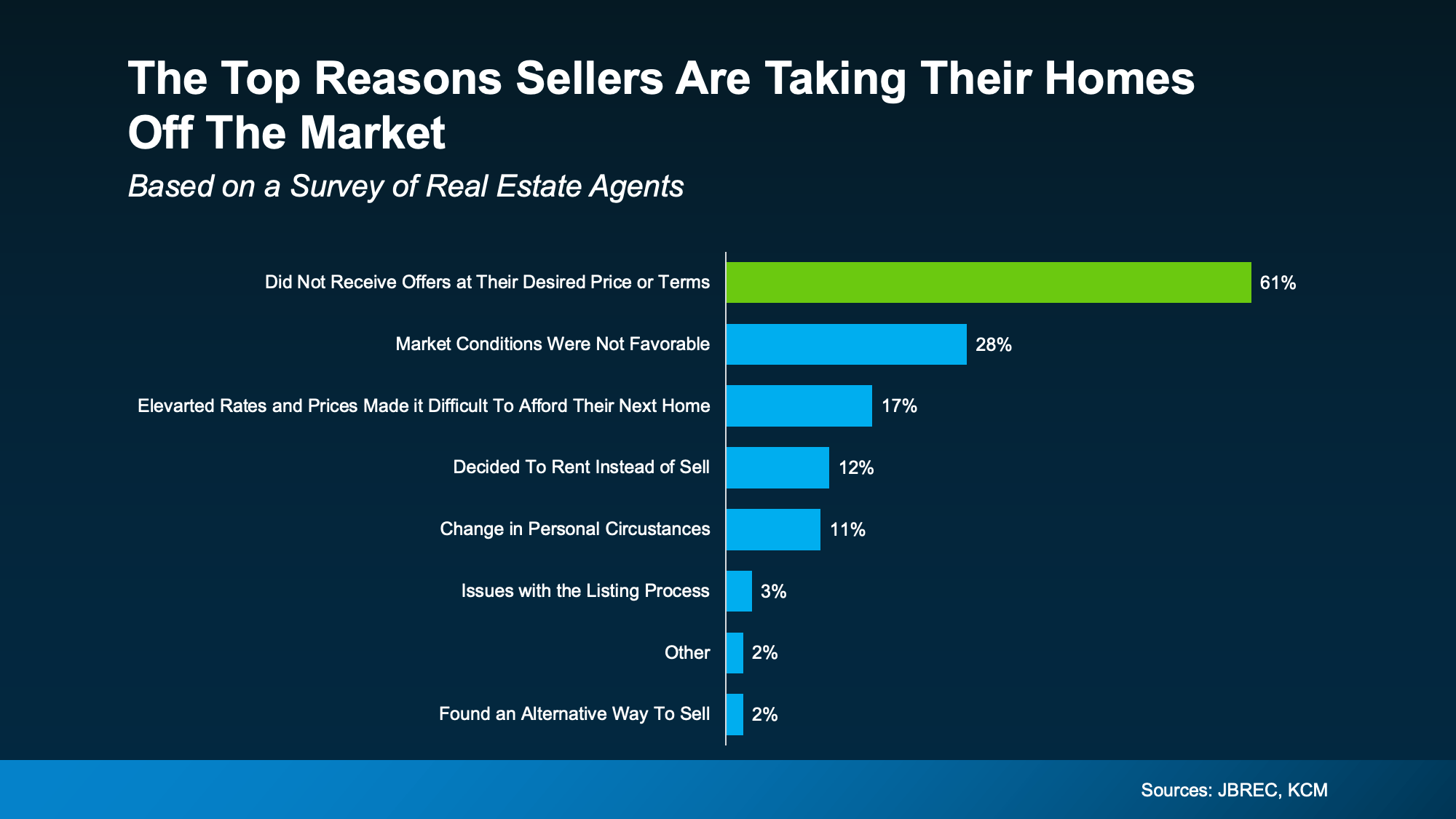
 And the top reasons for that? According to the agents, homeowners didn’t get any offers they felt were fair. The survey from JBREC and KCM explains it like this:
“Sellers holding onto high price expectations is the leading reason they are delisting their homes.”
 BrightMLS data backs this up:
“. . . sellers are delisting after having their home on the market and finding they are not getting the price they hoped for.”
It’s more proof pricing too high does more than turn buyers away, it puts your whole move at risk. Because if no one looks at your home or makes an offer, how are you going to sell it?
The Secret To Making Your Move Happen
If you’re selling to relocate for a job, need more space for your growing family, or have to be closer to your relatives as they age, you can’t afford to get stuck. You need a pricing strategy that helps you move forward – and that starts with the right agent.
The sellers who are winning right now are the ones working with experienced local agents who know the current market and aren’t afraid to have honest conversations about price.
And it’s paying off. In the right price range and condition, homes are still selling fast, sometimes even with multiple offers.
Bottom Line
Pricing your house for today’s market isn’t just about getting it sold. It’s about making sure your move doesn’t stall before it starts.
Talk to an agent about what buyers are really paying right now in your area, and how to price your home to match.


You may have seen headlines on social saying the number of buyers backing out of their contracts is on the rise – and has recently reached a high not seen since 2017. That can sound intimidating. But it varies a lot by market.
And here’s the key thing to understand if you want to sell. A lot of the time, there’s one common cause. And it’s something you can actually control.
Here’s what you can do to get ahead of the biggest dealbreaker before it ever becomes a problem.
The Top Dealbreaker: Issues That Pop Up During the Inspection
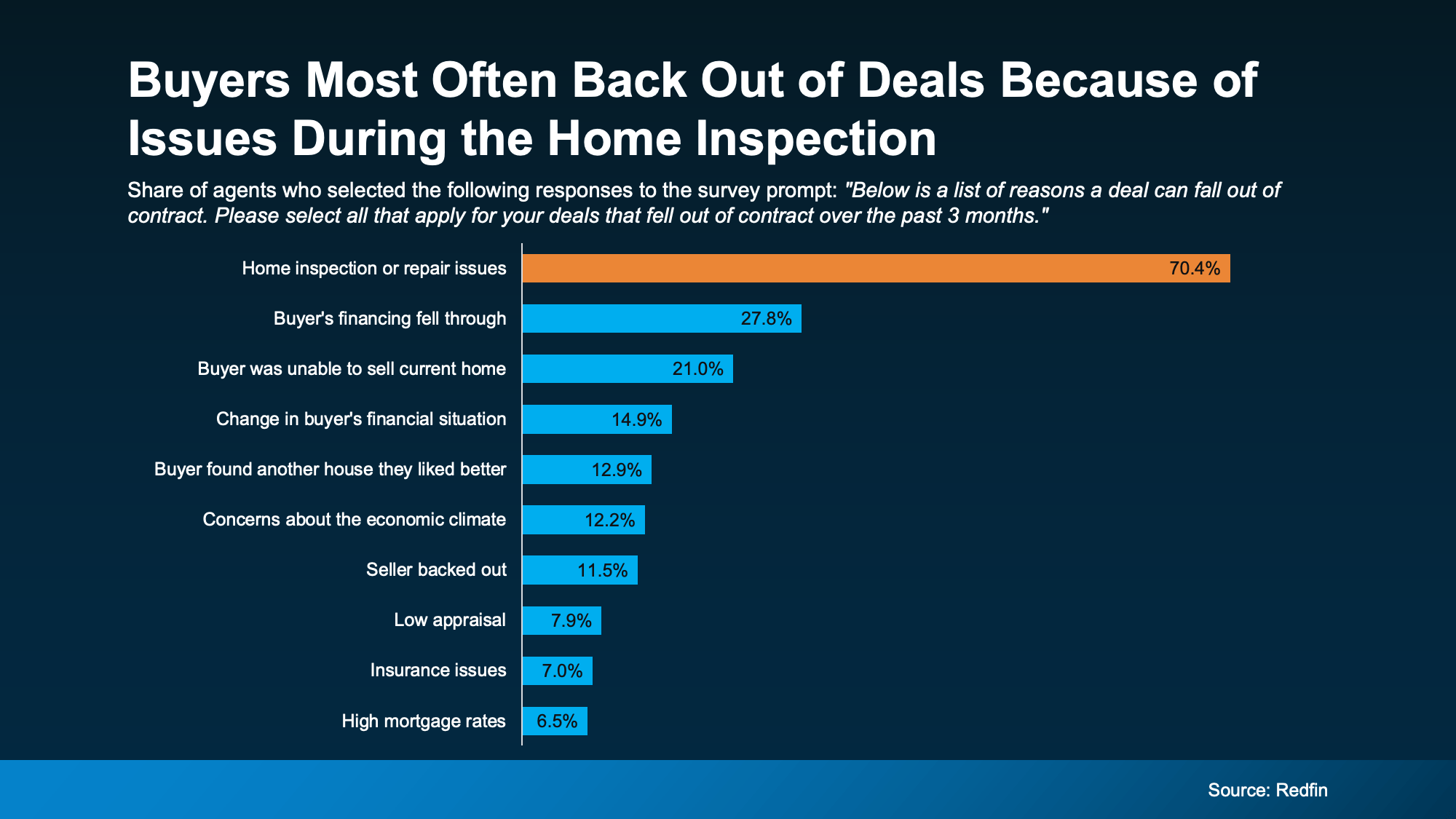
A Redfin survey shows over 70% of recently cancelled contracts happened because of issues during the home inspection (see graph below):
 And that makes sense. Because today’s buyers have something they didn’t have a couple of years ago: options.
Why Fixing Things Before You List Matters More Today
A few years back, when buyers felt rushed or boxed in due to the limited number of homes for sale, they were more willing to overlook issues.
But in today’s market, skipping essential repairs is one of the fastest ways to lose a deal.
Now that there are more homes to choose from, buyers can be more selective. If a house feels risky, outdated, or like it’s hiding expensive surprises, they’re a lot more likely to walk away. So, what do you have to fix? Just ask an agent.
How Your Agent Can Help Give You the Edge
A local agent will be able to walk through your house and offer advice on what to tackle based on your specific home, your market, and what buyers are prioritizing in your area. They’ll also have first-hand knowledge about some of the biggest turnoffs for buyers today. And you can use that expertise to prevent future headaches.
For example, according to Zillow, these are some of the issues buyers will care the most about:
- Roof leaks or damage: sagging, leaking, etc.
- Plumbing problems: standing water, leaks, water damage, etc.
- Electrical concerns: outdated or exposed wiring, missing GFCI outlets, etc.
- HVAC issues: non-functioning units
- Pest or insect damage: termite colonies, etc.
- Hazardous materials: lead, mold, asbestos, etc.
- Safety/code violations: missing smoke detectors, windows stuck closed, etc.
- Structural problems: cracks in the foundation, sagging floors, etc.
Odds are not all of this even applies to your house. Maybe only 1-2 things do. Or maybe none of them do. It just depends. But an agent will have the tools and resources to help you figure it out and stay one step ahead.
The Benefits of a Pre-Listing Inspection
To buyers, these aren’t cosmetic issues. They’re trust issues. And that’s what you need to watch out for today. Once buyers start wondering “what else might be wrong,” it’s hard to recover momentum.
That’s why some agents are even recommending a pre-listing inspection as a sneak peek into what buyers will see on their own inspection. With that insight, you can:
- Fix concerns before you list, or disclosue issues upfront
- Avoid having to respond or negotiate under pressure
- Stop scrambling to find contractors with availability before your closing date
But remember, you don’t have to fix everything. You just have to be strategic about what you do tackle, so you and your buyer aren’t caught off guard.
And that’s why you need an agent who can:
- Decide if a pre-listing inspection is worth it where you live
- Recommend a trusted inspector (if you decide to get one)
- Look at the results with you to identify true dealbreakers in your market
- Help you decide what to fix or what to credit
- Make sure you avoid over-spending or under-preparing
Bottom Line
One of the biggest dealbreakers for buyers today is inspection issues – and that’s something you can control. You just need to be proactive about high-impact repairs before you list.
If you want help figuring out where to focus, connect with an agent.

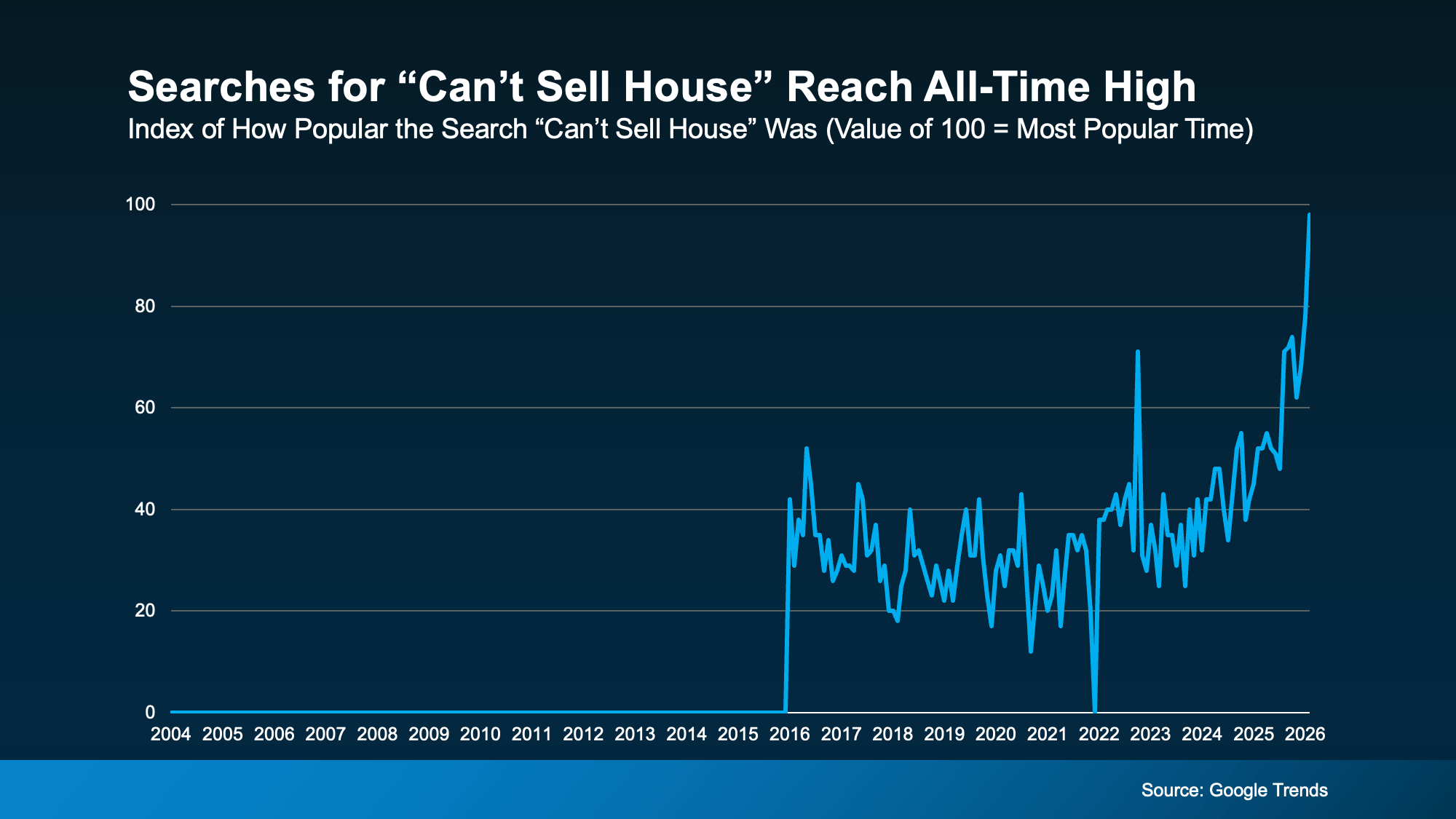
Online searches for “can’t sell house” just hit an all-time high according to Google Trends. So, if your house has been sitting on the market without any bites, you’re not the only one. But it’s also not the end of the road.
Homes are selling every day, so you can turn this around. You just need to take another look at your approach.
 If you’re feeling this pain, know this: an online search engine isn’t where you should go for your answers. It’s much better to talk to your agent. Because a search engine doesn’t know your market or your house. But your agent does.
While a quick search or an AI platform may give you some tips on what to try, only an expert agent can actually diagnosis what’s going on – and how to fix it.
For example, your agent knows most homes that struggle to sell today are usually being held back by one (or more) of these three things.
1. Presentation: Buyers Will Compare Everything
When inventory was tight a few years ago, buyers overlooked imperfections because they had to, or they’d lose out to another bidder. Now? That’s no longer the case.
Today’s buyers scroll through dozens of listings in just minutes. They compare condition, updates, lighting, finishes, layout, and more – all side by side. If your home feels dated, cluttered, or in need of repairs, buyers will notice and it’ll knock your house right off their list of contenders.
This doesn’t mean you need a full renovation. But it does mean first impressions matter again. To compete today, you need curb appeal. Clean spaces. Neutral colors. Professional photos. If there are scuffs on the walls, obvious repairs, or too many outdated features, it could be what’s holding you back.
2. Pricing: If the Price Isn’t Compelling, It’s Not Selling
This is maybe the hardest one to hear, but what your neighbor sold their house for a few years ago isn’t necessarily the same price you’ll get today. As Selma Hepp, Chief Economist at Cotality, says:
“For sellers, the days of pricing aggressively and expecting instant offers are largely over. Homes that are well-priced and well-presented will still sell, but pricing discipline matters more than it did during boom years.”
Buyers are budget-conscious right now. If your home is priced based on outdated expectations instead of current demand, buyers may still look at your house online… but they likely won’t write an offer. Or, they’ll make an offer that you think is too low.
Pricing too high for this market is one of the top things sellers miss the mark on today. And those who aren’t willing to meet the market where it is or entertain offers may feel stuck.
3. Access: If Buyers Can’t See It, They Can’t Buy It
It sounds obvious but limited showing availability can kill your momentum. If your house isn’t easy to see because you’re restricting showings to evenings only, no weekends, or requiring a 24-hour notice, you’re cutting your buyer pool down by more than you may realize.
And the more friction you create, the fewer buyers walk through the door.
In a market where buyers have more options, the last thing you want to do is give them a reason to skip your house. Availability matters because if no one sees it, no one buys it.
Don’t Let Search Results Decide Your Next Step
When your house isn’t selling, it’s tempting to spiral and wonder if it’s the market or if something’s wrong with your house. But instead of searching for answers online, here’s what to do.
Sit down with your agent and ask three honest questions:
- What are buyers looking for in today’s market?
- What feedback are we getting from showings?
- Why do you think my house hasn’t sold yet?
That conversation will bring a lot more clarity than any search engine results.
Bottom Line
If your listing feels stuck, it’s not a sign you shouldn’t sell. It’s the market giving you feedback. And feedback is powerful when you use it.
Start with a real conversation with a real agent about what’s working and what’s not. Your agent will be able to tell you which small adjustments could totally change the momentum. Because in this market, the sellers who adapt are the ones who move.

You Can’t Control What’s Happening with Mortgage Rates. But You Can Control This.

The Remodel You’ve Been Dreaming About May Be Closer Than You Think

Affordability Has Improved in All 50 States



-

 Affordability4 weeks ago
Renting vs. Buying: The Numbers Might Surprise You
-

 For Sellers4 weeks ago
Top Mistakes Homeowners Are Making in 2026 (And How To Avoid Them)
-

 For Sellers3 weeks ago
Spring Sellers Have an Edge. Here’s Why.
-

 Downsize3 weeks ago
The Hidden Advantage Repeat Buyers Have Right Now
-

 Equity3 weeks ago
Are Home Prices Dropping? Here’s the Real Story.
-

 Agent Value2 weeks ago
If Your House Isn’t Getting Offers, Read This.
-

 Affordability2 weeks ago
Should You Wait for Lower Rates?
-

 For Buyers2 weeks ago
One Key Sign We’re Not Headed for a Wave of Foreclosures
You must be logged in to post a comment Login