


For Sellers
How To Make Sure Your Sale Crosses the Finish Line

If there was one simple step that could help make your home sale a seamless process, wouldn’t you want to know about it?
There’s a lot that happens from the time your house goes under contract to closing day. And a few things still have to go right for the deal to go through. But here’s what a lot of sellers may not know.
There’s one part of the process where some homeowners are hitting a road bump that’s causing buyers to back out these days. But don’t worry. The majority of these snags are completely avoidable, especially when you understand what’s causing them and how to be proactive.
That’s where a great agent (and a little prep) can make all the difference.
What’s Causing Some Buyers To Back Out
The latest data from Redfin says 15% of pending home sales are falling through. And that’s not wildly higher than the 12% norm from 2017-2019. But it is an increase.
That means roughly 1 in 7 deals today don’t make it to the closing table. But, at the same time, 6 out of 7 do. So, the majority of sellers never face this problem – and odds are, you won’t either. But you can help make it even less likely if you know how to get ahead.
You might assume the main reason buyers are backing out today is financing. But that’s actually not the case. The most common deal breaker today, by far, is inspection and repair issues (see graph below):
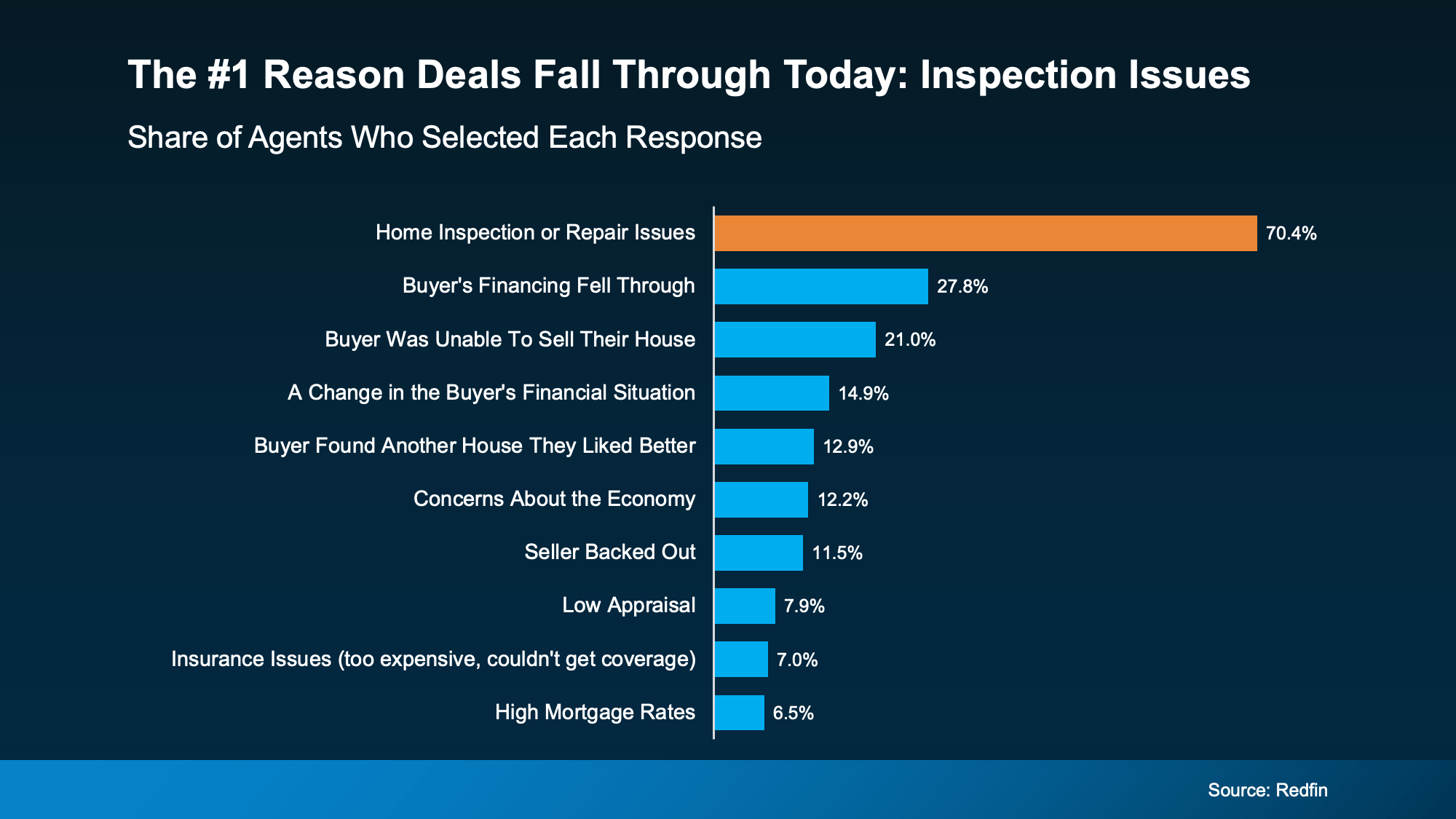 Here’s why that’s a sticking point for buyers right now:
- Buyers are already stretched thin from high prices and challenging mortgage rates, so they don’t have the appetite (or budget) for unexpected repairs.
- If they’re going to spend all that money, they want to get something that’s move-in ready. They don’t want to take on another high-cost project themselves.
- They have more homes to choose from, so if yours seems like a hassle or if you’re not willing to fix something, they can just move on.
The sellers with the best agents have heard about this shift and they’re doing what they can to go in prepared. Enter the pre-listing inspection.
What’s a Pre-Listing Inspection?
It’s exactly what it sounds like. It’s a professional home inspection you schedule before your home hits the market. And while it’s not required, the National Association of Realtors (NAR) explains why it could be a valuable step for some sellers right now:
“To keep deals from unraveling . . . it allows a seller the opportunity to address any repairs before the For Sale sign even goes up. It also can help avoid surprises like a costly plumbing problem, a failing roof or an outdated electrical panel that could cause financially stretched buyers to bolt before closing.”
Think of it as a way to avoid future headaches. You’ll know what issues could pop up during the buyer’s inspection – and you’ll have time to fix them or decide what to disclose before you put your house on the market.
This way, when the buyer’s inspector walks in, you’re ready. No surprises. No last-minute panic. No deal on the line.
Is It Worth It?
Generally speaking, a pre-listing inspection costs just a few hundred dollars. So, it’s not a big expense. And the information it gives you is invaluable. But before you make that investment, talk to your local agent.
In some markets, it may not be worth it. And in others, it may be the best move you can make. It all depends on what’s happening where you are and what’s working for other local sellers. If your agent recommends getting one, they’ll also:
- Help you decide which issues to fix
- Prioritize repairs based on what buyers in your area are focusing on
- Connect you with trusted professionals to get the work done
- Ensure you understand local disclosure laws
That small step could save your deal (and your timeline).
Bottom Line
So, if there was one simple step that could help make your home sale go according to plan, would you do it?
If you’d rather deal with surprises on your terms (not with the clock ticking under contract), talk to an agent about whether a pre-listing inspection makes sense for your house.
It may be worth it so you can hit the market confident, prepared, and in control.


Spend about 5 minutes online searching for news about the housing market, and odds are you’ll see something pop up about home prices. You may even stumble onto social media influencers saying we’re headed for a crash. Let’s get you the context you need.
The truth is prices are going to vary depending on where you live. But they’re not crashing.
Here’s what you need to know.
The Local Perspective: Home Price Trends by Area
The biggest thing feeding into the confusion online is how different home price trends are by area right now. Take a look at this data from ResiClub and Zillow (see graph below).
About half of the largest metros are seeing prices go up.
The other half are seeing some declines.
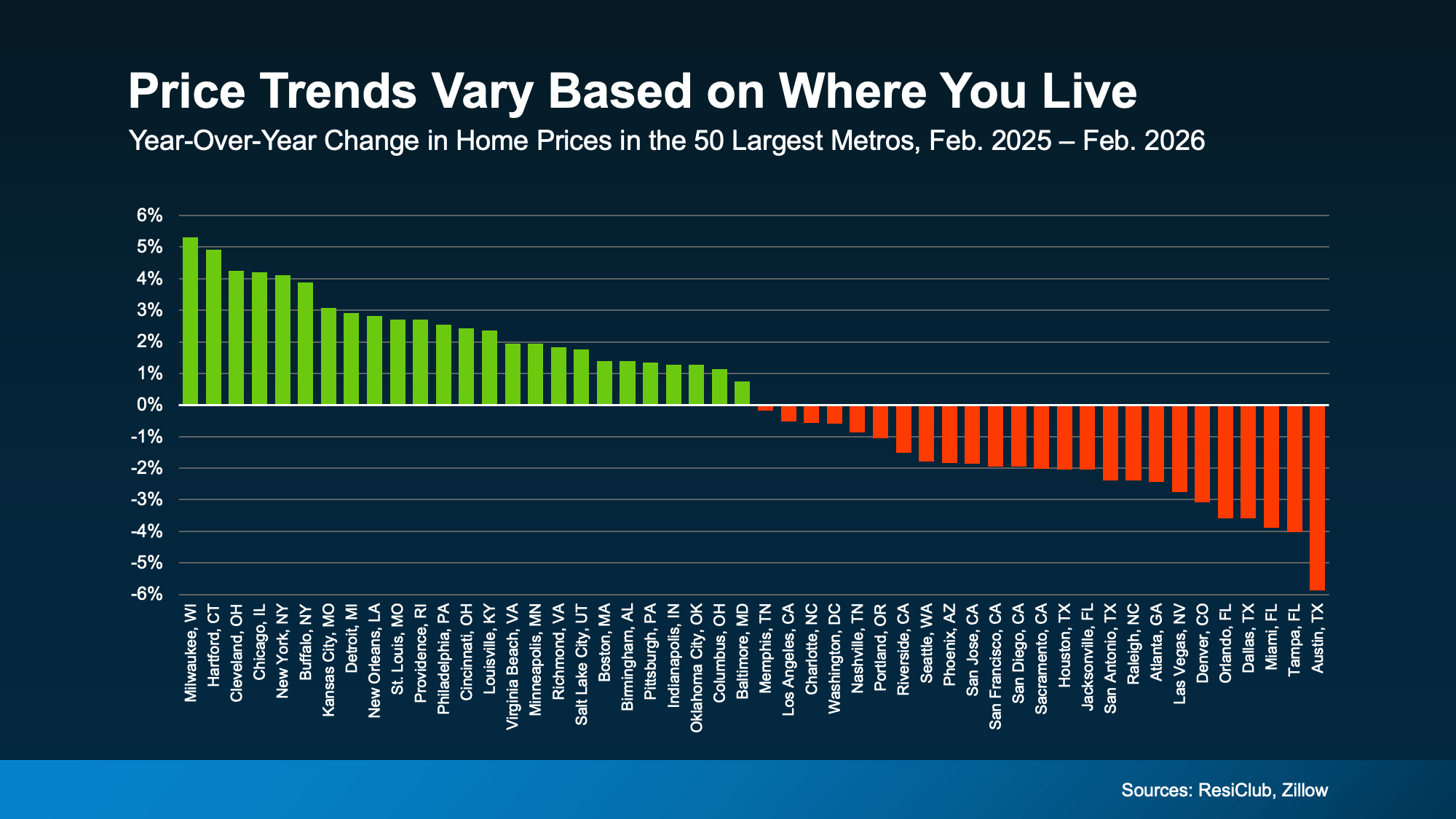 Unfortunately, the online chatter only focuses on the markets where prices are down – and that makes it sound like something bigger is happening.
But, as you can see in this graph, that’s only one side of the story. The full picture is different.
The National Perspective: Moderate Price Growth
As a country, when you average it all together to get a true baseline, one thing becomes clear, home prices are still net positive at the national level.
According to the Redfin, national home prices were up about 1% year-over-year in February. So, what we’re seeing right now isn’t a collapse. It’s a market that’s normalizing after a period of unusually fast growth. And that impacts some local markets more than others – particularly those where prices rose too far, too fast during the pandemic.
A true crash, like what happened in 2008, would mean prices dropping sharply across the entire country. That’s just not what the data shows today. And it’s not where things are going either.
Experts Agree This Isn’t 2008
In fact, Fannie Mae surveyed over 100 housing market experts to ask their opinions on where prices are headed from here. And the experts agree, nationally, prices are expected to keep rising over the next five years:
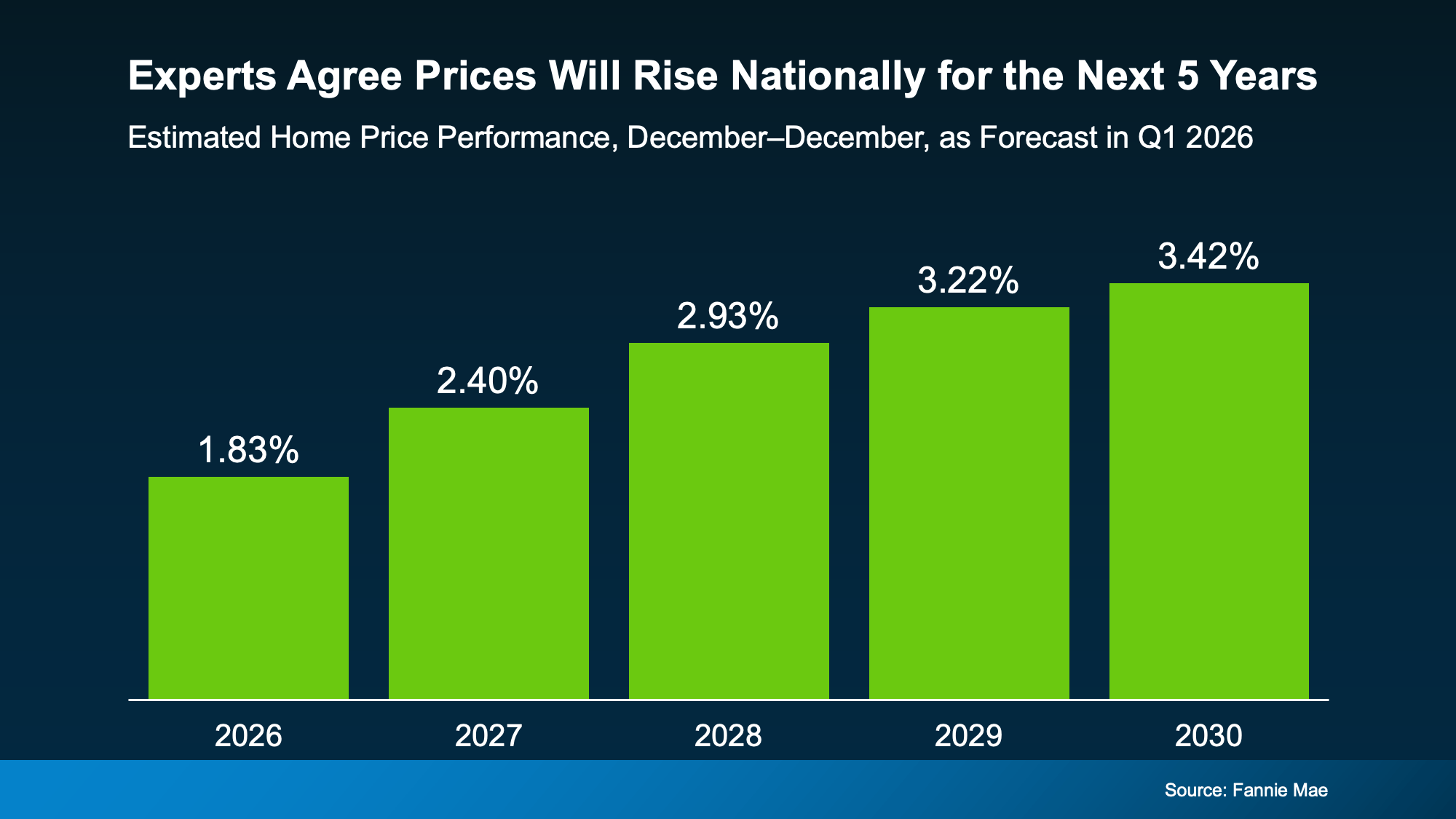 That rise will be moderate, particularly this year, but the trend is clear. Nationally, prices are forecast to grow every year now through at least 2030 – and that’s normal. Daryl Fairweather, Chief Economist, at Redfin explains:
“House prices aren’t going to fall on a national scale any time soon—and that’s actually a good thing. It’s normal for house prices to rise gradually over time . . .”
That’s why even in the select areas where prices have dropped slightly this year, the decline is expected to be temporary. According to that same quarterly Fannie Mae survey mentioned above, 85% of the experts say the markets that are seeing mild declines right now will return to positive price growth before the end of 2027.
The main takeaway? This isn’t a crash. And prices aren’t expected to fall nationally. If anything, the few areas experiencing declines are expected to rebound in the next year or so.
Bottom Line
It’s easy to get caught up in headlines that make it sound like something big is about to happen. But don’t be fooled. The housing market isn’t crashing. It’s just shifting.
The key is understanding what’s actually happening in your market, so you can make the right move for you. Connect with a real estate agent if you want the local perspective.


Your House Hasn’t Sold Yet. Should You Rent It Out Instead?

Before You Fall in Love with a House, Do This First.

Don’t Let Home Prices Headlines Fool You



-

 Agent Value4 weeks ago
If Your House Isn’t Getting Offers, Read This.
-

 Affordability4 weeks ago
Should You Wait for Lower Rates?
-

 Agent Value3 weeks ago
The #1 Reason Buyers Walk Away (And How To Get Ahead of It)
-
 For Buyers4 weeks ago
One Key Sign We’re Not Headed for a Wave of Foreclosures
-
 For Buyers6 days ago
Don’t Let Home Prices Headlines Fool You
-

 Affordability3 weeks ago
Affordability Has Improved in All 50 States
-

 Agent Value3 weeks ago
3 Must-Do’s for First-Time Home Buyers
-

 Equity2 weeks ago
The Remodel You’ve Been Dreaming About May Be Closer Than You Think
You must be logged in to post a comment Login