
Agent Value
Your House Didn’t Sell. Here’s What To Do Now.

When your house doesn’t sell, it doesn’t just feel frustrating – it feels personal. You put time, money, and emotional energy into this move. You told your friends and family it was happening. And now that your listing has expired without a buyer? You’re left feeling stuck, and maybe even a little embarrassed.
And here’s what most agents won’t tell you. Over 70% of homeowners who re-list with a different agent sell their house.
Re-list with the same agent? That stat drops to only 50%, according to the latest data from REDX. That’s like leaving the fate of your sale to a coin toss. And that’s not good enough.
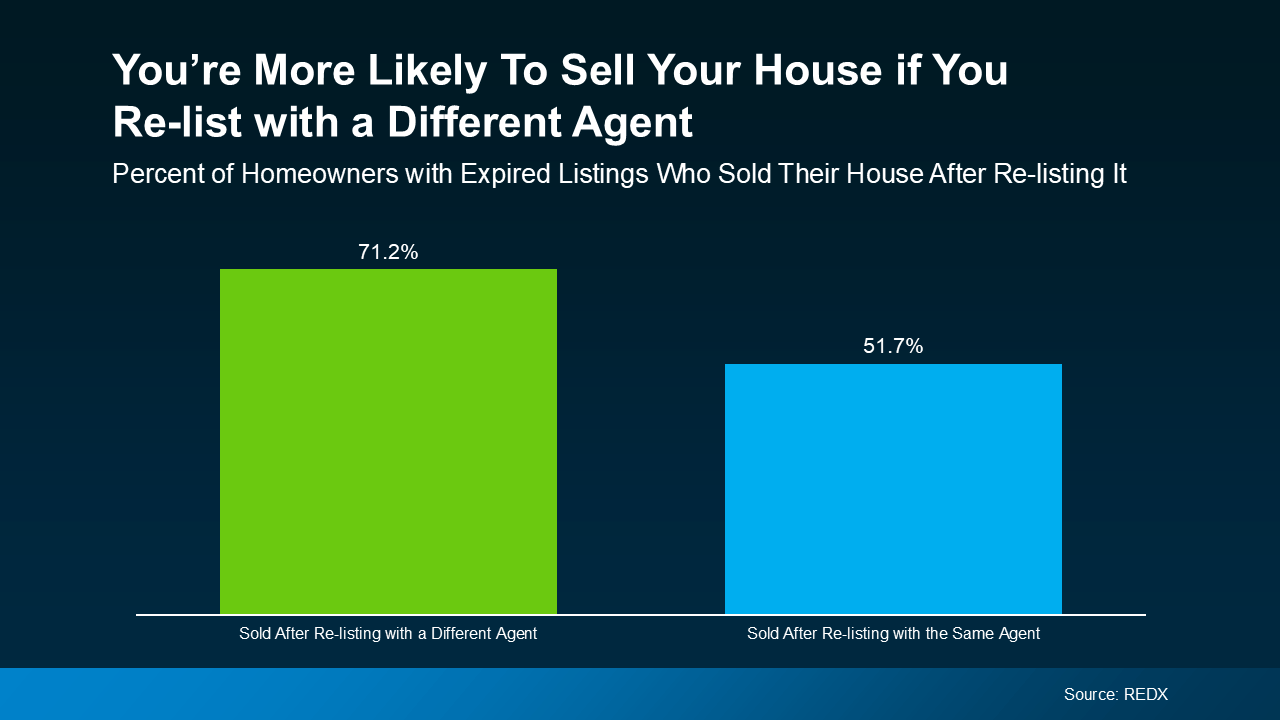 REDX data also shows that only 1 in 3 homeowners with expired listings actually make that change. That means most sellers either give up or repeat the same mistakes, so they get the same disappointing outcome. You deserve better.
Same house. Different strategy. Completely different results.
Let’s break down what might’ve gone wrong – and how a fresh perspective can help you have a winning strategy this time.
1. It Was Priced Too High
Today, homebuyers are feeling the squeeze of higher mortgage rates, so even a slightly overpriced home will get overlooked. And once your listing starts to go stale, it’s hard to regain momentum.
Missing the mark on pricing is a costly mistake – and too many homeowners are doing that very thing right now.
What we need to do now: We need to analyze the latest sales in your area to make sure you’re hitting the right number. This includes taking a hard look at real-time buyer behavior, and any feedback you got from open houses or showings your first time around. Pricing at, or even just below, current market value is a winning play because it drives more buyers to your listing – and that amps up the competition for your home.
2. It Didn’t Show Well
You only get one shot at a first impression. If the listing photos didn’t pop, the house wasn’t staged well, or it wasn’t updated, most buyers will skip over it without ever scheduling a showing. And even if buyers did show up, small things like scuffed walls, outdated light fixtures, or a wobbly doorknob can turn them away.
What we need to do now: Let’s walk through your house with fresh eyes to see if there are any areas that may have been sticking points inside and out. Sometimes taking down old drapery, some light staging, or even a fresh coat of paint can completely change how a buyer feels about the home.
3. It Didn’t Get the Right Exposure
If your home didn’t sell, chances are it wasn’t getting the visibility it deserved. Generic flyers and a few online photos aren’t enough anymore. Today’s top agents are using highly targeted digital marketing, social media strategies, custom video content, and more to get your listing in front of the right buyers at the right time.
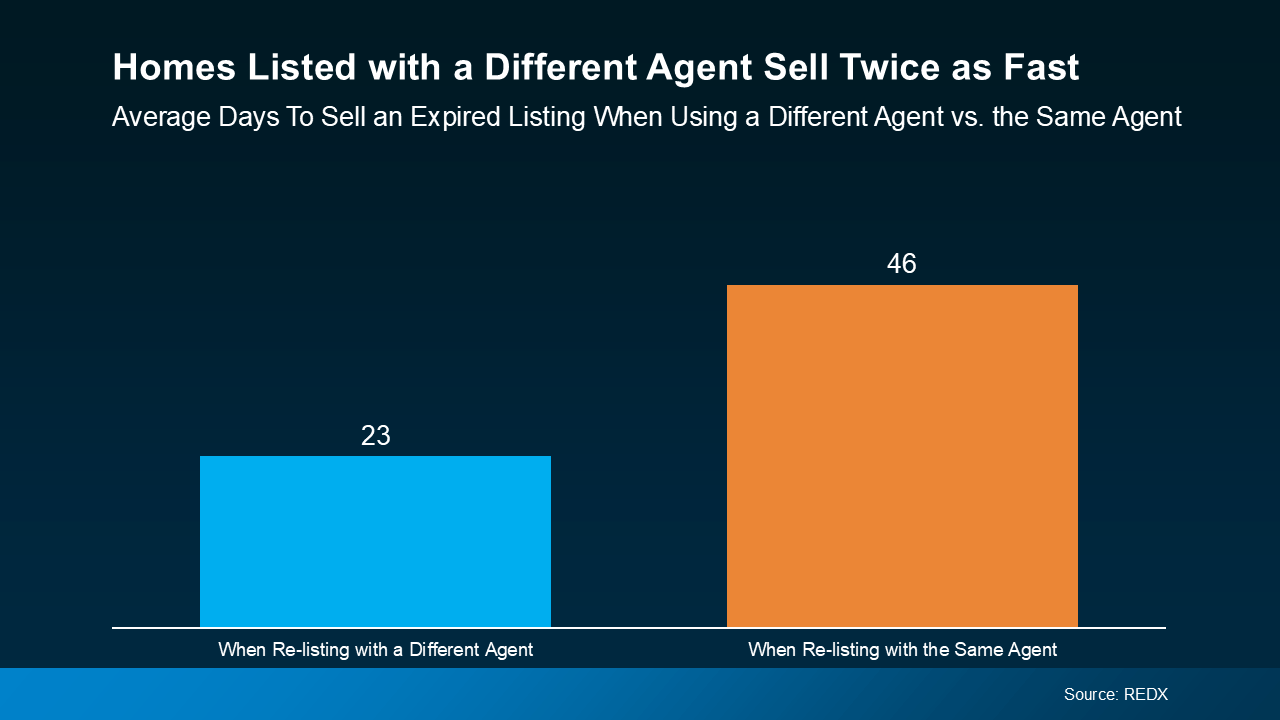
What we need to do now: We have to do more than just put your house online and hope it sells. Together, we can come up with a real plan to maximize its exposure. With the right pricing, staging, and marketing, your house will sell quickly. Here’s a real-world example (see graph below):
 4. You Weren’t Willing To Negotiate
In this market, sellers who aren’t open to negotiating on things like closing costs, inspection repairs, or other concessions are often left behind. And if your last agent didn’t set that expectation with you, that’s a real shame.
What we need to do now: Be willing to meet buyers where they are. The goal is to get the deal done – and sometimes that means getting creative to help buyers cross the finish line. Home values have increased by over 55% over the last five years, so you likely have enough wiggle room to offer some perks without sacrificing your bottom line.
Bottom Line
If your house didn’t sell and your listing has expired, you don’t need to give up. You just need a better plan. And maybe, a better partner.
Over 70% of homeowners who switch agents sell their house the second time. That’s not a coincidence. That’s strategy.
If you’re ready for a proven approach, talk to a local agent so you know what to do differently – and why doing different things actually works. It’s time to get your move back on track.

Whether you’re dreaming about buying your first home or wondering if it’s time to move on from the one you’re in, affordability is probably weighing on your mind. Home prices are still high in many markets, and even though things have improved a bit over the past year, making the numbers work can still feel like a stretch.
But the people finding ways to move right now usually have one thing in common. They didn’t wait for affordability to come to them. They went looking for it.
According to PODS, 61% of people across all generations say affordability is the biggest factor when deciding where to move. And it’s led a growing number of people to do one thing – broaden their search to include more affordable areas they hadn’t seriously considered before. As PODS, put it:
“. . . moving is increasingly driven by affordability, connection, and quality of life. As economic pressures persist, Americans are taking a more intentional, values-driven approach to where they choose to live.”
It’s Not Just the Home Price – It’s the Whole Cost of Living
Here’s where it gets really interesting. When people talk about moving for affordability, they’re not just talking about finding a cheaper house. They’re thinking about the full picture. What does it actually cost to live somewhere?
WalletHub looked at exactly this, measuring housing costs as a share of median monthly household income across every state (see map below).
Take a look at where you live on that map. The lighter the blue, the more affordable it generally is to live there. The darker the blue? Just the opposite.
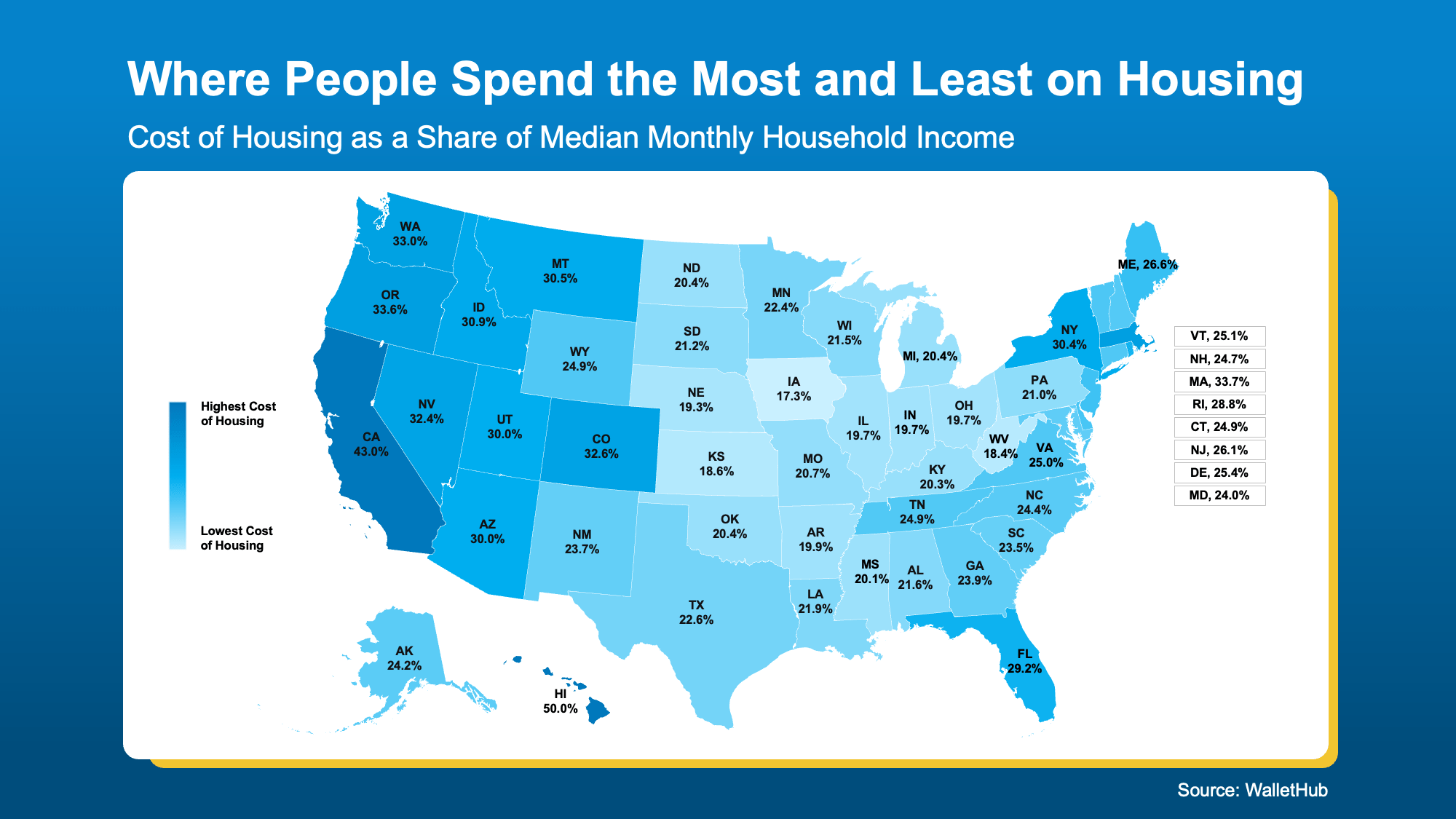
If your state is showing up on the darker blue end of the scale, the cost of living may be putting a real pinch on your wallet, and it may be worth exploring what a lighter-blue area could mean for your finances.
Because if you’re less financially stretched, imagine how that could change things. Less stress. Less worry. More freedom and peace of mind.
You Don’t Have To Move to Another State To Find a Better Deal
But finding more affordable homeownership doesn’t have to mean a cross-country move. It doesn’t even have to mean leaving your state, your family, or your favorite coffee shop behind.
Every market has more affordable pockets that most buyers never think to explore – neighborhoods, towns, and communities where home prices are lower, property taxes are more manageable, and the overall cost of living just works better.
A great local real estate agent knows exactly where those places are.
And if you work remotely, or have any flexibility in where you’re based, your options open up even further. Remote work has already changed the way millions of people think about where to live, and that trend isn’t going away.
When location stops being tied to a daily commute, a more affordable area that’s a bit farther out suddenly becomes a very real option.
Bottom Line
Affordability is a real challenge, but it’s not an unsolvable one. The key is being open to places you might not have considered before. A local real estate agent can help you find them.
Ready to find out which areas have the best affordability right now? Reach out today.

Most sellers come into the market with one number in mind. And it’s often the one that costs them the most. That’s their asking price.
A survey from Realtor.com shows about 8 in 10 (80%) of sellers expect to sell at or above their asking price today. But here’s where things get interesting.
In reality, only about 4 out of every 10 (roughly 40%) actually do.
That’s a big gap. And it’s where a lot of sellers get caught off guard. So, why the disconnect? And how can you set yourself up to be one of the 4 in 10 that get top dollar?
Let’s break it down.
What Should You Really Expect To Get for Your House?
That 40% may sound low at first, but it’s not.
If you look back to the last typical year for the housing market (2019), what we’re really seeing is a return to what’s normal (see chart below). If anything, slightly more homeowners are able to sell above list price today compared to 2019:
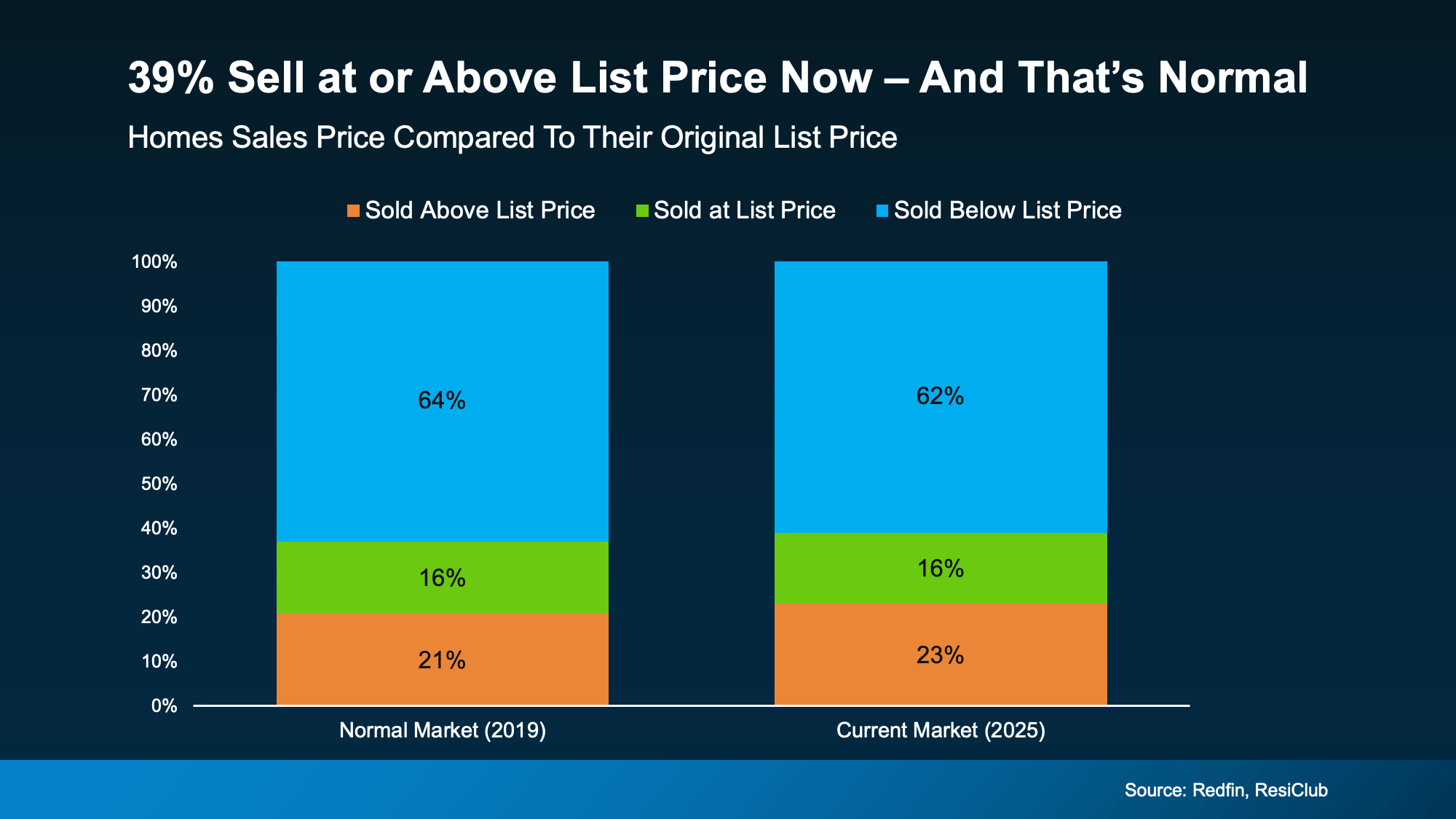 It only feels low because the past few years were anything but typical. Between 2020 and mid-2022, buyer demand was sky-high and the number of homes for sale was at record lows. Almost everything sold over asking.
Now, the market has shifted.
There are more homes for sale. Buyers have more options. And that means they’re more selective about how they spend their money.
In other words, the rules have changed – and pricing like it’s still 2021 is where sellers run into trouble. You have to meet the market where it is if you really want to cash in big.
What Happens When a Home Is Priced Too High
Here’s the reality. It’s easy to think pricing high gives you room to negotiate. But it usually does the opposite.
When your home is priced above what buyers expect, in this market, they don’t negotiate. They move on.
Because buyers notice price first. And if your home doesn’t line up with similar options in your area, it may not even get a showing. And that’s when things start to snowball:
-
A high price gets less interest from buyers.
-
Less interest means fewer offers.
-
And fewer offers usually means more time on the market.
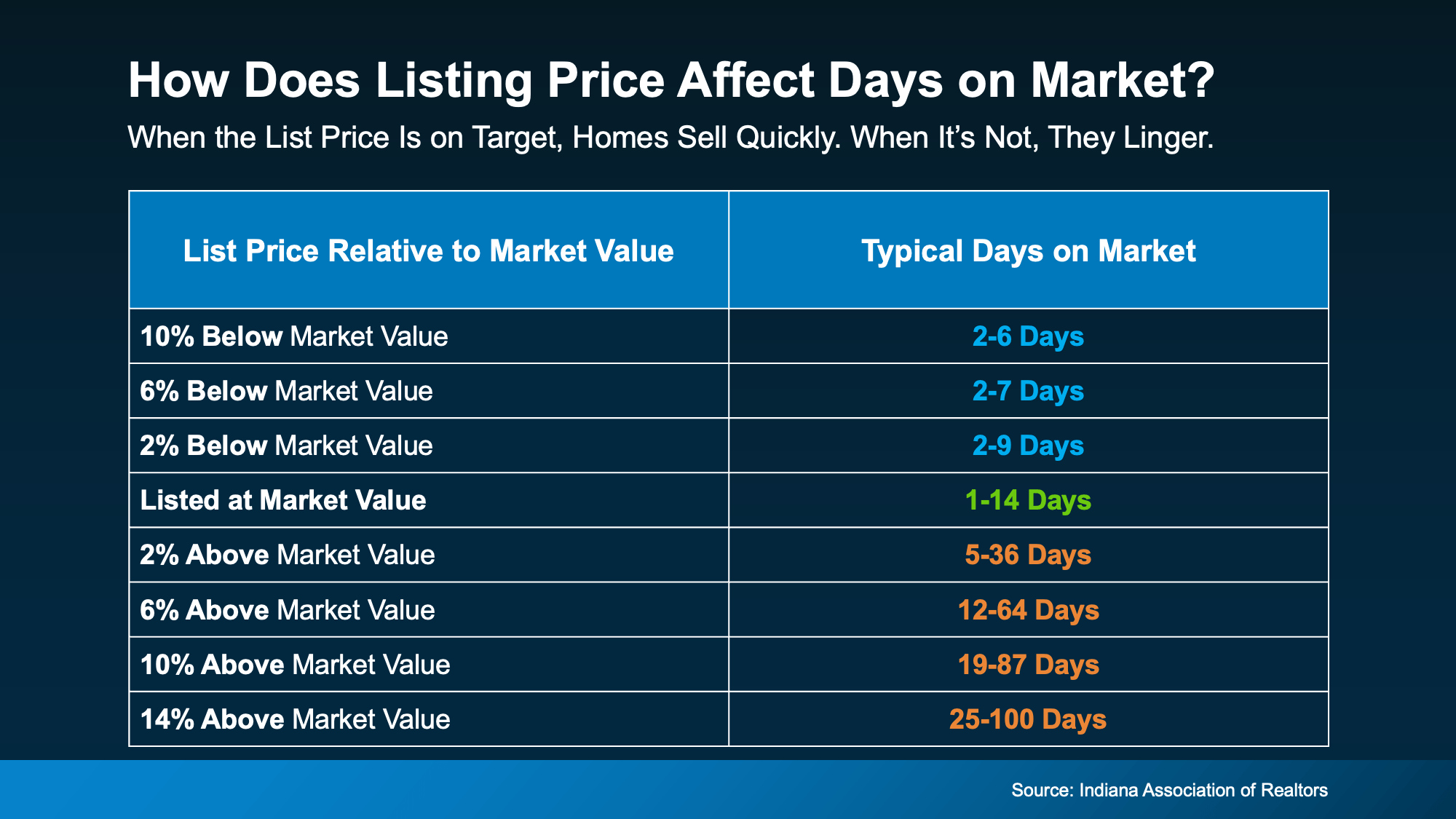
Take a look at this table from the Indiana Association of Realtors. While this data is from one state, the general trend is going to hold true across many markets in the country. It shows that homes listed at or under market value sell fast. But homes priced high? They linger. And that delay comes at a very real cost.
 The Price Cut Trap (And How To Avoid It)
When a home sits that long without offers, a lot of sellers will do a price reduction. According to Realtor.com, 16.7% of sellers are going that route today.
But here’s the real problem. Even a price cut doesn’t guarantee a sale.
In fact, some buyers will see a reduction as a sign something’s wrong with the house – even when nothing is.
That’s why data from the National Association of Realtors (NAR) shows the longer a home sits, the bigger that price cut tends to be to attract buyers back:
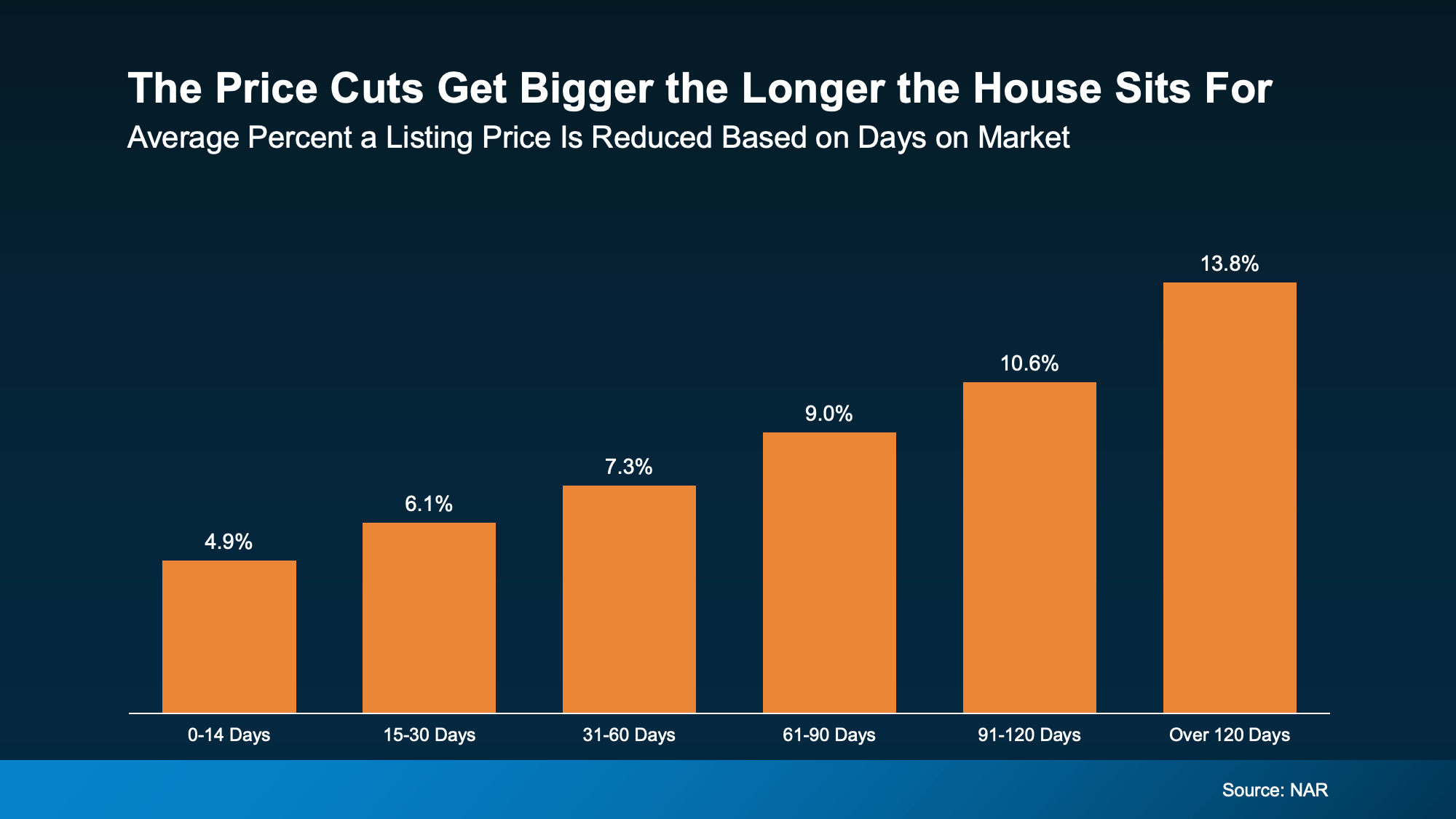 So, what starts as a strategy to “leave room” for negotiate can end up costing you more in the long run.
Why Pricing Right from Day One Matters
Even though listing at or even just shy of market value may sound counter intuitive if you’re looking to get as much money for your house as possible, a lot of the time it really is the best strategy.
Because the goal isn’t just to list your house to see what price sticks. It’s to price it in a way that creates demand from day one.
NAR puts it best:
“While some sellers are pricing their homes higher than ever, a more ‘goldilocks’ frame of mind is a better approach to avoid price cuts and lingering time on the market.”
In other words, there’s a sweet spot. Too high, and buyers disappear. Too low, and they question the value.
But right in the middle? That’s where the magic happens.
And that’s where the right agent comes in.
They help you understand what buyers are actually paying right now, how your home compares, and how to price it so it stands out immediately. And in today’s market, that strategy is the difference between:
-
Listing high, watching it sit, and selling for less later.
-
Or, pricing it right, creating competition, and putting yourself in a position to win from the start.
Bottom Line
A lot of homeowners think they can list high now and negotiate later, but that’s a mistake that costs them. And it’s the reason only 4 out of every 10 sellers are getting their asking price or more.
If you want to be in that group, it starts with getting the price right from day one.
Connect with a local agent to make sure you are.

Selling your house this season? You’ve probably heard you should stage it before it hits the market. But what does that really mean – and is it worth the effort?
The short answer is “yes,” especially right now.
With more houses for sale this year, you’re likely wondering how to make the most money possible without your house sitting on the market. The answer is staging. It can help your house stand out, bring in stronger offers, and sell faster. As Nadia Evangelou, Principal Economist at the National Association of Realtors (NAR), puts it:
“Staging matters. Preparing the home to be ‘buyer-ready’ attracts more buyers, especially now that inventory has increased.”
Here’s what staging actually involves and what it could do for your sale.
What Is Home Staging?
Home staging is the process of preparing your house, so it appeals to as many buyers as possible. That usually means decluttering, deep cleaning, rearranging furniture, and adding simple touches that help each room feel bright, open, and welcoming.
The goal is to help buyers fall in love with the space and picture themselves living there, which makes them more likely to make an offer.
Why Staging Is Worth the Effort
Staged houses tend to perform better on almost every metric that matters when you sell. According to Redfin, staged homes have been shown to sell up to 73% faster than unstaged homes. And they often close in under a month, compared to anywhere from two to three months for vacant ones.
There’s also a strong return on the money you spend.
The Home Staging Institute says mid-level staging can deliver a 350% return on investment. On a $400k home, that turns the typical $4k cost into roughly $18k in added value when you sell (see graph below):
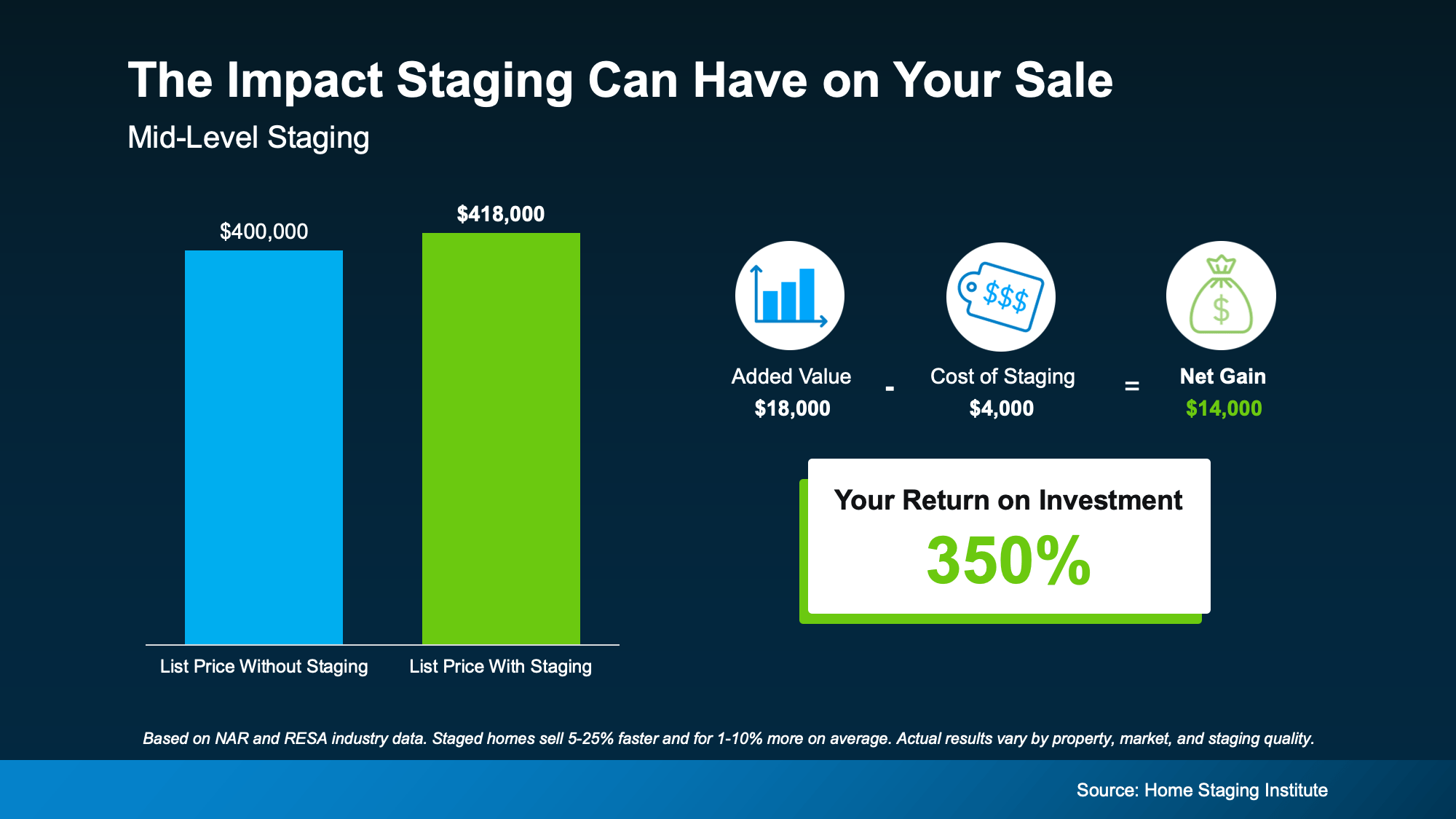 By that estimate, that’s an extra potential profit of about $14k – a meaningful boost when you’re trying to maximize what you walk away with at closing.
Your Staging Options
And just in case you’re seeing that $4k upfront investment above and thinking, “I’m not going to spend that,” here’s what you should know.
Staging doesn’t always have to mean hiring a full crew or filling your house with rented furniture. There are a few different paths you can take, depending on your budget and timeline. So, you could spend a lot less and still get a good return.
Here are a few options:
- Professional staging. A stager handles everything from layout to décor, often bringing in their own inventory. According to the Home Staging Institute, costs typically range from $500 to $5k or more, depending on the size of your house.
- Virtual staging. Digital furniture and styling are added to your listing photos, which can be a budget-friendly option for vacant houses.
- DIY staging. If your budget is tight and your home only needs minor updates, decluttering, deep cleaning, and arranging furniture for flow can still make a real difference.
Your agent can help you figure out which approach fits your house, your market, and your goals.
Agents see what buyers respond to in open houses and showings every week, so they can give you specific, personalized recommendations on what’s worth your time and money (and what isn’t).
That way you can get the most bang for your buck – no matter your budget.
Bottom Line
With more homes for sale right now, making a strong first impression matters. Staging can help your house sell faster and for more – and there’s an option for almost every budget.
If you’re getting ready to list, connect with a local real estate agent to talk through what level of staging makes the most sense for your house.

Two Big Reasons To Move This Summer

Lower Asking Prices Are a Win for Today’s Buyers

Could Moving a Bit Further Out Change Everything About Your Budget?



-

 Equity3 weeks ago
Record High Mortgage Debt Sounds Scary. Here’s What the Headlines Leave Out.
-

 Agent Value4 weeks ago
The Pricing Mistake That Could Cost You Your Sale
-
 Equity4 weeks ago
Are Home Prices Going To Fall?
-
 Affordability3 weeks ago
Newly Built Home Prices Hit a 5-Year Low
-

 Affordability3 weeks ago
What Most Veterans Don’t Know About Their VA Home Loan Benefit
-

 Affordability2 weeks ago
The Truth About Affordability Today
-

 For Sellers2 weeks ago
The Real Reason Some People Are Still Moving Right Now
-
 Economy1 week ago
The Mid-Year Housing Market Update: Why Forecasts Changed in 2026
You must be logged in to post a comment Login